Macau 3-day itinerary — the definitive first-timer's plan
Macau: Macau Tower Observation Deck Ticket
- Instant confirmation
- Free cancellation
Quick answer: Three days in Macau is ideal for first-timers who want to see everything without rushing. Day 1 covers the UNESCO Historic Centre and Taipa Village. Day 2 takes in Coloane, Macau Tower, and the Cotai Strip. Day 3 goes deeper — Guia Fortress, quiet Peninsula neighbourhoods, a Michelin meal, and the House of Dancing Water if you’ve booked tickets. Budget realistically: MOP 2,000–3,500 per person all-in excluding flights and accommodation.
| Where | Macau Peninsula, Taipa Village, Coloane, Cotai Strip |
| Cost | around MOP 2,000–3,500/USD 250–435 per person, excl. accommodation |
| Time needed | 3 full days |
| Getting there | ferry or HZMB bridge from Hong Kong, or fly into Macau |
| Best time | October–November for cooler, drier weather |
Why three days is the right length
Macau is small but layered. The peninsula’s 30+ UNESCO-listed buildings each have a story; Coloane feels like a different country from the Cotai Strip; Taipa Village’s restaurant scene rewards revisiting. Three days means you can walk slowly, eat properly, take a nap after lunch, and still cover all the landmark experiences. It’s also long enough to catch a major show at City of Dreams or Galaxy, which you’d have to skip in a tighter itinerary.
How many days in Macau is one of the most common questions — three days is our recommendation for anyone who cares equally about history, food, and spectacle.
Three days vs two days: what the extra day actually buys
The jump from two to three days isn’t about seeing more attractions — it’s about not rushing the ones that matter. On two days, Coloane and Cotai get compressed into a single afternoon; on three, Coloane gets a relaxed morning and Cotai gets its own dedicated block. The third day also unlocks Guia Fortress and the Santo António neighbourhood, both of which the 2-day itinerary has to skip, plus room for a proper Michelin dinner without treating it as a rushed final-night splurge. If two days sounds like enough, it genuinely can be — see that itinerary for the tighter version.
Day 1: UNESCO Historic Centre and Taipa Village
8:45 — Arrive at the Outer Harbour Ferry Terminal
Take the first morning ferry from Hong Kong. TurboJET departs from the Macau Ferry Terminal in Sheung Wan; Cotai Jet from Hong Kong Airport or Taipa. Arrive at the Outer Harbour Terminal and take a taxi to the historic centre (MOP 30–40/USD 3.70–5, about 10 minutes).
If you’re arriving by the HZMB bus from Hong Kong, you’ll arrive at the Macau Border Gate or Lotus Bridge — both are a taxi ride from the Peninsula.
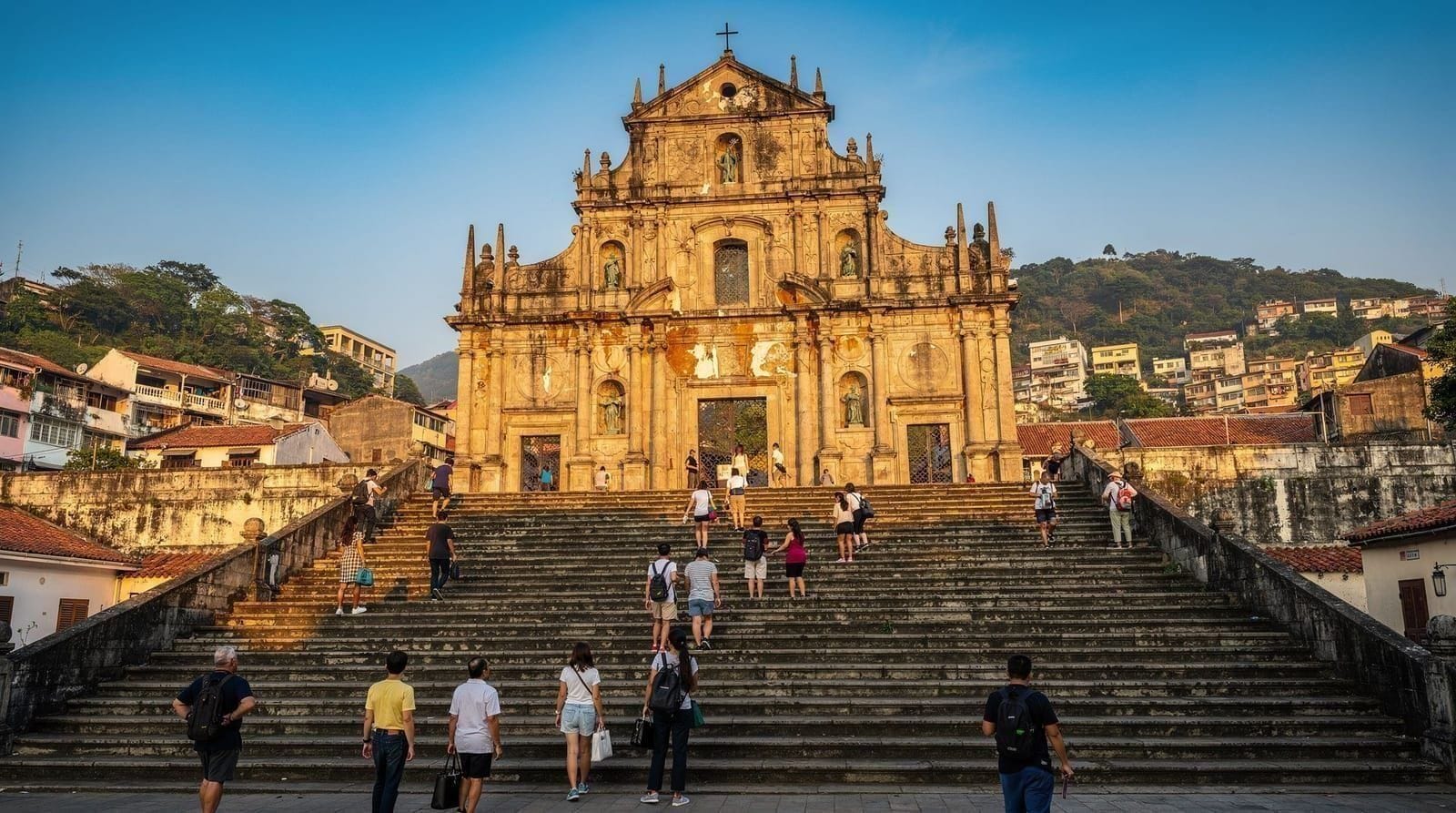
9:15 — Ruins of St Paul’s
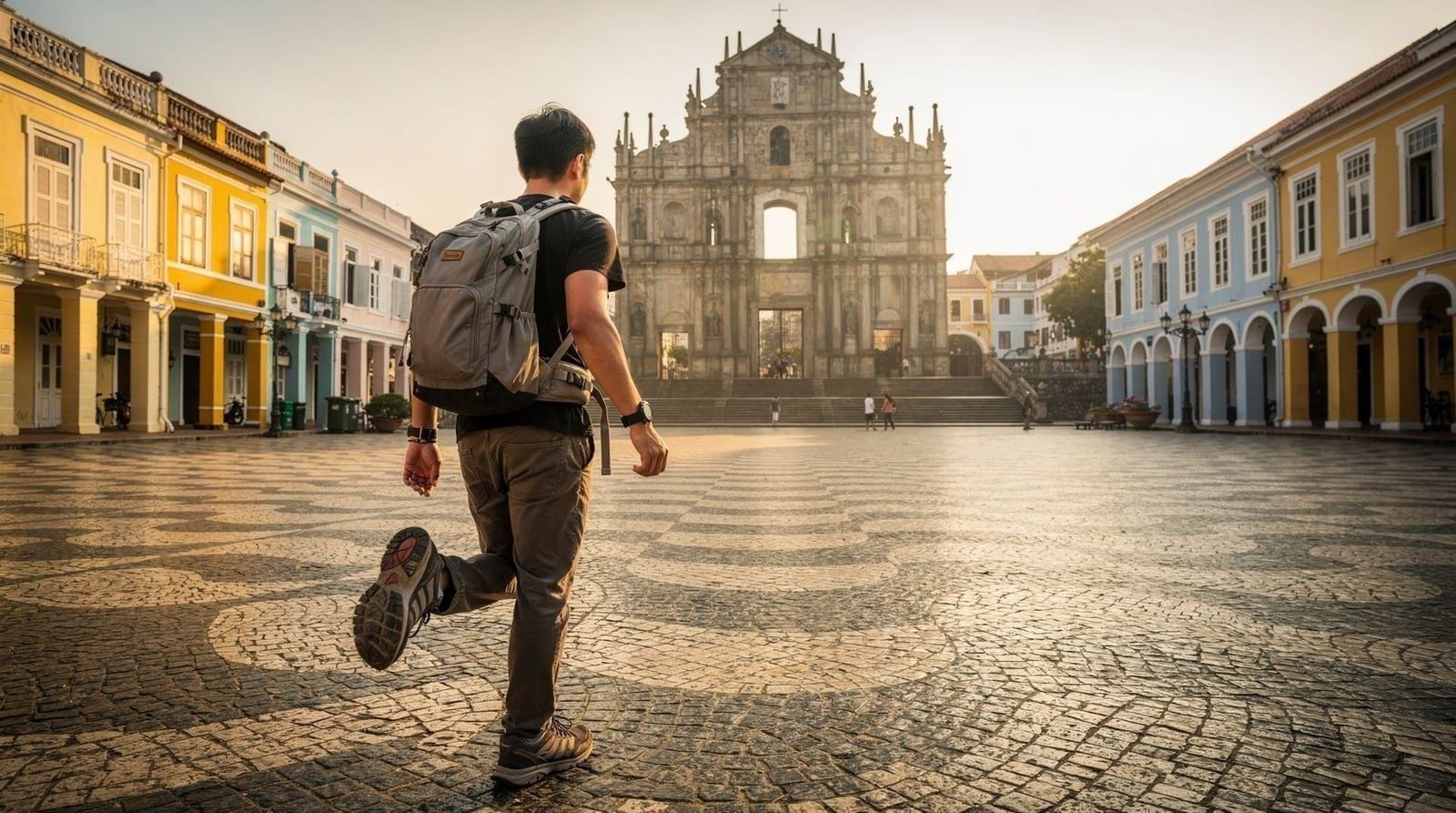
The ruins of St Paul’s are the non-negotiable opening act. The carved stone facade (1637) is the most photographed image in Macau and rewards close examination: look for the chrysanthemum and peony carvings, the Jesuit symbols, and the Chinese characters worked into the European baroque stonework. The crypt museum below is free and shows religious relics and bones of Japanese Christian martyrs.
Cost: Free
Time at site: 45–60 minutes
10:15 — Mount Fortress and Macau Museum
From the ruins, walk up the steps (5 minutes) to Mount Fortress. The fortress itself is free and the views over the Peninsula are the best from ground level. The Macau Museum inside costs MOP 15/USD 1.90 — three floors covering the city’s origins, Portuguese colonial era, and modern transformation. It’s one of the best short museums in the city.
Cost: MOP 15/USD 1.90 adults
Time: 60 minutes
11:30 — Senado Square and the Historic Centre
Walk downhill to Senado Square. This is the heart of the UNESCO Historic Centre — spend an hour walking the adjacent streets: Rua da Palha, Rua de São Domingos, Rua do Cunha (on the Taipa side). Stop at the Senate Building (free entry, beautiful interior) and the Church of St Dominic next to the square.
Where to eat your first Macanese egg tart: Margaret’s Café e Nata near the Inner Harbour is a short taxi ride and widely considered the best Portuguese-style tart on the Peninsula. Alternatively, Pastelaria Koi Kei on Senado Square is fine and convenient.
13:00 — Lunch: Macanese food on the Peninsula
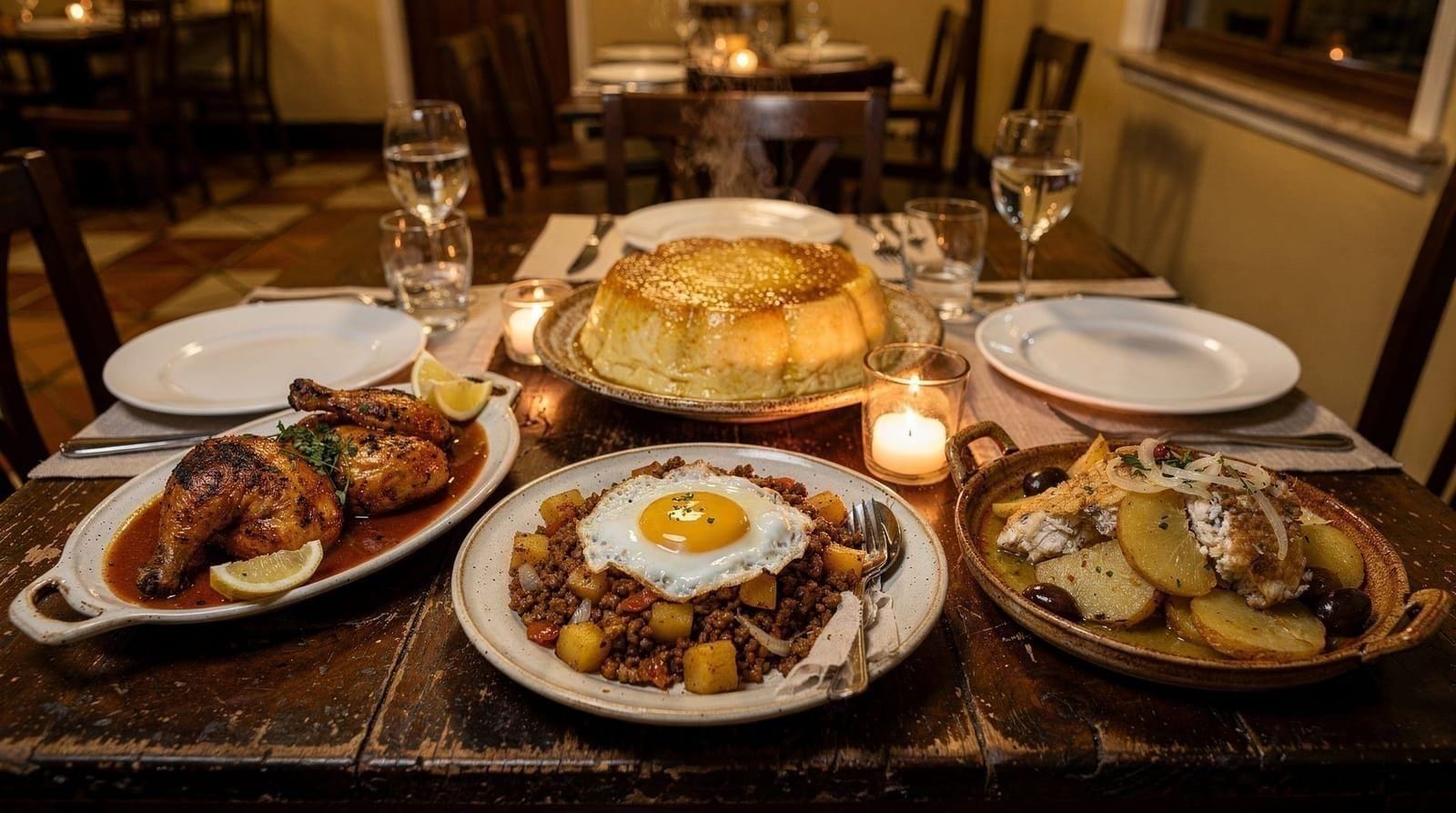
Restaurante Litoral (Rua do Almirante Sérgio) is the go-to for Macanese cuisine in proper restaurant form: African chicken, caldo verde, prawns cooked with egg. Budget MOP 130–200 pp/USD 16–25.
Budget option: The Public Security Police Food Centre (CPSP Canteen) near the IACM complex serves Macanese and Cantonese lunches at MOP 30–50/USD 3.70–6.20 — locals only know about this one.
14:30 — A-Ma Temple and the Inner Harbour
Walk 20 minutes south from Senado Square to A-Ma Temple, the oldest temple in Macau (circa 1488). The name “Macau” itself derives from the A-Ma goddess worshipped here. The complex of red pavilions, carved rock inscriptions, and incense coils is at its most atmospheric mid-afternoon when fewer tour groups are present.
After the temple, walk along the Inner Harbour promenade for 15 minutes to see the Portuguese shopfronts and fishing-boat repair yards that haven’t changed much in decades.
Cost: Free
16:00 — Taipa Village
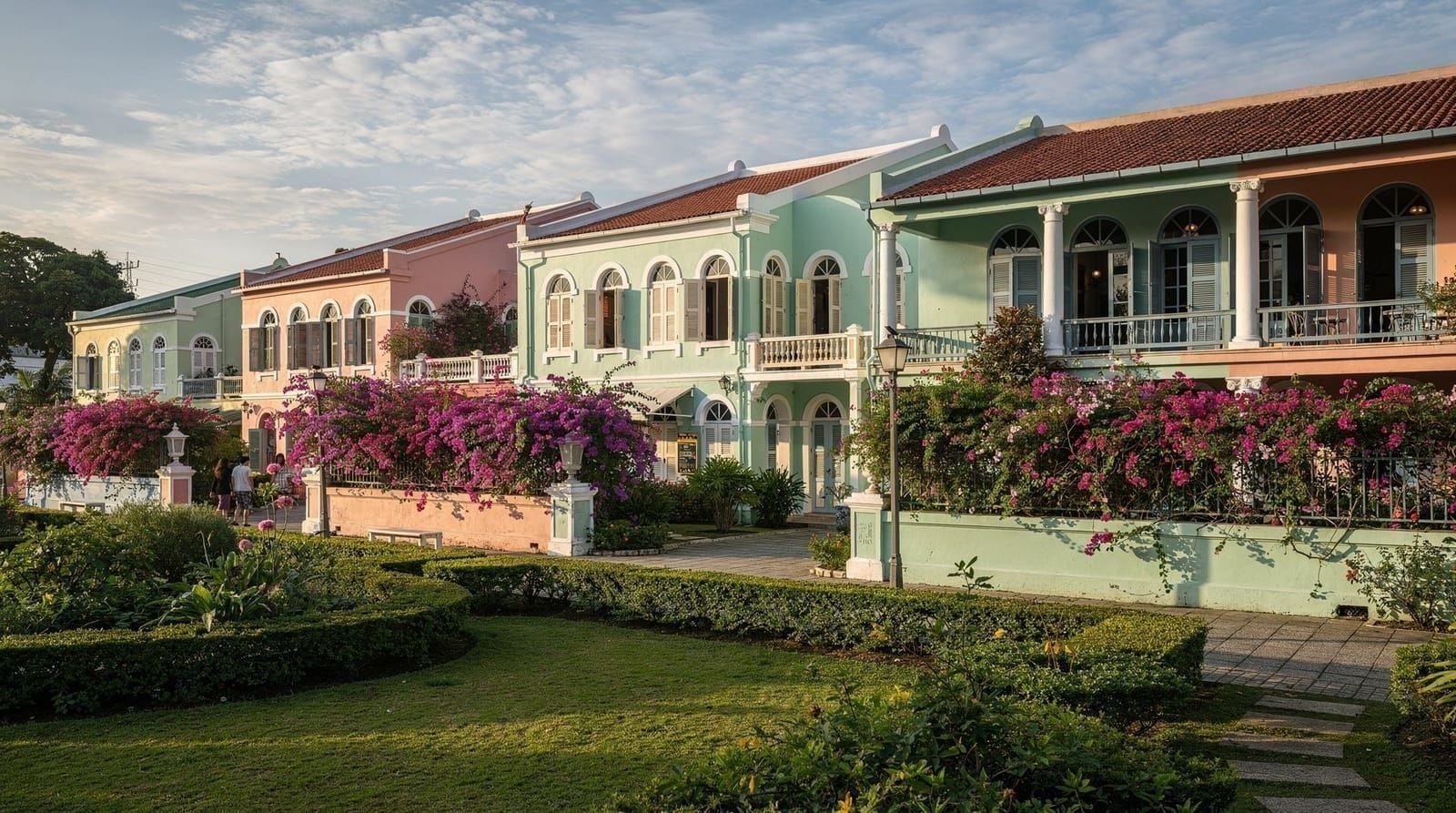
Taxi to Taipa Village (MOP 50–80/USD 6–10). Taipa Village is the most pleasant neighbourhood in Macau for an afternoon wander: Portuguese colonial houses painted yellow and white, a covered market, independent cheese and wine shops, and a church on the hill. Walk the Taipa Village Trail (about 2 km loop, signs in English) for the best mix of architecture and bay views.
18:30 — Dinner in Taipa Village
This is the best restaurant neighbourhood in Macau. Options for Day 1:
- A Petisqueira (Rua de São João): classic Macanese, well-executed. African chicken and bacalhau. MOP 150–220 pp/USD 19–27.
- Restaurante Esplanda: rougher around the edges, locals swear by it. Similar menu, slightly cheaper.
- O Santos: a small wine bar and restaurant with excellent Portuguese small plates. Great for two people sharing. MOP 180–280 pp/USD 22–35.
Day 2: Coloane, Macau Tower, and the Cotai Strip
9:00 — Lord Stow’s Bakery in Coloane
Start early in Coloane. Taxi from your hotel takes 20–35 minutes depending on starting point (MOP 80–130/USD 10–16). Lord Stow’s Bakery at 1 Rua do Tassara in Coloane Village opens at 7 am. The first tray of egg tarts comes out around 9 am — the custard is still warm and the pastry is at its crispest. Buy at least two; at MOP 10 each (USD 1.25) they’re the best-value food in Macau.
Spend 30 minutes walking Coloane Village: the Chapel of St Francis Xavier (tiny, beautiful), the square with the old village well, and the pastel-painted lanes.
10:00 — Seac Pai Van Park and Giant Pandas
A 10-minute taxi ride from Coloane Village takes you to Seac Pai Van Park, a leafy public garden with a petting zoo, hiking trails, and — the main draw — Macau’s Giant Panda Pavilion. The two pandas are visible from the public viewing area at no charge during feeding sessions (usually 9–11 am and 3–5 pm). Check opening times before you go; the pavilion occasionally closes for maintenance.
Cost: Free
11:30 — Hac Sa Beach
Coloane’s Black Sand Beach is 5 minutes by taxi from Seac Pai Van. It’s not a resort beach — the dark volcanic sand, Portuguese-style beach facilities, and forested hills make it feel more like southern Portugal than Southeast Asia. Swimming is possible but assess conditions on the day (jellyfish are common June–September).
Fernando’s Restaurant is at the end of the beach and is one of Macau’s few genuinely legendary restaurants. Cash only, no reservations, rustic setting, superb roast suckling pig and clams. Budget MOP 220–380 pp/USD 27–47 for a full lunch with beer.
Lunch cost: MOP 220–380 pp/USD 27–47
14:00 — Macau Tower
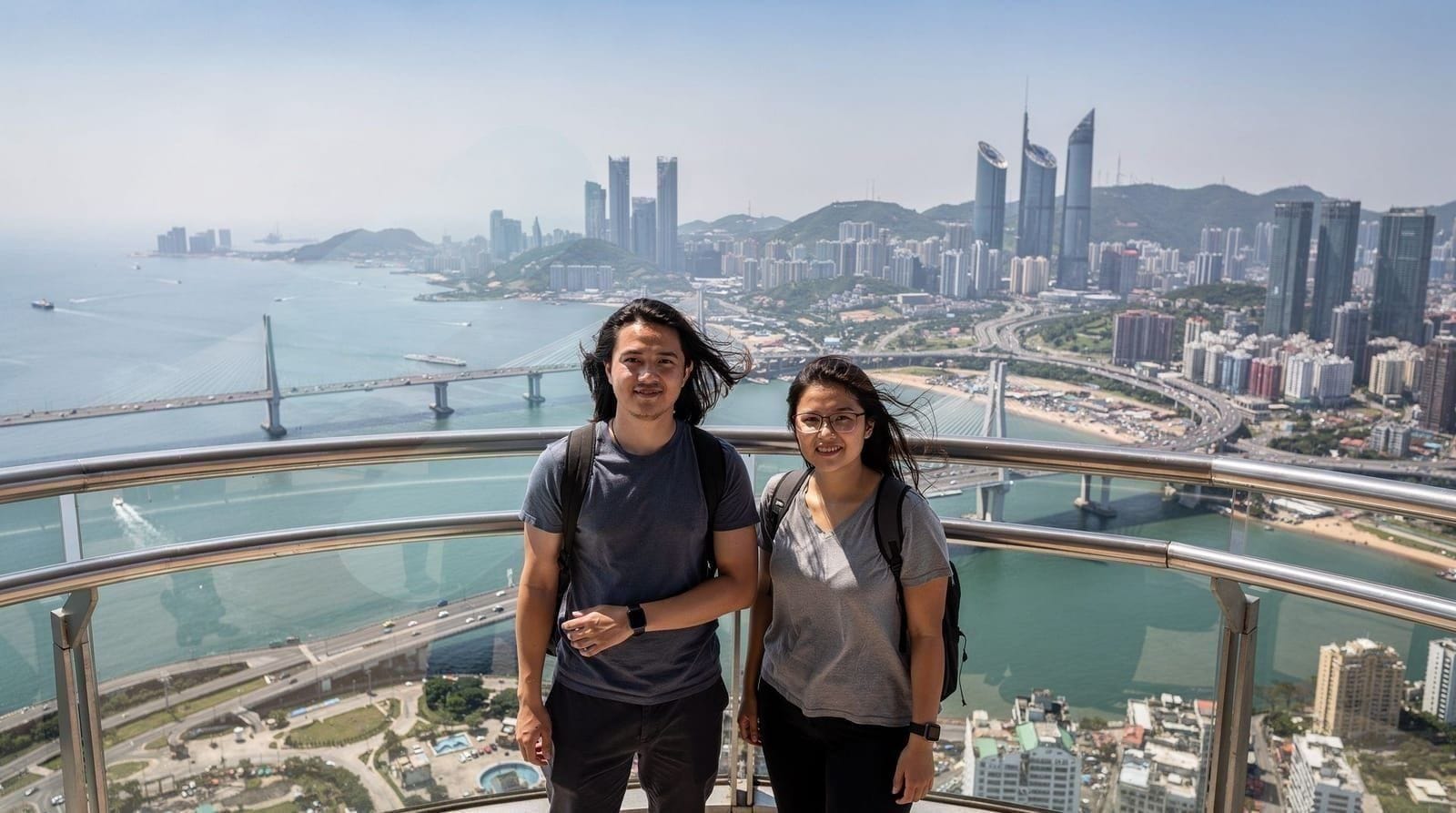
Taxi from Coloane to Macau Tower (15–20 minutes, MOP 60–100/USD 7.50–12.50). The observation deck on Level 58 (233 metres) is the best overall view of the city — both the historic peninsula and the Cotai reclaimed land are visible simultaneously, showing you in one glance how surreal the contrast is. Budget MOP 145/USD 18 for the deck.
If you’re considering the AJ Hackett bungy jump, the SkyJump, or the Skywalk — they’re all genuine and operated by a reputable company, but they’re expensive (MOP 1,988/USD 248 for the bungy) and require booking well in advance, especially on weekends.
Macau Tower observation deck — book to skip queues16:00 — The Cotai Strip
Free casino shuttle from Macau Tower area to Cotai, or taxi (MOP 40–60/USD 5–7.50). Spend the afternoon walking the main Strip resorts:
The Venetian Macao: Walk the Grand Canal with gondoliers, the Piazza San Marco replica, and at least part of the three-level casino floor. The Venetian is the world’s largest casino building and genuinely worth an hour of free exploration. A gondola ride costs MOP 108–128/USD 13–16 and takes 10 minutes.
Venetian gondola ride — worth it for the experienceThe Parisian Macao: A 10-minute walk from the Venetian. The half-scale Eiffel Tower lights up at dusk and makes for a good walk-around. The tower observation level (MOP 80/USD 10) is optional.
City of Dreams: The Morpheus hotel facade (Zaha Hadid) is free to walk past and photograph. If you’ve booked tickets to the House of Dancing Water (see evening plan), pick up tickets at the box office here.
19:30 — House of Dancing Water (pre-booked)
The House of Dancing Water show at City of Dreams is the most technically spectacular theatrical production in Macau — possibly in Asia. A custom-built theatre with a 3.7-million-litre pool that transforms between scenes, 80 performers, and 270-degree water effects. Tickets MOP 480–980/USD 60–122 depending on seat category. The show runs about 90 minutes.
It’s not for everyone: it’s loud, very Las Vegas in sensibility, and the storytelling is thin. But if you appreciate technical spectacle, it’s extraordinary. Book online at least 3 days in advance; weekend performances sell out.
Dinner after the show: The restaurant complex at City of Dreams has several options from casual (MOP 80–150/USD 10–19) to Jade Dragon (three Michelin stars, MOP 800–1,500 pp/USD 100–187 without wine).
Day 3: Guia Fortress, quiet neighbourhoods, and a Michelin meal
9:00 — Guia Fortress and Lighthouse
The Guia Fortress and Lighthouse sits on the highest point of the Peninsula and is consistently undervisited. The lighthouse (1865) is the oldest Western-style lighthouse on the Chinese coast and still operational. The adjacent chapel has beautifully restored 17th-century frescoes — a fusion of European Christian iconography and Chinese decorative elements almost identical in style to what you saw at the ruins of St Paul’s. Take the free cable car from Flora Garden (open 8 am–6 pm).
Cost: Free
Time: 45–60 minutes
10:30 — The quiet neighbourhoods: Santo António and São Lázaro
Most tourists stick to Senado Square and the ruins. Walk north from Guia into the Santo António and São Lázaro neighbourhoods: narrow streets, crumbling baroque churches, neighbourhood markets, and elderly residents playing mah-jong outside their houses. The Church of Santo António (1588, rebuilt) and the Church of São Lázaro both have tranquil squares in front of them. This is the Macau that hasn’t changed.
Follow our self-guided walking tour or best views in Macau guide for suggested routes.
12:00 — Dim sum lunch
Wing Lei at the Wynn Macau is one of the most elegant dim sum rooms in the city — an eight-dragon ceiling, enormous aquarium, and genuinely excellent har gow and siu mai. Lunch costs MOP 200–350 pp/USD 25–43. Reserve a day ahead.
Budget option: Tim’s Kitchen on the Peninsula (a few outlets near NAPE) serves competent dim sum at MOP 80–120 pp/USD 10–15.
14:00 — Macau shopping: what’s actually worth buying
The Macau shopping guide covers this in detail, but the short version: Rua de São Paulo and the lanes around Senado Square have genuine local products — Macanese almond cookies (buy from Koi Kei or Choi Heong Yuen for guaranteed quality), Portuguese wine from smaller importers, and preserved meats. The Grand Canal Shoppes at the Venetian has luxury brands at prices similar to Hong Kong.
Avoid buying egg tarts, pork chop buns, or almond cookies from hawkers who pressure-sample outside the ruins — you’ll pay 3× the price.
16:00 — NAPE waterfront
The NAPE reclaimed land on the eastern side of the Peninsula has a pleasant waterfront promenade and several of the city’s better modern restaurants and bars. The Fisherman’s Wharf complex is somewhat artificial and overpriced as tourist attractions go, but the adjacent Amizade Avenue has normal coffee shops and Portuguese bakeries that locals actually use.
19:00 — Farewell dinner
This is the meal to spend on.
Robuchon au Dôme (Grand Lisboa): Three Michelin stars, French cuisine, extraordinary wine list, formal dress code. MOP 1,200–2,500 pp/USD 150–310 excluding wine. Reserve months in advance. This is one of the finest restaurants in Asia.
The Eight (Grand Lisboa): Eight Michelin stars in the Michelin guide (three stars), Cantonese cuisine. Often cited as the best Cantonese food in Macau. MOP 600–1,200 pp/USD 75–150.
More accessible: Check the current Macau Michelin guide for one-star options in the MOP 300–500 pp range.
21:00 — Last ferry back to Hong Kong
Free casino shuttles from Cotai to the Taipa Ferry Terminal run every 15–30 minutes. Last TurboJET ferries to Hong Kong run until around midnight (check current timetables). A taxi from the Peninsula to the Outer Harbour Terminal costs MOP 25–35/USD 3–4.
Practical information for three days in Macau
Packing for three days
Bring comfortable, broken-in walking shoes — Day 1’s cobblestones and Guia Fortress’s climb on Day 3 are unforgiving in new shoes. Pack one smart-casual outfit if you’re booking Robuchon au Dôme or another formal Michelin restaurant (jeans and trainers won’t pass the dress code). A light rain layer outside the dry winter months, sunscreen and a hat for the outdoor stretches on Coloane, and cash for Fernando’s, Lord Stow’s, and several Taipa Village restaurants that don’t accept cards. If you’re doing the Macau Tower bungy or SkyJump, check the operator’s clothing and footwear requirements in advance.
Getting around for three days
No car needed. Day 1 is almost entirely walkable. Days 2 and 3 require taxis between the Peninsula, Coloane, Macau Tower, and Cotai — budget MOP 60–150 per trip. Free casino shuttles are reliable for Cotai-to-ferry-terminal routes. The Macau LRT connects Taipa Ferry Terminal through Cotai and saves a taxi on Day 2 if you arrive via Taipa.
Three-day budget summary
| Category | MOP | USD |
|---|---|---|
| Day 1 taxis | 150–200 | 19–25 |
| Day 1 meals | 350–550 | 43–68 |
| Day 2 taxis | 300–450 | 37–56 |
| Day 2 meals and Lord Stow’s | 500–800 | 62–100 |
| Macau Tower deck | 145 | 18 |
| House of Dancing Water | 480–980 | 60–122 |
| Day 3 taxis | 100–200 | 12–25 |
| Day 3 meals | 400–2,500 | 50–310 |
| Museum entries | 15–30 | 1.90–3.70 |
| Total per person | 2,440–5,855 | 304–727 |
The huge range reflects whether you eat at Robuchon or Wong Chi Kei. See our Macau travel budget guide for a full breakdown by travel style.
Where to base yourself for three nights
Taipa Village is the strongest all-round choice: walkable neighbourhood streets, a five-minute taxi to Cotai, and the best restaurant density outside the casino resorts. Cotai Strip hotels (Venetian, Parisian, Londoner) put you inside the spectacle itself and are convenient if Days 2 and 3 dominate your plan, but they’re a genuine taxi ride from the UNESCO sites on Day 1. Peninsula hotels near Senado Square are the pick if the historic centre is your priority and you don’t mind commuting out to Coloane and Cotai. Full comparison, including specific hotel picks by budget, is in our where to stay in Macau guide.
If you’d rather swap a day for Hong Kong or Zhuhai
Some travellers use the third day as a springboard rather than staying in Macau. A Hong Kong day trip is entirely feasible via the HZMB bridge (45 minutes each way), and a Zhuhai day trip across the mainland border is an easy half-day for anyone curious about the contrast with a Chinese Special Economic Zone city. Either substitution works, but you’ll lose the Guia Fortress/quiet-neighbourhoods day described above — decide based on whether breadth (seeing another city) or depth (understanding Macau better) matters more to you.
Guided tour options
For Day 1, a guided UNESCO walking tour covers the historic sites with context that’s hard to find in guidebooks. A full-day guided tour combining the peninsula, Taipa, and Cotai makes good sense for travellers who don’t want to navigate independently.
Full-day Macau tour with lunch and transfers includedFrequently asked questions about three days in Macau
What’s the best order to see things in three days?
The order above — Peninsula on Day 1, Coloane/Tower/Cotai on Day 2, Peninsula depth and farewell dinner on Day 3 — works well because it puts the most important sites when you’re freshest and saves the quieter neighbourhoods for Day 3 when you know the city well enough to appreciate them.
Is three days too long for Macau?
Not if you’re engaged by the food, history, and architecture. If you’re primarily interested in gambling and shows, two days is probably enough. If you want to cover Zhuhai or Hong Kong as a day trip, a fourth day or Macau-Hong Kong combined itinerary makes sense.
What should I skip if I only have time for 2.5 days?
Seac Pai Van Park (nice but not essential), the Fisherman’s Wharf area (overpriced), and the Parisian Eiffel Tower observation level (the view from outside is free and nearly as good). The Macau Museum can be shortened to 30 minutes if time is tight. Read is Macau worth visiting for a candid take on what justifies the trip.
Do I need to book any of the three days in advance?
Yes: the House of Dancing Water show (book 3+ days ahead, weekends sell out); Macau Tower bungy jump if you want it; a Michelin-starred dinner on Day 3 (especially Robuchon au Dôme, which fills months out). Ferry tickets from Hong Kong should be booked ahead for Friday evenings and weekends.
Is Macau safe for three days of solo travel?
Very safe. Macau has extremely low street crime, well-maintained public areas, and English signage throughout the tourist areas. Solo travellers — including solo women — report no issues. The main risks are taxi scams (rare in metered cabs) and overpriced souvenir food near the ruins. See our taxi and money scams guide for what to watch.
What’s the best neighbourhood to stay in for three days?
Taipa Village for a neighbourhood feel and easy Cotai access; Senado Square area on the Peninsula for proximity to Day 1 sites; Cotai Strip if you’re planning to spend significant time at the resorts. Our where to stay in Macau guide covers all price levels.
How do I handle the heat and humidity in summer?
Macau in July–September is hot (28–34°C) and very humid. Plan outdoor walking for 8–11 am and 4–7 pm; use the covered walkways between Cotai resorts midday; carry water. The casino resorts are aggressively air-conditioned — almost too cold — so bring a light layer. Check Macau weather by month for your specific travel dates.
Can I fit a Zhuhai or Hong Kong side trip into three days?
Not comfortably alongside the full plan above — either substitution replaces a full day rather than adding to it. If crossing borders interests you more than Macau’s own quieter corners, swap Day 3 for a Zhuhai day trip or a Hong Kong day trip via the HZMB bridge, and accept you’ll miss Guia Fortress and the Santo António neighbourhood. For travellers who actually want both cities properly, the Macau and Hong Kong 4-day itinerary is the better-built option.