Macau 1-day itinerary — make the most of 24 hours
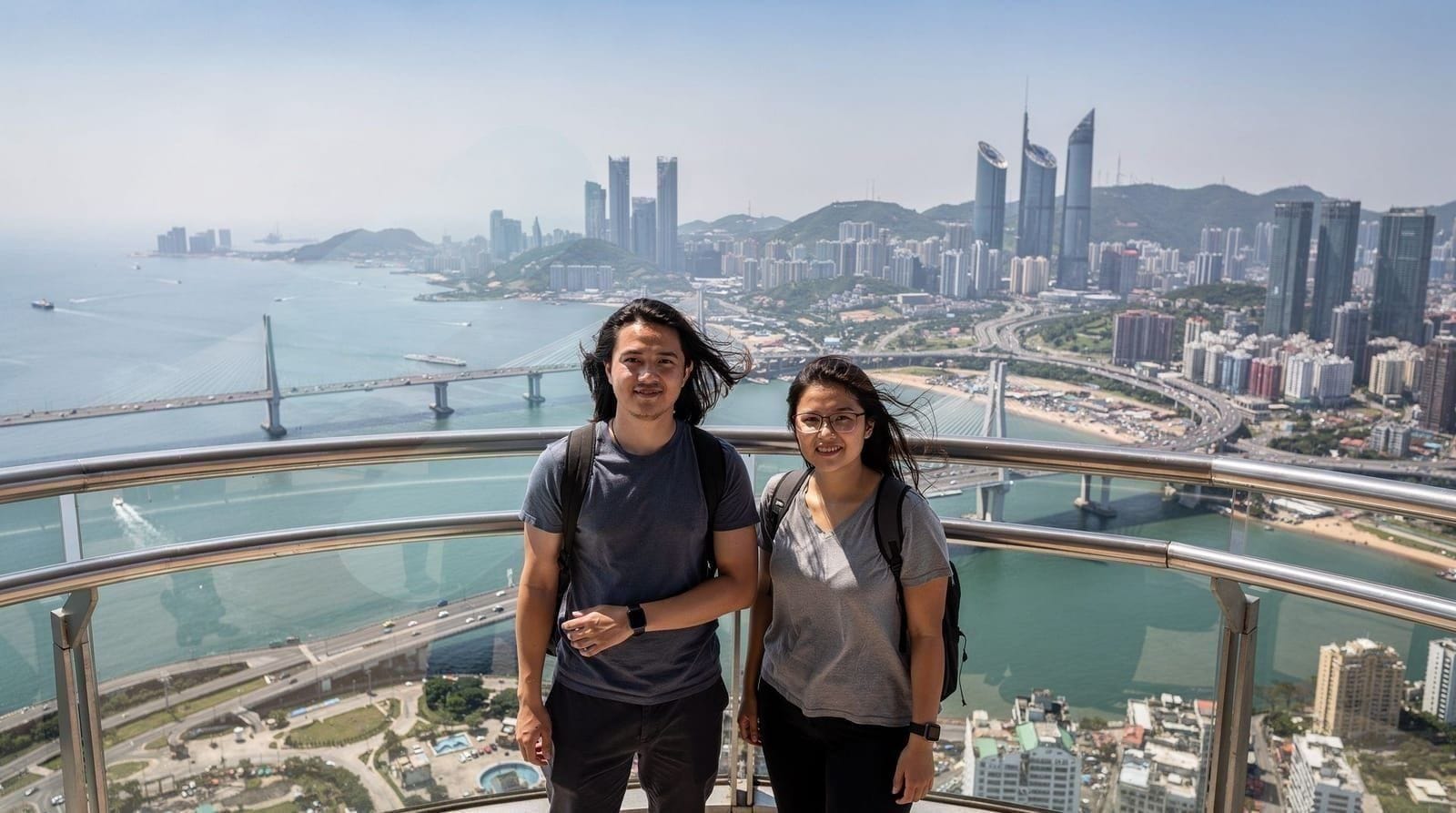
Macau: Macau Tower Observation Deck Ticket
- Instant confirmation
- Free cancellation
Quick answer: One day in Macau is enough to see the UNESCO Historic Centre, eat the best egg tarts in the world, and tick off either Macau Tower or a free casino spectacle on the Cotai Strip. Start at the ruins of St Paul’s by 9 am, walk south through Senado Square to A-Ma Temple, grab lunch in Taipa Village, and finish the evening at the Venetian or Macau Tower — all reachable on foot or free casino shuttle.
| Where | Macau Peninsula (UNESCO zone), Taipa Village, Cotai Strip |
| Cost | around MOP 500–800/USD 62–100 per person, excl. accommodation |
| Time needed | a full day, 9 am–9 pm realistic |
| Getting there | ferry or HZMB bridge from Hong Kong, or fly into Macau direct |
| Best time | year-round; October–November for cooler, drier weather |
How to structure your one day in Macau
The city is small — the entire Macau Peninsula is walkable in a morning — but the clusters of interest are spread between the Peninsula, Taipa Village, and the Cotai Strip. The most efficient loop: UNESCO Heritage Zone (morning) → lunch in Taipa Village (midday) → Cotai or Macau Tower (afternoon/evening). You won’t need a taxi until you cross to Cotai; even then, free casino shuttles from the ferry terminals cover most of the route.
If you’re coming from Hong Kong on the ferry, you’ll arrive at the Outer Harbour or Taipa Ferry Terminal. From Taipa terminal, it’s smarter to reverse the loop: start with Taipa Village and Cotai, then head to the Peninsula in the afternoon when light is better for the ruins.
Which loop should you actually pick?
| Arrival point | Best order | Why |
|---|---|---|
| Outer Harbour Terminal | Peninsula → Taipa → Cotai | Ruins are 15 min walk; morning light suits the facade |
| Taipa Ferry Terminal | Taipa → Cotai → Peninsula | Avoids an extra taxi crossing; ruins still fine in afternoon |
| Macau International Airport | Cotai → Peninsula → Taipa | Airport sits closest to Cotai/Taipa side |
| Arriving by HZMB bridge bus | Peninsula → Taipa → Cotai | Border gate lands you closer to the Peninsula |
Whichever loop you pick, the honest constraint is taxis: budget MOP 50–100 per crossing between zones, or lean on the free casino shuttles once you’re near Cotai.
Morning: the UNESCO Historic Centre (9:00–12:30)
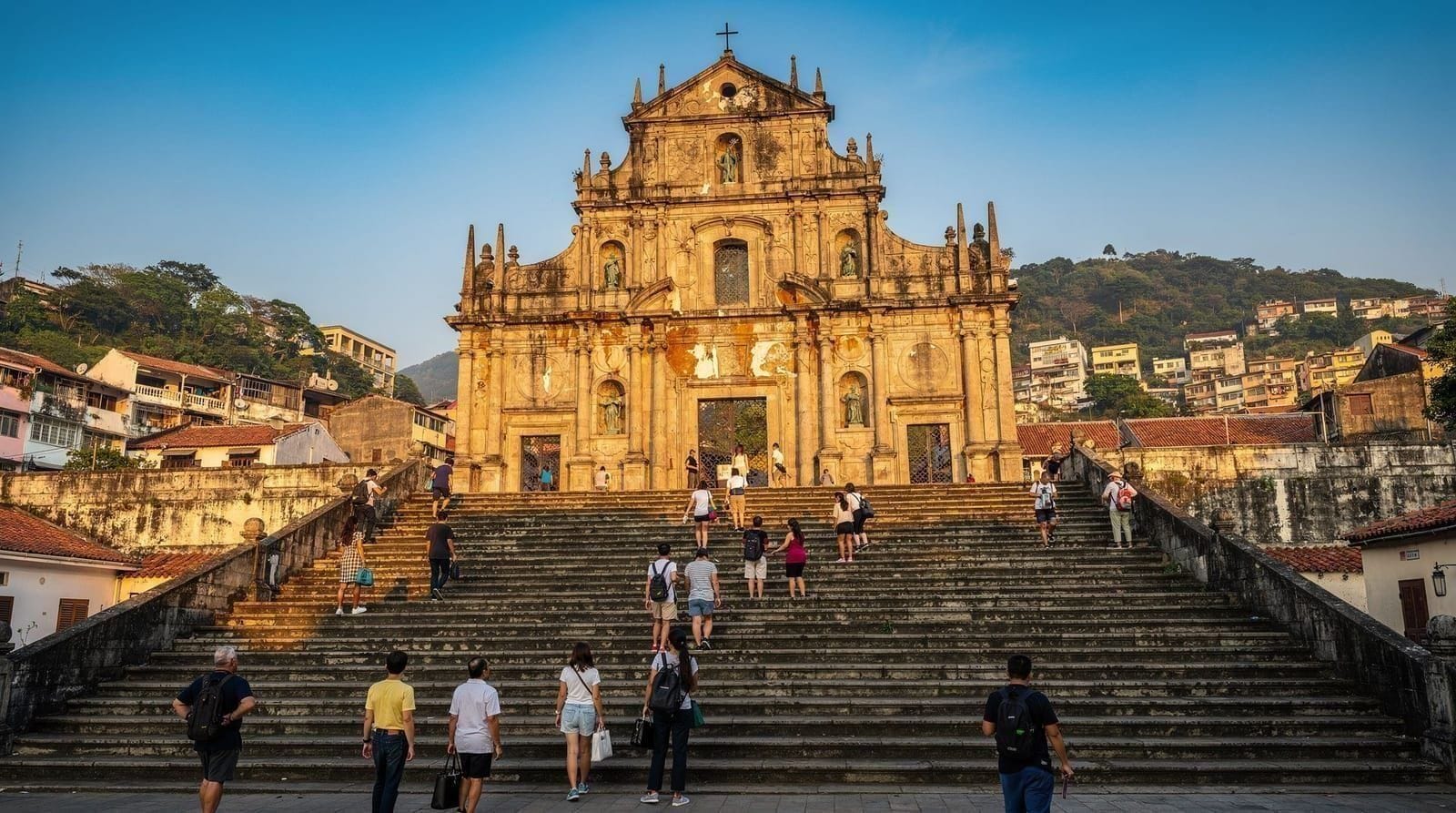
9:00 — Ruins of St Paul’s
Start at the ruins of St Paul’s, the iconic stone facade that survived three fires and became Macau’s most photographed image. Arrive before 10 am to beat tour groups. The facade is free to enter; the crypt museum beneath it is also free and worth 20 minutes. From here, climb the narrow Rua do Ressalo steps behind the ruins to Mount Fortress (free, 10 min walk) for a panoramic view over the Peninsula.
Cost: Free
Time: 45–60 minutes including the crypt
10:00 — Senado Square and the Historic Centre
Walk five minutes downhill to Senado Square, the paved Portuguese-style plaza that anchors the UNESCO Historic Centre. The mosaic pavements, pastel-coloured civic buildings, and central fountain are photogenic any time, but morning light hits the west façades well. Explore the side streets — Rua da Palha, Rua de São Paulo — for ceramics shops and bakeries. This is the right moment to pick up an egg tart.
Where to eat your first egg tart: Pastelaria Koi Kei on Senado Square is the mass-market option (and still decent). For a step up, Margaret’s Café e Nata near the Inner Harbour is widely considered the best Portuguese-style tart on the Peninsula (around MOP 9/USD 1.10 each). Lord Stow’s original bakery is in Coloane — you’ll save that for another day, or buy them at any Koi Kei branch if time is tight.
Cost: Free to walk; egg tarts MOP 8–11 each
Time: 45 minutes
11:00 — A-Ma Temple
From Senado Square, walk 15 minutes south along Rua do Almirante Sérgio to reach A-Ma Temple, the oldest surviving temple in Macau (circa 1488) and the origin of the city’s name. The complex of pavilions climbing the hillside is genuinely atmospheric, with incense coils burning year-round. It’s free and rarely crowded before noon.
Cost: Free
Time: 30–40 minutes
12:00 — Macau Tower (optional morning detour)
If you want to see Macau Tower and don’t have time in the afternoon, it’s a 10-minute taxi ride from A-Ma Temple (MOP 30/USD 3.70). The observation deck on Level 58 costs MOP 145/USD 18 for adults. The bungy jump, skywalk and SkyJump cost considerably more — book in advance.
Macau Tower observation deck — skip the queueMidday: Taipa Village and lunch (12:30–14:30)
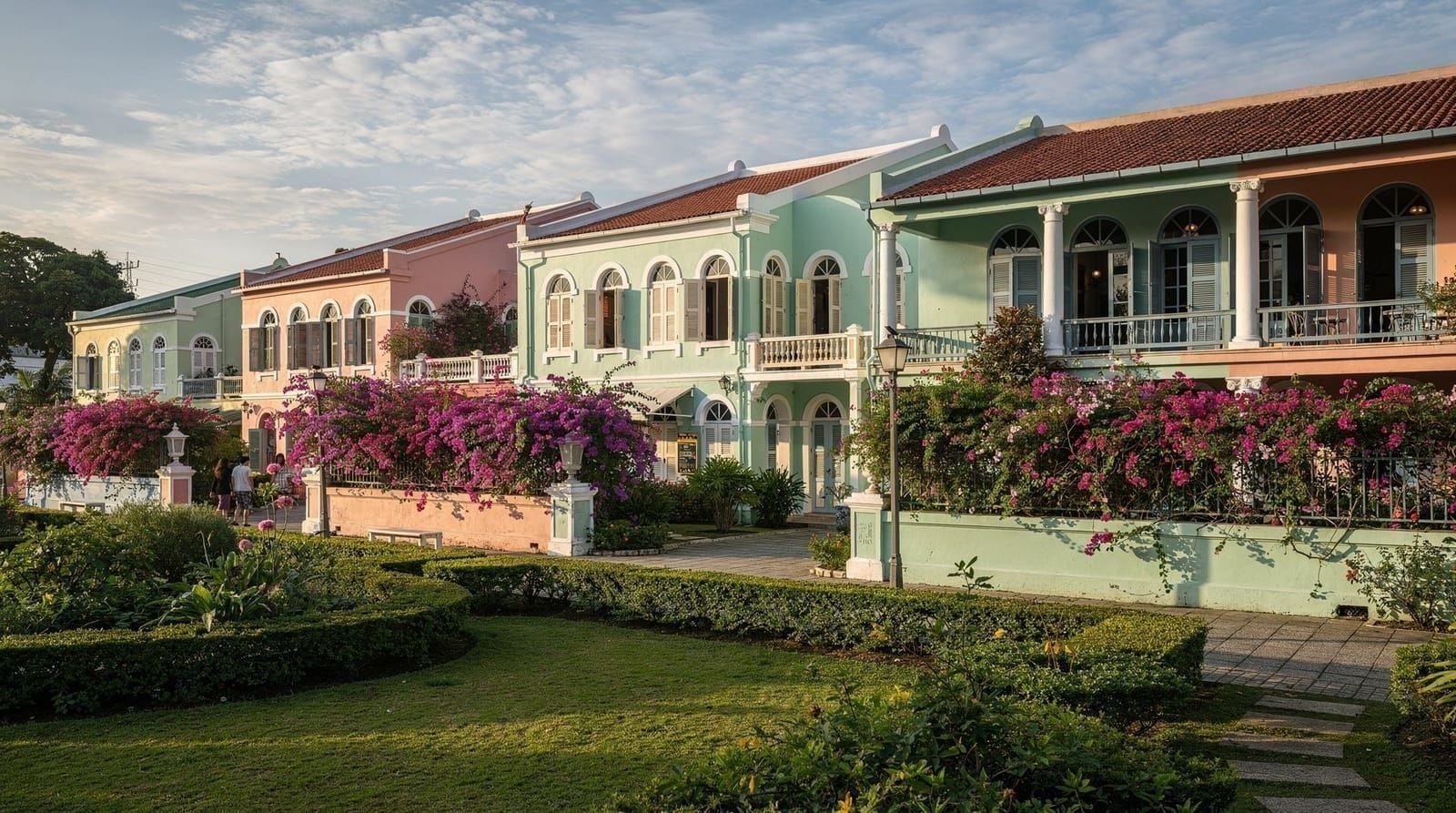
Grab a taxi from A-Ma Temple or Macau Tower to Taipa Village (MOP 50–80/USD 6–10 including the bridge toll). Taipa Village is the most liveable neighbourhood in Macau — Portuguese colonial houses, independent restaurants, and far fewer tourists than the Peninsula.
Where to eat lunch in Taipa Village
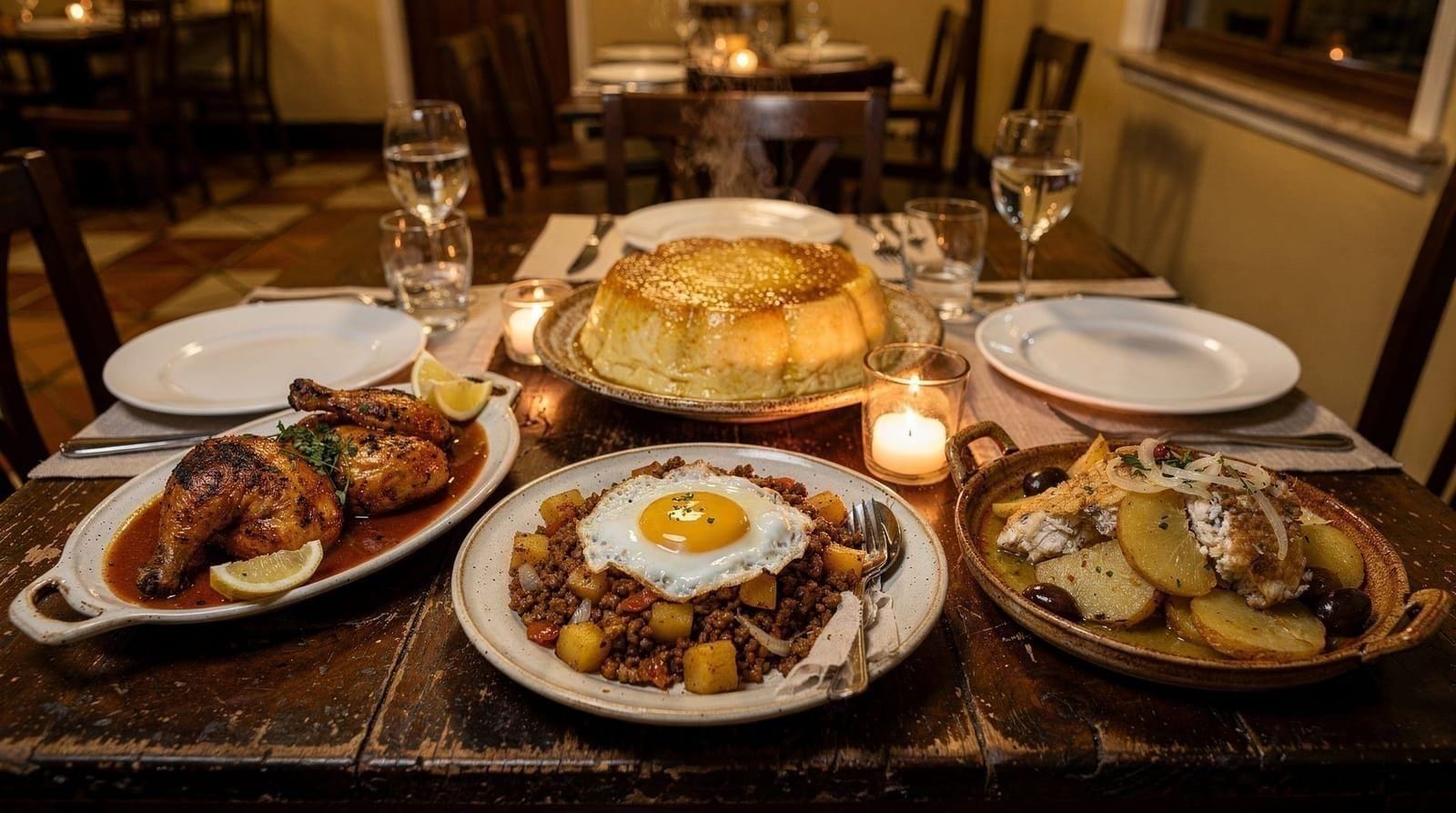
- A Petisqueira — Portuguese-Macanese restaurant on Rua de São João. Bacalhau (salt cod), African chicken, pork belly with taro. Budget MOP 150–200 pp/USD 18–25.
- Restaurante Esplanda — older, rougher around the edges, cheaper, and beloved by locals. African chicken here is excellent.
- Café Nga Tim — if you want the Macanese egg-tart-and-coffee lunch that doesn’t break the bank (MOP 60–80/USD 7–10).
Walk the Taipa Village main street (Rua do Cunha) before or after lunch — it’s 400 metres of old shophouses selling almond cookies, beef jerky (a local specialty), and Portuguese wine. Don’t buy from every hawker who thrusts samples at you — the pressure-selling is the tourist trap, not the products.
Read more in our Taipa Village food guide.
Time: 90–120 minutes total
Afternoon: Cotai Strip spectacles (14:30–18:00)
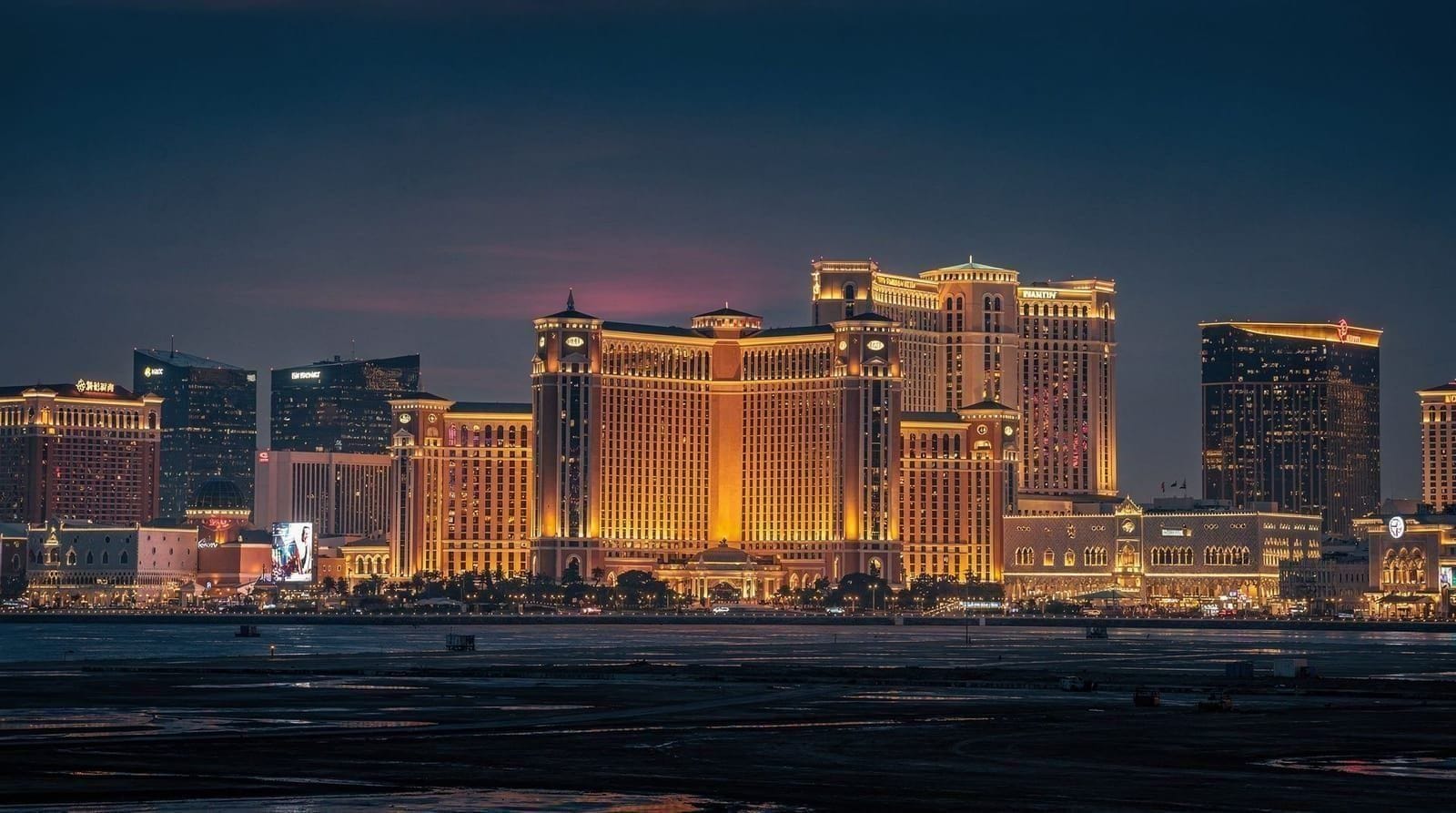
Cotai is a 5-minute taxi ride or free casino shuttle from Taipa Village. The Cotai Strip is Macau’s answer to Las Vegas: massive integrated resorts side by side. The key insight for day-trippers: the free spectacles are genuinely impressive and cost nothing.
The Venetian Macao
The Venetian Macao is the world’s largest casino building and absolutely worth walking through even if you never gamble. The indoor canal with gondoliers, the replica Piazza San Marco, and the sheer scale are legitimately jaw-dropping. A gondola ride costs MOP 108–128/USD 13–16.
Venetian gondola ride — book online and saveGalaxy Macau’s sky roof
The Galaxy resort has a rooftop pool complex that non-guests can occasionally access (check current access policy — it changes). At minimum, the free atrium with artificial beach and the Diamond Lobby are worth five minutes.
City of Dreams shows
City of Dreams hosts the House of Dancing Water — a theatrical water show that’s one of the most technically impressive shows in Asia. If you want to see it, book tickets in advance (MOP 480–980/USD 60–122). It’s not budget, but it’s genuinely extraordinary.
For families or those on a tighter budget: the Morpheus hotel lobby at City of Dreams is free to walk through and architecturally stunning (designed by Zaha Hadid).
Evening: dinner and getting back (18:00–21:00)
Dinner options
Budget: Back in Taipa Village, Wong Chi Kei is a local congee and noodle shop that’s been feeding Macau residents for generations. A bowl of wonton noodles runs MOP 40–55/USD 5–7.
Mid-range: Robuchon au Dôme in the Grand Lisboa on the Peninsula holds three Michelin stars and costs accordingly — worth the splurge if this is a special occasion (MOP 1,200–2,500 pp/USD 150–310). Book months ahead.
Casual Cotai: The Venetian’s food court has a mix of Asian and Western options from MOP 60–120/USD 7–15.
Getting back to the ferry
Free casino shuttles run from all major Cotai resorts to both Taipa Ferry Terminal and Outer Harbour Terminal every 15–30 minutes. They’re genuinely free — you don’t need to gamble or buy anything. Pick up a shuttle timetable at your hotel or ask any casino information desk.
Read our getting-to-Macau-from-Hong-Kong guide for ferry times and booking tips.
Practical information for your one-day visit
How to get around
Macau’s UNESCO zone is fully walkable — the Peninsula sites are within 2 km of each other. To cross to Taipa and Cotai, use taxis (metered, honest, rarely refuse to use the meter) or free casino shuttles. See our getting around Macau guide for the LRT light rail, which connects Taipa Ferry Terminal to Cotai stops.
What to carry
- MOP cash: most markets and small restaurants are cash-only. Change HKD at the border or ferry terminal (HKD and MOP trade roughly 1:1, and most places accept both).
- A refillable water bottle: Macau is hot and humid April–October.
- Comfortable shoes: the historic centre involves cobblestones and stairs.
What it costs
| Item | MOP | USD |
|---|---|---|
| Ferry (HK–Macau return) | 160–260 | 20–32 |
| Egg tarts (2) | 16–22 | 2–3 |
| Taipa Village lunch | 120–200 | 15–25 |
| Taxi to Cotai | 50–80 | 6–10 |
| Gondola ride (optional) | 108–128 | 13–16 |
| Cotai dinner (casual) | 80–150 | 10–19 |
| Total (conservative) | 500–800 | 62–100 |
See our detailed Macau travel budget guide for a full breakdown.
What one day skips (and whether that’s a problem)
A single day genuinely cannot cover Coloane, Lord Stow’s original bakery, Hac Sa Beach, or the giant pandas — those sit far enough south that fitting them in means cutting either the UNESCO zone or Cotai. It also skips Guia Fortress, which most first-time day-trippers never see and is genuinely worth the detour if you upgrade to two days. If any of that sounds like a loss, the honest fix isn’t to rush this itinerary — it’s to read our is Macau worth visiting guide and consider the 2-day itinerary instead, which adds Coloane without sacrificing anything here.
If you’re set on one day but want a tighter, purely historic version with more context per stop, our half-day heritage walk covers the same UNESCO ground stop-by-stop and can be finished by lunchtime, leaving the whole afternoon free for Cotai or Macau Tower without feeling rushed in the morning.
Guided tour alternative
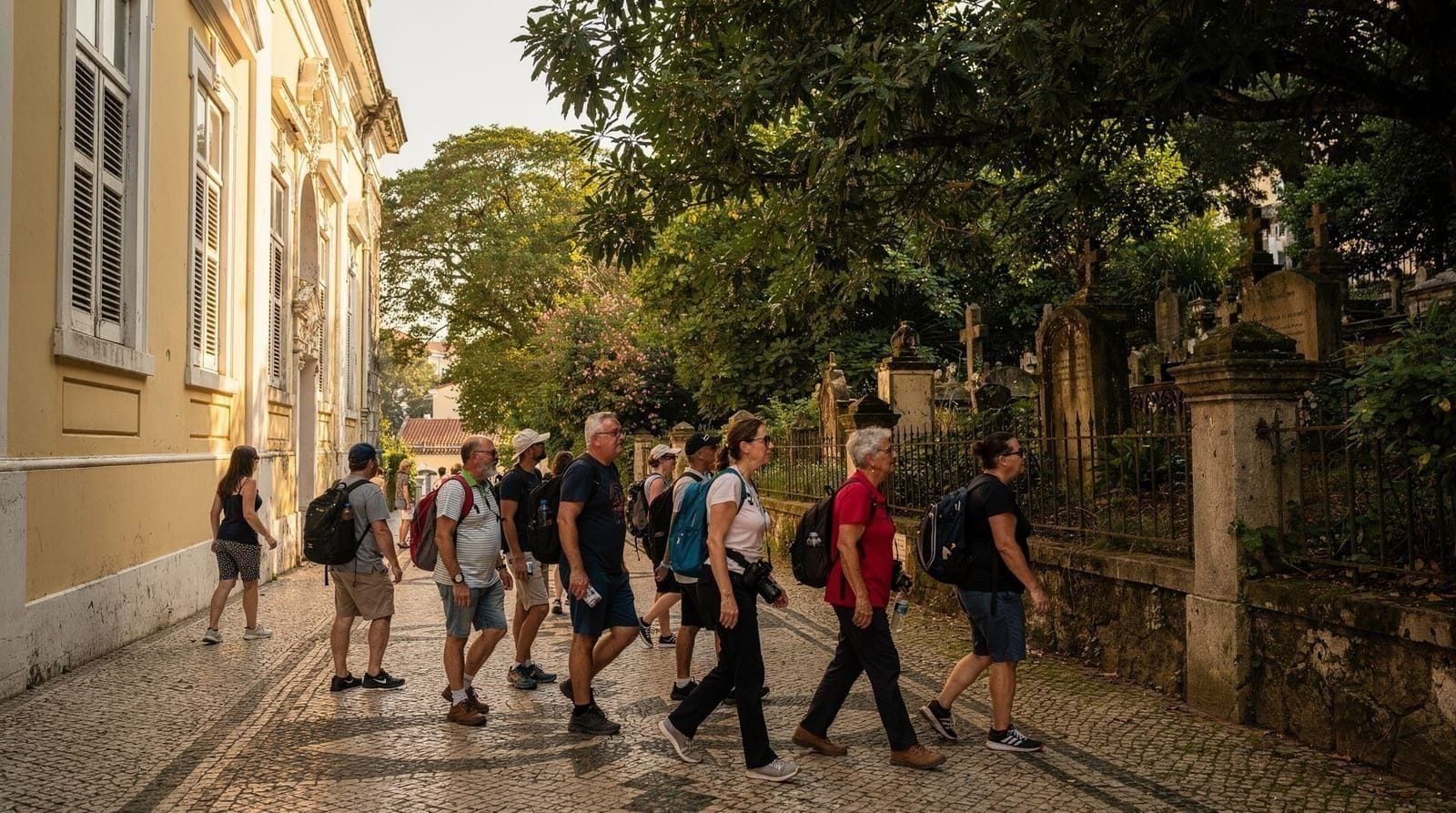
If you’d rather not navigate solo, a half-day guided walking tour covers the main UNESCO sites with context you’d otherwise miss. Most depart from the ferry terminals.
3-hour UNESCO walking tour — includes ruins, Senado Square, templesFrequently asked questions about one day in Macau
Is one day enough for Macau?
Yes, if you focus. One day covers the UNESCO Historic Centre, a meal in Taipa Village, and either the Cotai Strip or Macau Tower. You won’t see everything — Coloane, Guia Fortress, and the quieter neighbourhoods need more time — but you’ll get a genuine sense of the city. If you have any flexibility, two days is significantly more comfortable.
Do I need to gamble in Macau?
No. The casinos are legally obliged to let anyone walk through. The free spectacles at the Venetian, Galaxy, and City of Dreams are genuinely worth seeing. You don’t need to spend a single MOP on gambling unless you want to.
What’s the best way to get from Hong Kong to Macau for a day trip?
The fastest option is the TurboJET or Cotai Jet ferry from Hong Kong to Macau (about 1 hour). Book in advance on busy weekends. The HZMB (Hong Kong-Zhuhai-Macau Bridge) is also an option if you cross by bus. Read our getting to Macau from Hong Kong guide for current schedules and fares. For a fully guided day trip with transfers included, see our Macau day trip guide.
Can I do Macau on a layover?
Yes, if your layover is 8+ hours and you’re comfortable with immigration. Macau airport is compact; taxi to the historic centre takes 15 minutes. Read our macau on a layover post for a tight schedule. Note: you’ll go through immigration on both sides, so have your passport and any required visas ready.
What are the biggest tourist traps to avoid?
The main ones: overpriced egg tarts at inflated “souvenir” bakeries near the ruins (pay MOP 8–11, not MOP 20+); unlicensed taxi touts at the ferry terminal (use the metered taxi queue); and photo-with-animal setups near the temples. Our tourist traps guide covers the full list.
How much MOP should I bring for one day?
Budget MOP 500–800 (USD 62–100) for a comfortable day including ferry-side meals, taxis, and a light lunch and dinner. More if you’re doing the Tower observation deck (MOP 145) or a gondola ride (MOP 108–128). Card payments are accepted at major restaurants and hotel shops but not at street stalls or wet markets.
Should I book a guided tour instead of doing this solo?
Only if you’d rather not navigate independently or want historical context you can’t easily get from signage. The self-guided version above costs nothing beyond entry fees and transport; a guided UNESCO walking tour adds MOP 200–400 per person but covers the same ground with a guide filling in the history. Neither is objectively better — it’s a trade of cost against context. See our booking Macau tours: Klook vs GetYourGuide comparison if you decide to book.