Macau on a layover — what you can actually do in 4–8 hours
Macau does not have a hub airport for international flights in the way Hong Kong or Singapore does — most visitors arrive by ferry from Hong Kong rather than by air. But the layover scenario is more common than it might seem: a long Hong Kong stopover with time to cross to Macau, or a port call on a cruise itinerary, or simply one half of a combined HK–Macau visit where you’re only spending a few hours on each side.
The good news is that Macau is small and the core highlights are concentrated enough that 4–8 hours is genuinely useful time, not wasted transit. The bad news is that the ferry itself takes an hour each way, so your available time is always shorter than it looks on paper.
| Minimum window | 6 hours for a genuine visit; 8 hours is the sweet spot |
| Ferry crossing | 55–65 minutes each way, plus check-in and immigration |
| Cost | around HKD 170–220 / MOP 175–227 each way |
| Focus area | Historic peninsula only — skip Cotai and Coloane |
| Currency | HKD accepted almost everywhere; no need to exchange for a short visit |
The arithmetic of a Macau layover
Let’s be honest about the numbers. A 4-hour window sounds like enough for a quick Macau visit — but if you’re coming from Hong Kong:
- 15 minutes to the ferry terminal (from Hong Kong centre)
- Check-in and boarding: 30 minutes
- Ferry crossing: 55–60 minutes
- Arrival immigration in Macau: 15–25 minutes
- That’s already 2 hours each way, minimum.
Realistic usable time by window:
- 4 hours total: Barely worth it. You’d arrive, see Senado Square for 45 minutes, and turn around. Not recommended unless you specifically want to say you’ve been.
- 6 hours total: Tight but doable. Focus on one area. The historic centre from ferry arrival to Ruins is walkable and rewarding.
- 8 hours total: This is the sweet spot for a genuine layover visit. You can see the peninsula highlights and eat a proper meal.
- 10+ hours: Treat it as a full day. The one-day itinerary is a realistic plan.
Getting from Hong Kong to Macau and back
The most efficient route is the Hong Kong Macau Ferry Terminal in Sheung Wan (Central MTR, exit A). TurboJET and Cotai Jet operate high-speed ferries roughly every 15–30 minutes during peak hours. Journey time: 55–65 minutes. Current fares approximately HKD 170–220 (MOP 175–227 / USD 22–28) each way, with slight premium for weekend and evening sailings.
Book both legs in advance online — on-the-day tickets at the terminal counter are available but there’s no guarantee of the timing you want, especially on weekends. The Macau ferry guide covers the booking process in detail.
If you’re flying into Hong Kong and the Macau ferry terminal is not convenient, the Kowloon terminal (Tsim Sha Tsui, near the China Ferry Terminal) serves Macau Outer Harbour and is useful for travellers in Kowloon.
The Hong Kong-Zhuhai-Macau Bridge bus service is an alternative, but the border crossing adds unpredictable time due to immigration queues. Not recommended for a time-constrained layover.
4-hour window: what’s realistic
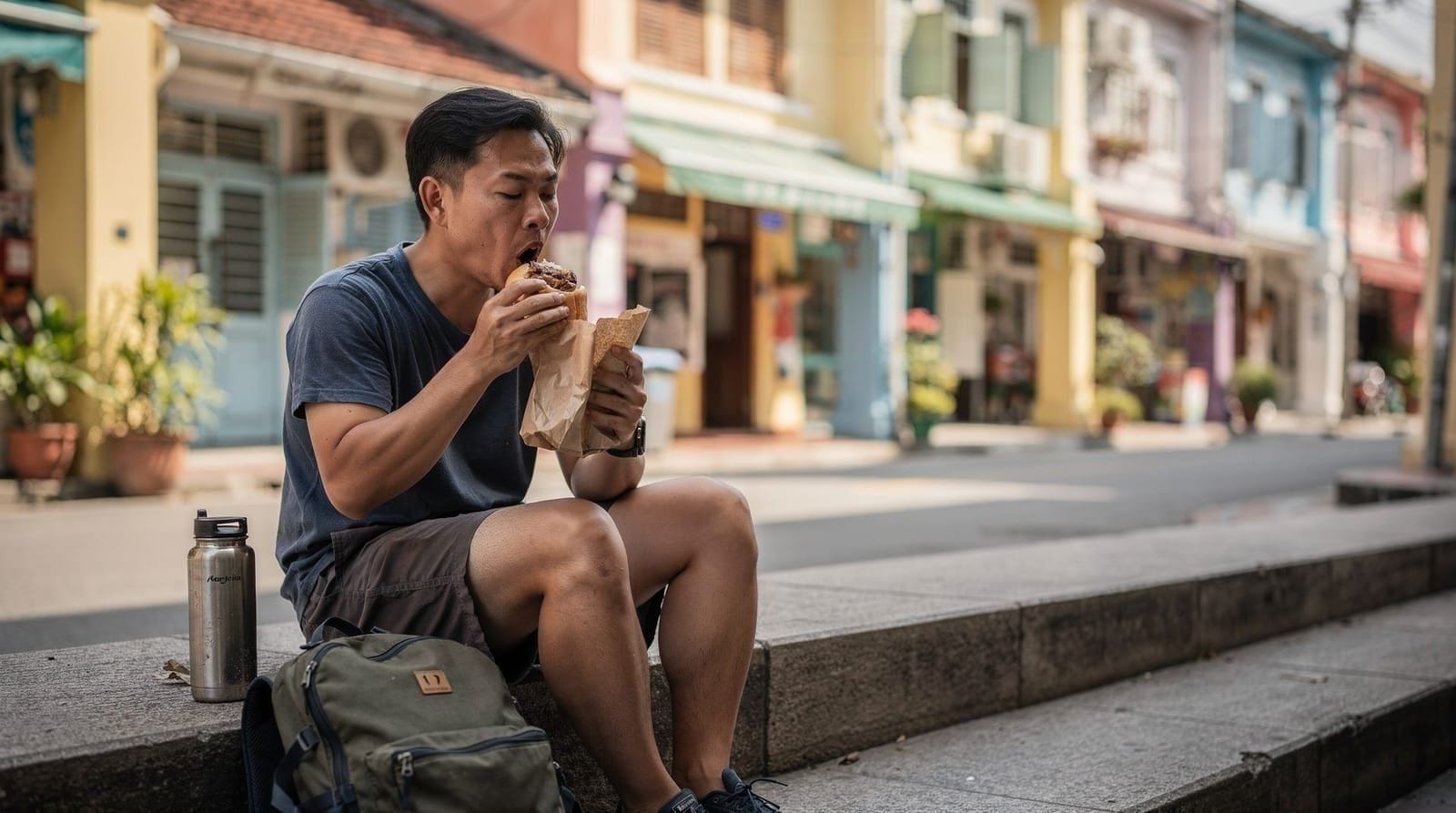
Take the earliest ferry you can. From Macau Outer Harbour terminal, walk or take a taxi to Senado Square (10 minutes). Spend 30–40 minutes walking Senado Square and the lower streets up toward St. Paul’s. If time permits, walk up to the Ruins of St. Paul’s facade (10 minutes from Senado). Eat a pork chop bun or egg tart at one of the pastelarias near the ferry terminal on your way back. Return ferry.
You’ve ticked the box, but you haven’t had a real experience. 4 hours is the minimum threshold for “I’ve been to Macau” not “I’ve seen Macau.”
6-hour window: the heritage walk
From the Outer Harbour terminal: taxi to A-Ma Temple (MOP 30 / USD 3.75) — start here rather than Senado Square to work from south to north, which gives you more flexibility on timing. The temple itself takes 20–30 minutes.
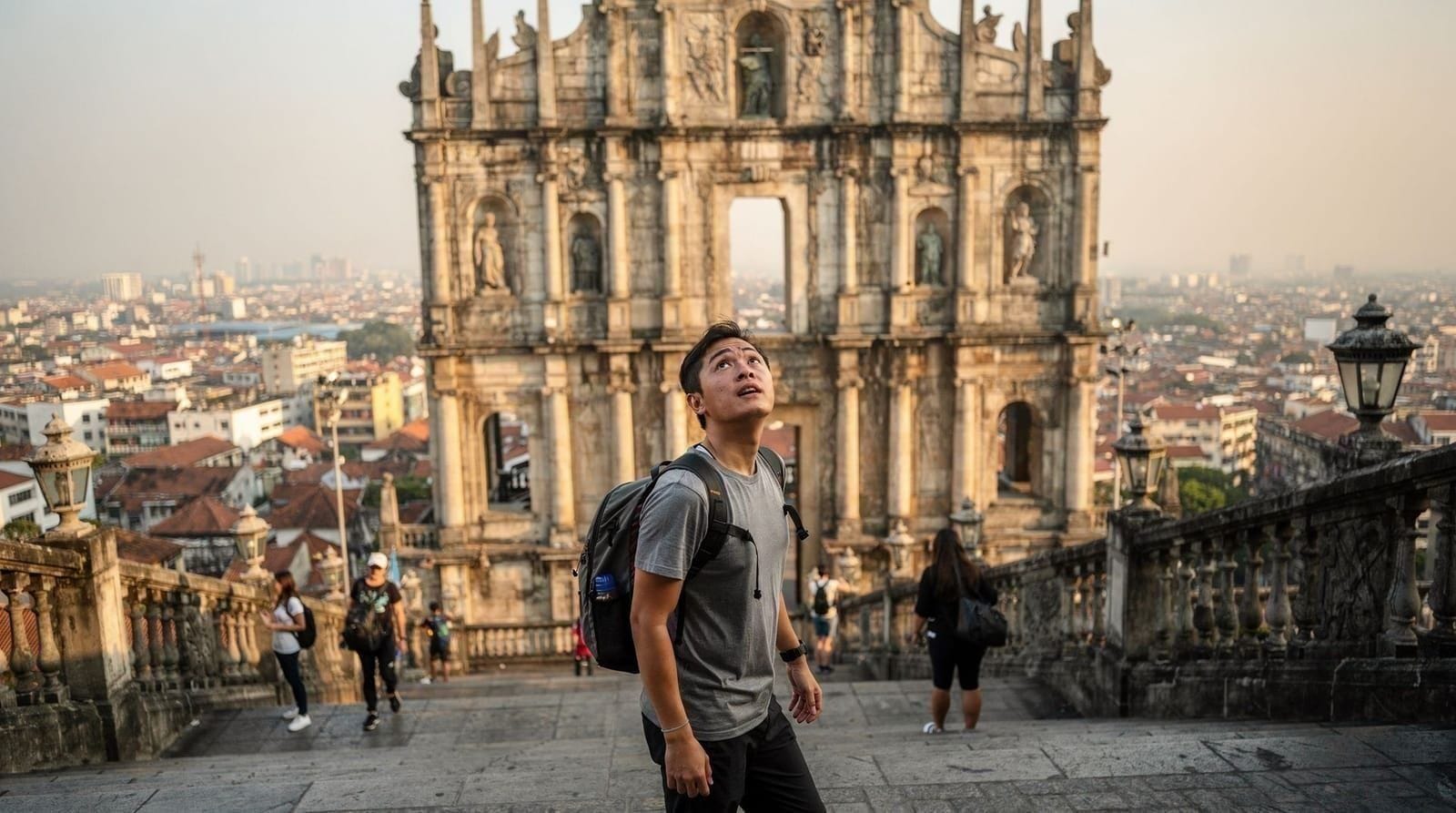
Walk north to Senado Square (25 minutes on foot, or taxi 5 minutes). Spend 30 minutes around the square and lower heritage streets. Continue north to the Ruins of St. Paul’s and the facade (15 minutes on foot, 10 minutes at the site). Eat at a nearby restaurant or pick up street food for lunch. Taxi back to the terminal.
If your interest is the overview rather than depth, a guided heritage walk covering St. Paul’s and the historic centre compresses the learning and removes navigation time.
8-hour window: the real half-day
This is where the layover becomes worthwhile. The 8-hour window allows you to add Mount Fortress (45 minutes, with museum), a sit-down lunch at a Macanese restaurant rather than street food, and optionally a quick trip to Taipa Village in the afternoon.
Suggested flow:
9am — Arrive Macau Outer Harbour. Take taxi directly to A-Ma Temple.
9:30am — A-Ma Temple. 30 minutes.
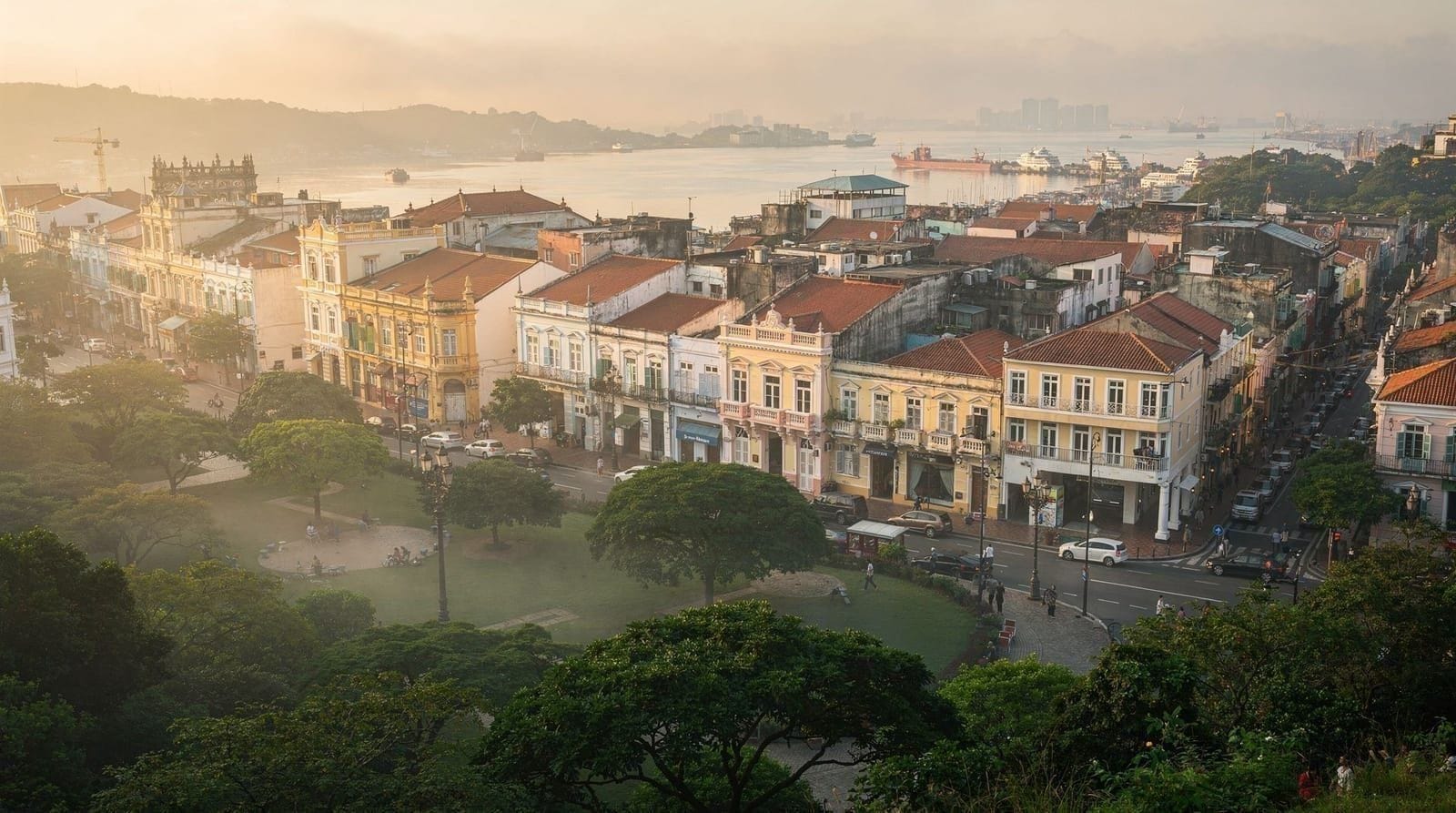
10am — Walk north through the Inner Harbour area, pausing at the Portuguese-style street scenes, to Senado Square. 30 minutes walking plus 20 minutes at the square.
11am — Walk up to Ruins of St. Paul’s. 10 minutes. Then Mount Fortress and Macau Museum above (30–45 minutes).
12:30pm — Lunch. Clube Militar de Macau is 15 minutes by taxi and worth the trip for a Macanese meal. Alternatively, Wong Chi Kei at Senado Square is faster. 45–60 minutes.
1:45pm — Optional: taxi to Taipa Village for 30 minutes of walking and an egg tart. MOP 40 / USD 5 each way.
3pm — Return to Outer Harbour terminal. Allow 30–40 minutes before your departure time for check-in and security.
What to skip during a layover
Cotai and the casino mega-resorts. The Venetian Macao is interesting, but getting there and back from the peninsula consumes significant time. A layover is not the visit for Cotai.
Coloane. A genuine highlight of Macau but too far from the ferry terminal for a time-constrained visit.
The Macau Tower observation deck. It’s out of the way for a peninsula-focused visit and costs MOP 145 (USD 18). Worth it on a longer trip, not on a 6-hour layover.
Trying to gamble on a time limit. The combination of learning unfamiliar table games and watching your clock is not a good experience for either the gambling or the sightseeing.
Money and practicalities
HKD and MOP are interchangeable at most businesses at roughly 1:1. You don’t need to exchange currency for a short visit — HKD is accepted in taxis, restaurants, and most shops. MOP is not accepted in Hong Kong, so don’t convert cash you’ll end up carrying back.
You won’t get the best value at the ferry terminal exchange desks. An ATM in Macau dispenses MOP if you need local cash.
If you’re transiting Hong Kong specifically to add a Macau visit to your itinerary, the Hong Kong to Macau day tour guide covers the logistics in more depth including combined package options.
Layover windows compared
| Window | Usable Macau time | Realistic plan | Verdict |
|---|---|---|---|
| 4 hours | ~1.5 hours on the ground | Senado Square only | Barely worth it |
| 6 hours | ~2.5–3 hours on the ground | A-Ma Temple → Senado → Ruins of St. Paul’s | Tight but doable |
| 8 hours | ~4–4.5 hours on the ground | Full heritage loop + sit-down lunch + optional Taipa | The sweet spot |
| 10+ hours | Treat as a full day | See the one-day itinerary | Genuine day trip |
If you’re arriving by cruise instead of ferry
Cruise port calls in Macau or nearby Hong Kong terminals follow slightly different logistics than a Hong Kong ferry layover, but the core advice holds: the historic peninsula rewards the time far more than Cotai does on a short call, and you should always build in a buffer before your ship’s all-aboard time — Macau’s ferry and taxi queues don’t care about your departure schedule. If your ship docks in Hong Kong and offers a Macau shore excursion, check whether it uses the ferry or the Hong Kong-Zhuhai-Macau Bridge — the bridge route eats more of your limited time and is worth avoiding for a short call.
Making the most of a 6-hour window specifically
Six hours is the window most layover travellers actually have, and it rewards ruthless prioritisation more than the 8-hour version does. Skip the museum inside Mount Fortress (worthwhile but not essential) and stick to the outdoor heritage sites — A-Ma Temple, Senado Square, and the Ruins of St. Paul’s facade — which you can see without paying an entry fee or waiting in a ticket line. Street food from a pastelaria near the route beats a sit-down meal for time efficiency; save the proper Macanese lunch for the 8-hour plan or a future full trip.
Frequently asked questions about Macau
Is a 4-hour layover in Macau worth it? Barely. By the time you account for the ferry crossing and immigration both ways, you’ll have roughly 90 minutes on the ground — enough for Senado Square only. Six hours is the realistic minimum for a worthwhile visit.
Can I visit Cotai on a Macau layover? Not recommended under 8 hours. Cotai is a worthwhile taxi ride from the peninsula, but on a short layover it competes directly with the heritage sites for time that’s better spent on the free, walkable historic centre.
What’s the best use of an 8-hour Macau layover? The full peninsula heritage loop — A-Ma Temple, Senado Square, the Ruins of St. Paul’s, and Mount Fortress — plus a sit-down Macanese lunch, with an optional short trip to Taipa Village if you’re moving efficiently. See the suggested hour-by-hour flow above.