First time in Macau? Here's what nobody tells you
Macau is one of those places that surprises almost everyone on a first visit. You expect Vegas-by-the-sea — a glitzy strip of casinos hovering over a bay — and you get something far more layered: Portuguese cobblestones running alongside Cantonese temples, a UNESCO World Heritage historic centre wedged between casino towers, and some of the best cheap food in Asia sitting two streets away from Michelin three-star restaurants.
If you’re planning your first trip, this post covers the realities that most travel sites gloss over, because I had to learn most of them the hard way.
| Size | 33 sq km total — peninsula, Taipa, Cotai, Coloane |
| Getting there | Ferry from Hong Kong, around 60 minutes, MOP 170–210 |
| Visa | 30 days free on arrival for most nationalities |
| Daily budget | around MOP 800–1,200 / USD 100–150, excl. accommodation |
| Minimum stay | Two full days |
The size of Macau will surprise you
The entire territory is roughly 33 square kilometres. That includes Macau Peninsula, Taipa, Cotai, and Coloane. You can walk from one end of the historic centre to the other in under 30 minutes. The casino mega-resorts on Cotai look enormous on maps but are reachable in 20 minutes by taxi or free shuttle from most hotels.
First-timers consistently overestimate how much time they need for the casinos and underestimate how long the heritage sites take. Budget at least half a day for the historic centre alone — the Ruins of St. Paul’s, Senado Square, A-Ma Temple, Mount Fortress, and the surrounding streets are genuinely interesting and reward slow wandering.
Getting in is easier than you think
Most visitors arrive by ferry from Hong Kong. The journey takes about an hour on a turbojet and costs around MOP 170–210 (USD 21–26) each way depending on timing. Ferries run from Hong Kong Macau Ferry Terminal in Sheung Wan and also from the Kowloon terminal near Tsim Sha Tsui. See the Macau ferry guide for current schedules and booking tips.
Alternatively, since 2018, the Hong Kong-Zhuhai-Macau Bridge has allowed bus crossings — read about the bridge if you’re curious about that route. The visa situation is generally straightforward for most nationalities: passport holders from the US, EU, UK, Australia, and many others get 30 days free on arrival, no application required.
The casino shuttles are free — use them
Every major casino hotel runs free shuttles from the ferry terminals, Taipa Ferry Terminal, the border gates, and often between their own properties. These are genuinely useful for getting around, even if you have no intention of gambling. The catch is they route you through the casino floor, which is by design.
Taxis are cheap by international standards — a cross-city ride rarely exceeds MOP 60–80 (USD 7.50–10). The Light Rail Transit connects parts of Taipa and Cotai and is expanding, but for most first-timers, taxis and the free shuttles cover everything. See getting around Macau for the full breakdown.
The historic centre is free and genuinely world-class
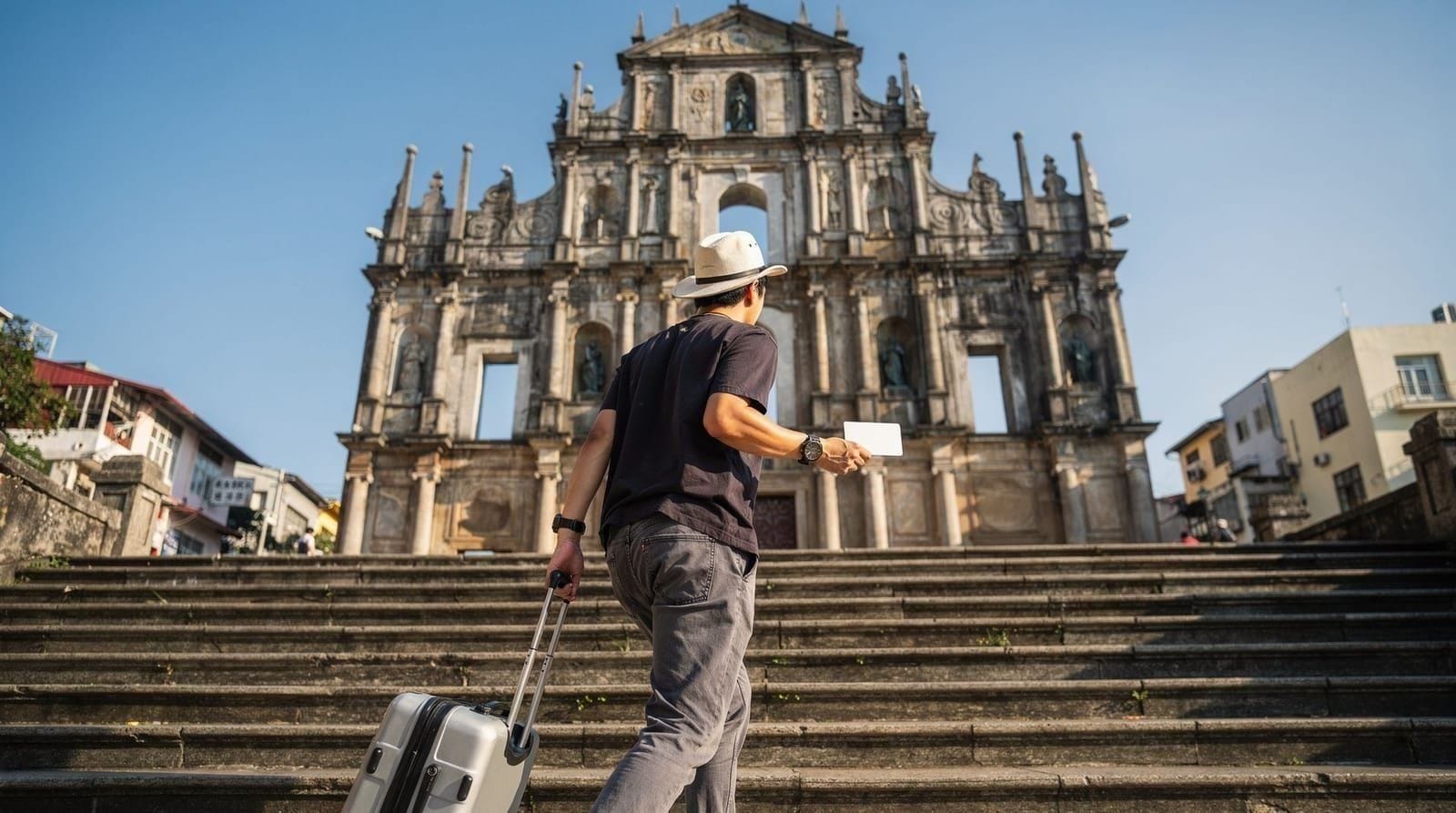
Here’s something the casinos don’t advertise: Macau has a UNESCO World Heritage site that is among the best-preserved examples of Portuguese colonial architecture in Asia. The Ruins of St. Paul’s — the ornate stone facade of a 17th-century church — are the iconic image most people associate with Macau. But don’t stop there.
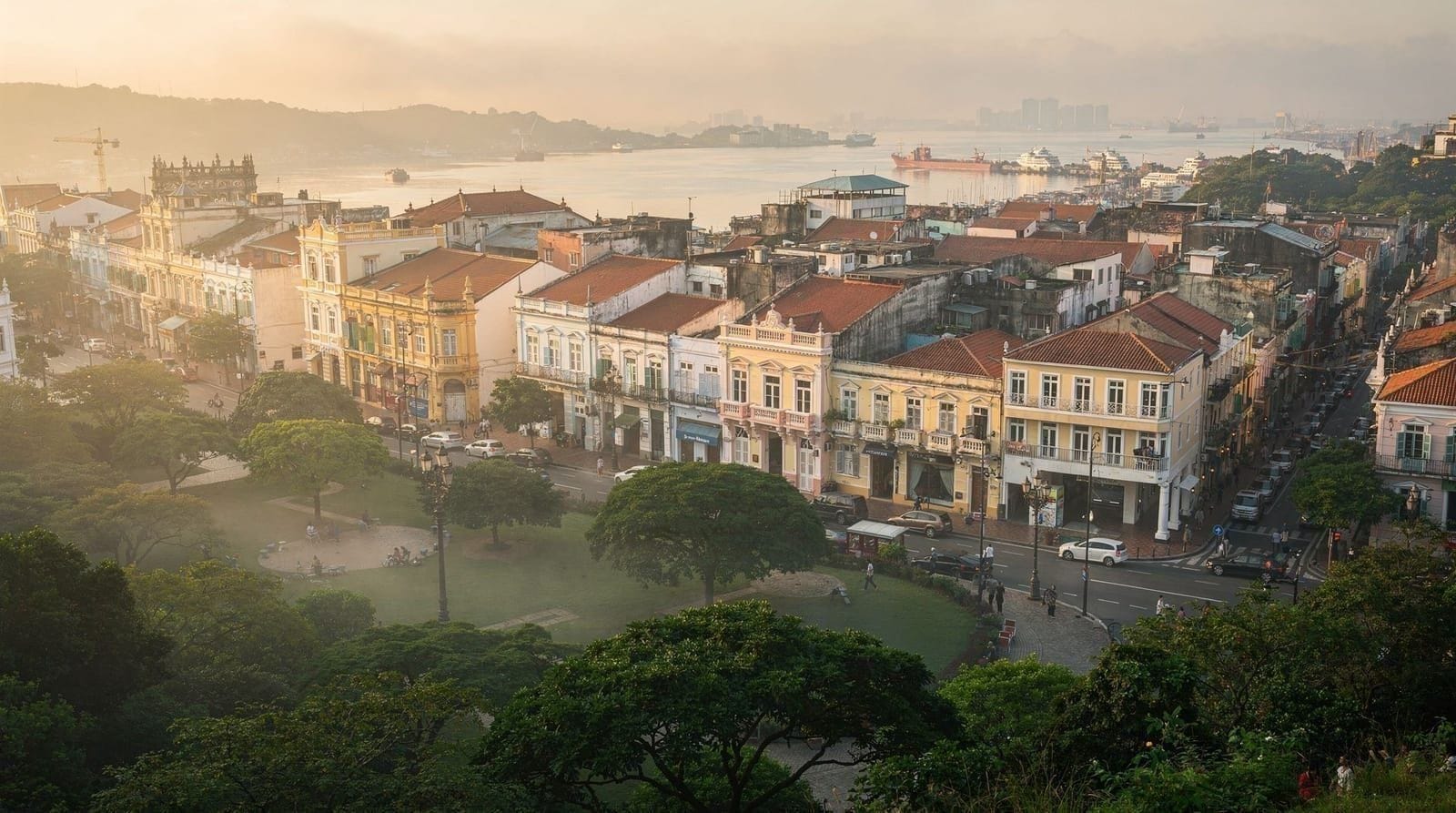
Walk up to Mount Fortress, which houses the Macau Museum and offers excellent views over the peninsula. Continue to the Guia Fortress and Lighthouse, the oldest lighthouse on the Chinese coast. Wander through Taipa Village on your second day, which has a completely different character — quieter, with local restaurants and colourful Portuguese houses lining Rua Correia da Silva.
The self-guided walking tour guide on this site maps a logical route connecting the main heritage sites.
Food is the real reason to visit
Macanese cuisine is a unique fusion that developed over 450 years of Portuguese colonial rule: African chicken (galinha africana), minchi (minced pork with potatoes and soy sauce), bacalhau (salt cod), pork chop buns, and of course the egg tarts. The pastéis de nata at Lord Stow’s Bakery in Coloane Village are rightly famous — they’re a slightly different, flakier style than the Hong Kong version, with a satisfyingly eggy custard.
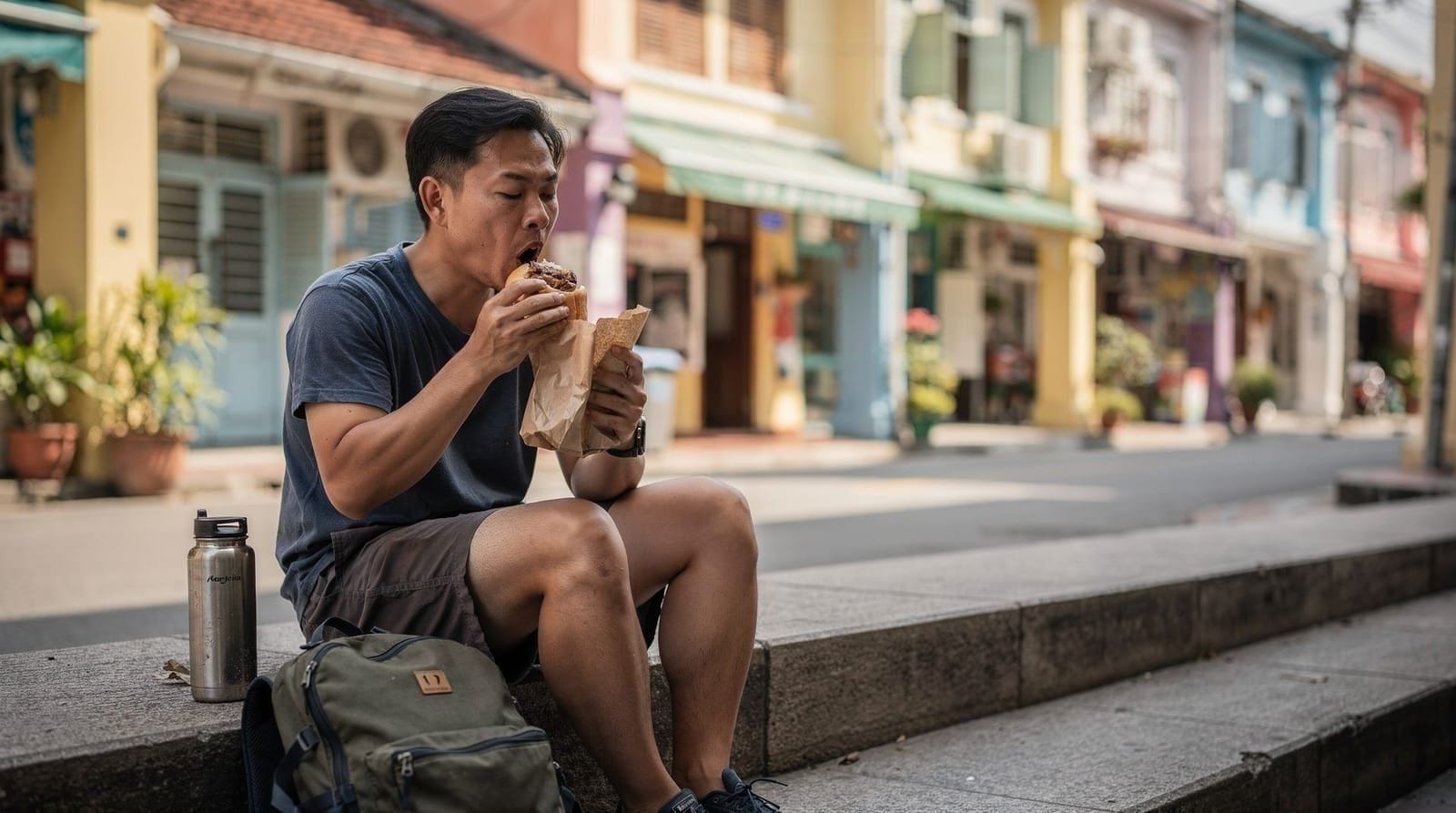
On the cheap end, a pork chop bun at one of the old coffee shops on the peninsula (Sei Kee Café near the ferry terminal, or the original Margaret’s Café e Nata) costs around MOP 22–35 (USD 2.75–4.35). Wong Chi Kei on Senado Square serves decent congee and wonton noodles at local prices despite the tourist location.
The Macanese cuisine guide covers all of this in more depth, and the street food guide maps the peninsula’s best cheap eats.
The casinos: what first-timers need to know
You don’t have to gamble, and plenty of people don’t. But some context is useful. Macau’s casinos generated more revenue than Las Vegas for years before the pandemic, making it the world’s largest gaming market. The vibe is different from Vegas: more serious, less theatrical, and the clientele skews heavily toward high-rolling mainland Chinese VIP players. Slot machines exist but are not the cultural centrepiece they are in Vegas.
The Venetian Macao on Cotai is worth seeing even if you’re not gambling — it’s a genuinely strange experience to be inside an air-conditioned replica of Venice, and the Grand Canal Shoppes are actually good for browsing. City of Dreams hosts the House of Dancing Water show, which is spectacular and unlike anything else in the region.
Non-gamblers will be happiest with a guide to Cotai that ignores the gaming floors.
What to budget
Macau is not cheap, but it’s not as expensive as the casino brochures make it seem. The mid-range traveller spending on accommodation, food outside the hotel, transport, and attractions (entrance fees are mostly free or very low) will typically spend MOP 800–1,200 (USD 100–150) per day, not counting accommodation. The Macau travel budget guide breaks this down by spending level.
Accommodation is the biggest variable. Budget guesthouses on the peninsula can be MOP 400–600 (USD 50–75) per night. Casino hotels on Cotai often go for MOP 1,200–2,500 (USD 150–310) on weekdays and significantly more on weekends when mainland Chinese tourists drive up demand.
Book your accommodation on weekdays if you can. Weekend rates in Macau can be double or triple the weekday price.
Common first-timer mistakes
Spending the whole trip on Cotai. The historic peninsula is the reason Macau is interesting. If you fly in and out of a casino resort without seeing the heritage sites, you’ve seen 10% of what makes the place worth visiting.
Underestimating ferry queues. Friday afternoon and Sunday evening ferries from Hong Kong are brutally crowded. Book in advance online, not at the counter.
Converting money at the ferry terminal. The exchange desks at arrival are not great. Patacas (MOP) are available from ATMs, and Hong Kong dollars are accepted almost everywhere at roughly 1:1 (the official rate is 1.03 HKD to 1 MOP).
Ignoring Coloane. The Coloane peninsula, connected to Cotai, has beaches (Hac Sa, Cheoc Van), hiking trails, and Lord Stow’s Bakery. It’s the quietest, greenest part of Macau and almost completely tourist-trap-free.
Skipping Taipa Village. The casino shuttles don’t go to Taipa Village — that’s not an accident. It’s one of the most charming neighbourhoods in Macau and worth the short taxi ride.
How many days do you need?
For a genuine first visit, two full days is a reasonable minimum. Day one on the peninsula — heritage sites, street food, Senado Square. Day two split between Taipa Village and Cotai. If you have a third day, add Coloane and either a day trip to Zhuhai or a slow morning at Guia.
If you only have one day — say you’re transiting from Hong Kong — the one-day itinerary is a realistic plan that hits the highlights without the rush.
One thing that will stick with you
Macau has an odd quality of feeling simultaneously familiar and completely disorienting. The Portuguese tile work, the Baroque church facades, the old pastelarias selling custard tarts — these are genuine echoes of Lisbon. Then you look up and there’s a 45-floor casino hotel looming behind a Qing-dynasty temple. It shouldn’t work aesthetically, but somehow it does.
Most first-timers come expecting a budget gambling trip and leave surprised by how much they liked the parts that had nothing to do with gambling. That reaction is not universal, but it’s common enough to be worth planning around.
A guided walk covering the ruins, historic centre, and a casino visit is a good option if you’d rather have someone walk you through the history rather than self-guiding. For a more comprehensive first-visit itinerary, the two-day Macau itinerary covers all of the above in a logical sequence.
What to pack and prepare before you go
Macau’s climate swings between humid summers and mild, dry winters, so check the weather by month guide before packing — a light jacket is enough for winter evenings, but summer visits need breathable fabric and rain protection. Bring a mix of cash (MOP or HKD) and a card; most casino properties and mid-range restaurants take cards, but small pastelarias and market stalls are cash-only. A comfortable pair of walking shoes matters more than anything else on this list — the heritage centre is cobblestone throughout, and it’s genuinely uneven underfoot in places.
How Macau compares to Hong Kong for a first trip
If you’re weighing whether to spend your limited time in Macau or Hong Kong, the short answer is: they’re different trips, not competing versions of the same one. Hong Kong is bigger, more vertical, and has a wider range of experiences across a longer stay. Macau is compact enough to see properly in two to three days and has a genuinely distinct Portuguese-Chinese heritage that Hong Kong doesn’t share. The Macau vs Hong Kong guide breaks down the comparison in more detail if you’re deciding how to split a combined trip.
First-timer questions worth settling before you land
Is Macau safe? Yes — violent crime against tourists is rare, and the heritage areas and casino districts are heavily monitored. Do you need Mandarin or Cantonese? No — English is widely spoken in casinos, hotels, and most tourist-facing restaurants, though not universally in smaller local eateries. Is it worth visiting if you don’t gamble? Genuinely yes — see is Macau worth visiting for the fuller case, but the short version is that the heritage centre and food scene stand on their own.
Frequently asked questions about Macau
Is Macau expensive to visit? Not as expensive as the casino resorts suggest. A mid-range traveller spends around MOP 800–1,200 (USD 100–150) per day excluding accommodation, and many of the best experiences — the heritage centre, temples, casino floors — are free.
Can I visit Macau without a visa? Most nationalities, including US, EU, UK and Australian passport holders, get 30 days visa-free on arrival. Check the visa entry requirements guide for your specific nationality before travelling.
Is two days enough for a first visit to Macau? Two full days is a reasonable minimum — enough for the peninsula heritage sites, Taipa Village and a look at Cotai. A third day lets you add Coloane or a Zhuhai day trip without rushing the rest.