Macau 2-day itinerary — the complete first-timer's plan
Macau: Macau Tower Observation Deck Ticket
- Instant confirmation
- Free cancellation
Quick answer: Two days in Macau is the sweet spot for first-timers. Day 1 covers the UNESCO Historic Centre on the Peninsula and Taipa Village; Day 2 adds Coloane (Lord Stow’s Bakery, Hac Sa Beach) and the Cotai Strip with its free casino spectacles. Total realistic cost: MOP 1,200–2,000 per person (USD 150–250) excluding accommodation.
| Where | Macau Peninsula, Taipa Village, Coloane, Cotai Strip |
| Cost | around MOP 1,200–2,000/USD 150–250 per person, excl. accommodation |
| Time needed | 2 full days |
| Getting there | ferry or HZMB bridge from Hong Kong, or fly into Macau |
| Best time | October–November for cooler, drier weather |
Why two days works better than one
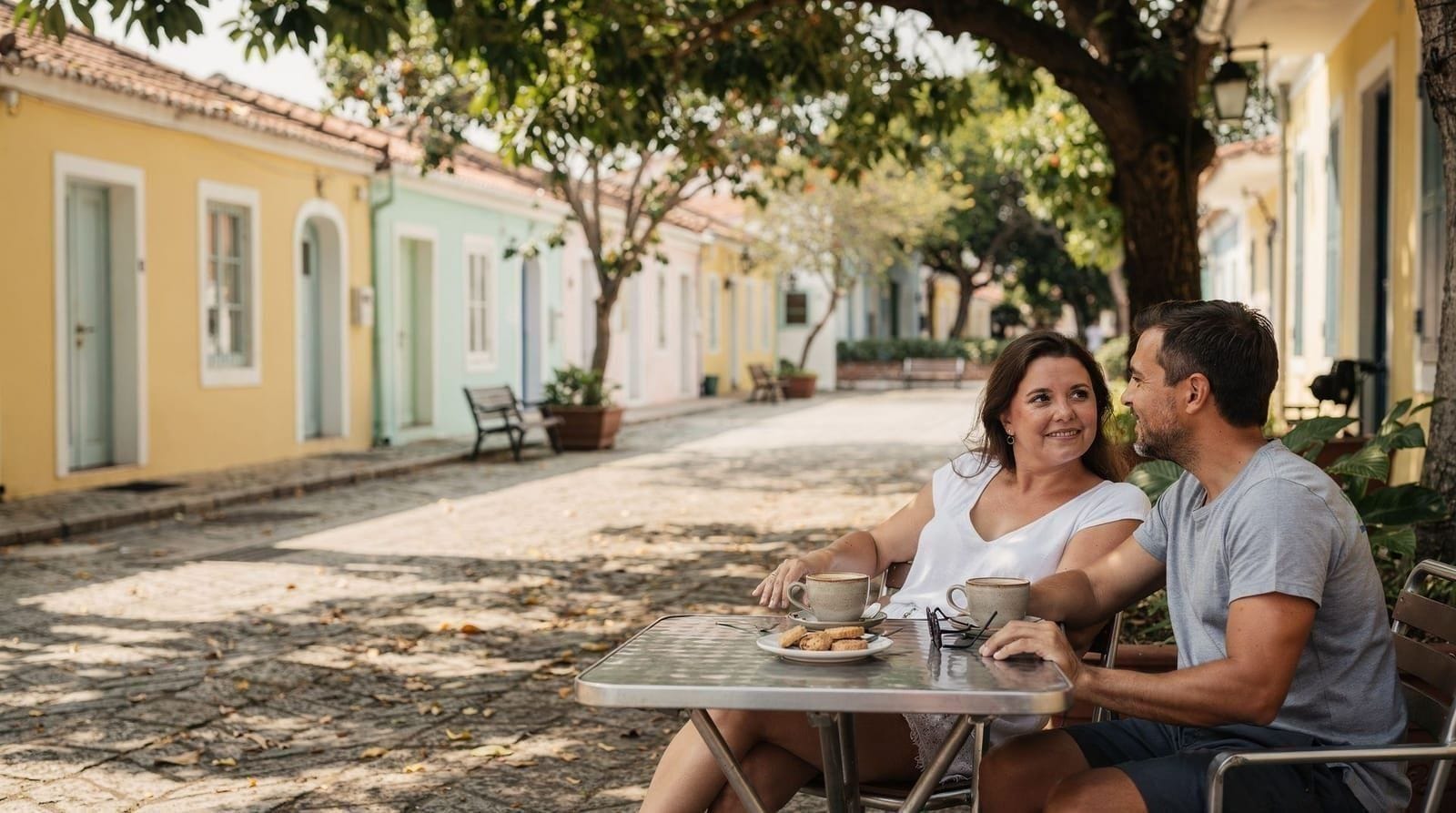
Macau is deceptively compact on a map — the Peninsula is barely 10 km² — but the city’s character lives in the pauses: a slow coffee at a Senado Square terrace, a wander through Coloane’s quiet lanes, the afternoon light on the mosaic pavements. Rushing through in one day means missing all of that. Two days lets you do the UNESCO sites properly on Day 1, then spend Day 2 on the quieter, more local side of Macau that most day-trippers never reach.
If you’re coming from Hong Kong, arrive on the first morning ferry and leave on the last ferry of Day 2. The overnight ferries also run, which can stretch Day 2 into an evening on the Cotai Strip.
Two days vs one day vs three days
If you’re still deciding on length: one day forces you to pick either Coloane or the Cotai Strip, not both, and skips Lord Stow’s original bakery entirely — see the 1-day itinerary if that’s your only option. Three days adds real depth (Guia Fortress, the quieter Santo António neighbourhood, a proper Michelin dinner) but is more than most first-timers need — the 3-day itinerary is the one to read if you’re a slower traveller or a serious food person. Two days is the balance point: everything essential, nothing rushed.
Day 1: the Macau Peninsula and Taipa Village
9:00 — Ruins of St Paul’s and the Crypt Museum
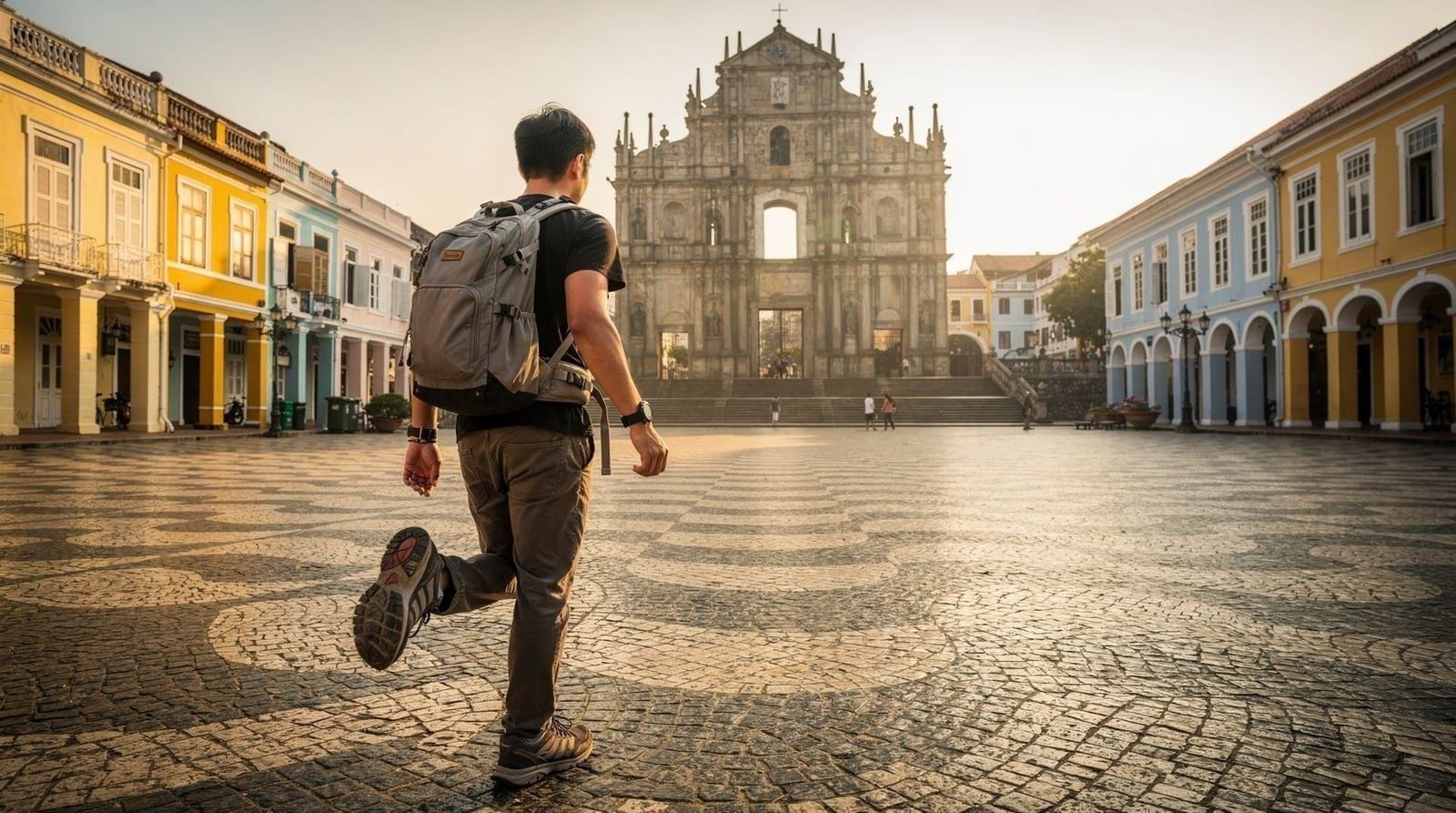
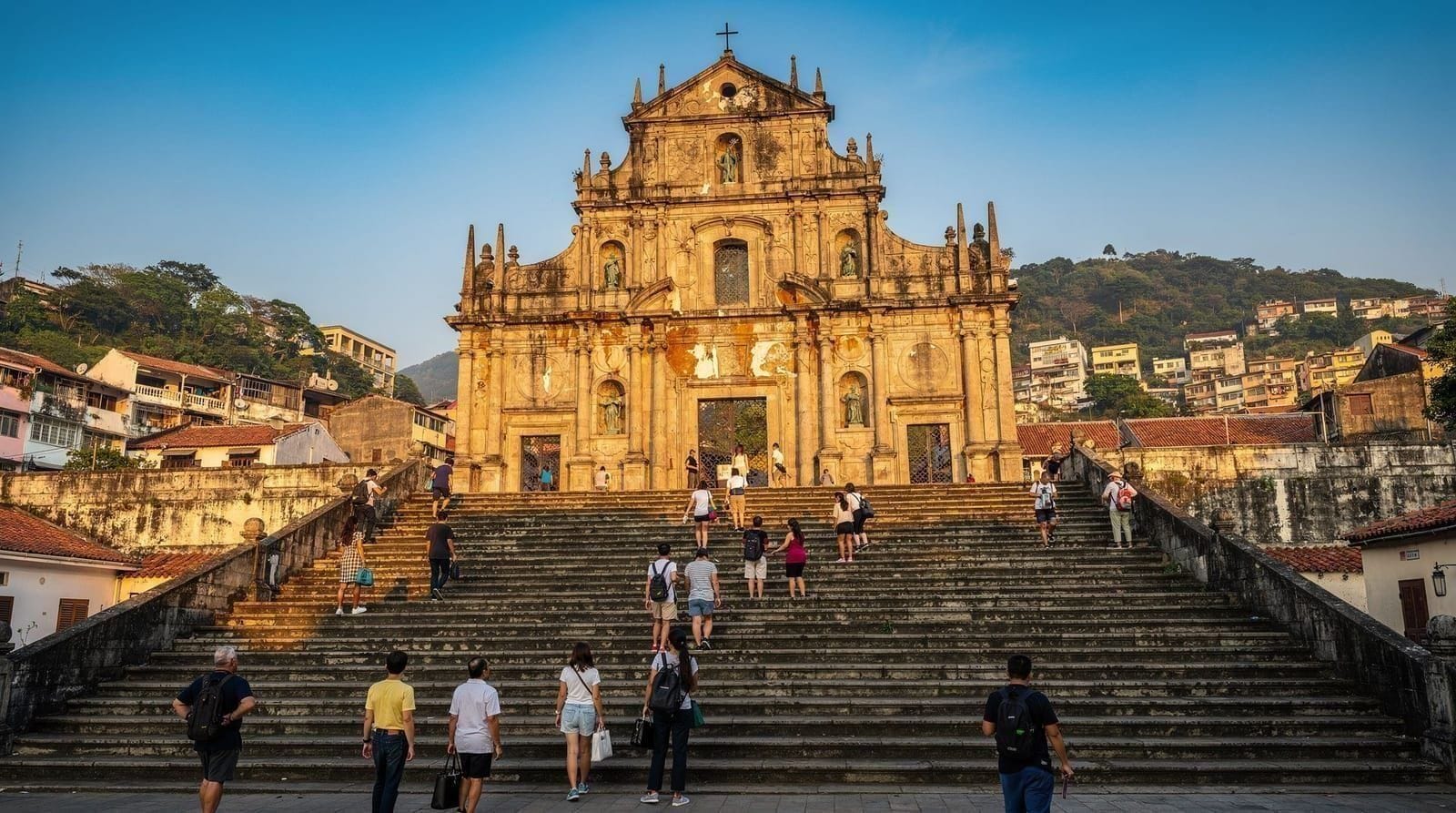
Start at the ruins of St Paul’s, the 17th-century Jesuit church facade that’s become Macau’s defining image. The stone carvings — a fusion of European baroque and Chinese motifs — repay slow looking. The crypt beneath the facade is a small museum with religious art and bones from Japanese martyrs; it’s free and usually takes 20 minutes.
Arrive before 9:30 am: tour groups from Zhuhai start arriving by 10 am and the space gets very crowded. Morning light is also better on the facade from the steps.
Cost: Free
Walking time from ferry terminal: 15–20 minutes or MOP 30/USD 3.70 by taxi
9:45 — Mount Fortress and the Macau Museum
From the ruins, climb the steps behind the facade (5 minutes) to Mount Fortress, the 17th-century Portuguese citadel with cannons still pointing toward the Pearl River Delta. The Macau Museum inside the fortress is one of the city’s better small museums — three floors covering the city’s history from pre-colonial fishing village to gaming capital. Budget 45–60 minutes.
Cost: Fortress free; museum MOP 15/USD 1.90 (MOP 8/USD 1 for children)
11:00 — Senado Square and lunch
Walk downhill to Senado Square, the centre of the UNESCO Historic Centre. The restored civic buildings, fountain, and wave-pattern mosaic paving make this the best place in Macau for an hour of café sitting and people-watching.
For lunch, duck into the side streets off the square — Rua da Palha and Rua de São Domingos have several Macanese restaurants charging MOP 80–150/USD 10–19 for a full meal. Recommended: Restaurante Litoral on Rua do Almirante Sérgio serves solid Macanese classics (MOP 120–180 pp/USD 15–22).
Cost: Lunch MOP 80–180/USD 10–22
13:00 — A-Ma Temple and the Inner Harbour area
Walk 15 minutes south to A-Ma Temple, the oldest place of worship in Macau. The complex of pavilions, prayer halls, and carved rock inscriptions is compact but worth 30–40 minutes. From the temple, walk along the Inner Harbour waterfront briefly to see the contrast between the colonial facades and the working port still operating behind them.
Cost: Free
14:30 — Guia Fortress and Lighthouse (optional)
Guia Fortress on the Peninsula’s highest hill is often skipped by first-timers and shouldn’t be. The Guia Fortress and Lighthouse includes the oldest Western-style lighthouse on the Chinese coast (1865) and a small chapel with restored frescoes. Take the free cable car up from Flora Garden (10-minute walk from the Cotai side of the Peninsula).
Cost: Free
Time: 45 minutes including cable car
16:00 — Transfer to Taipa Village
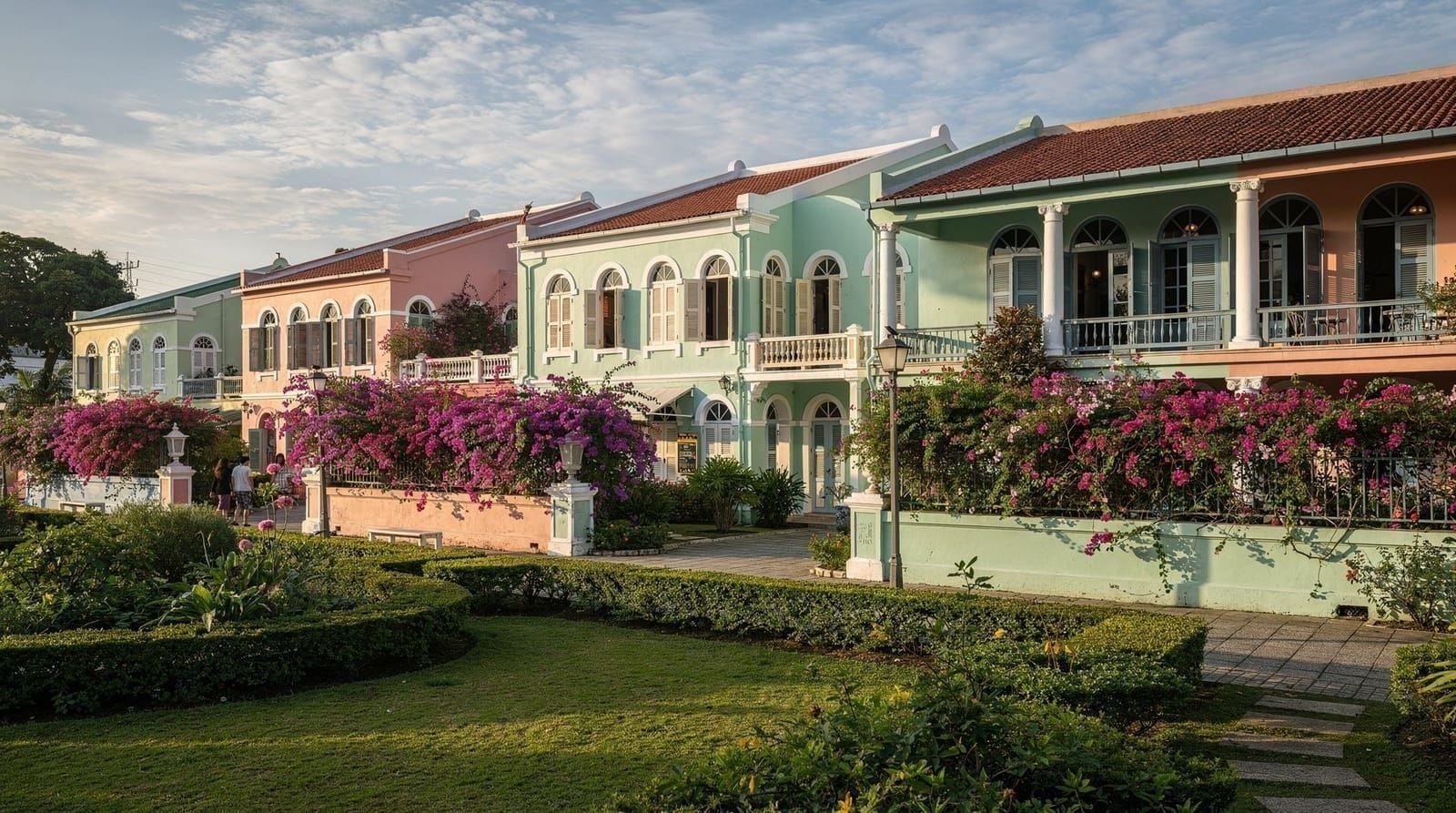
Taxi to Taipa Village takes 10–15 minutes and costs MOP 50–80/USD 6–10. Taipa Village is the most pleasant place to spend a late afternoon in Macau: a grid of Portuguese colonial houses, independent shops, and genuine restaurants untouched by the casino developments 800 metres away on the Cotai Strip.
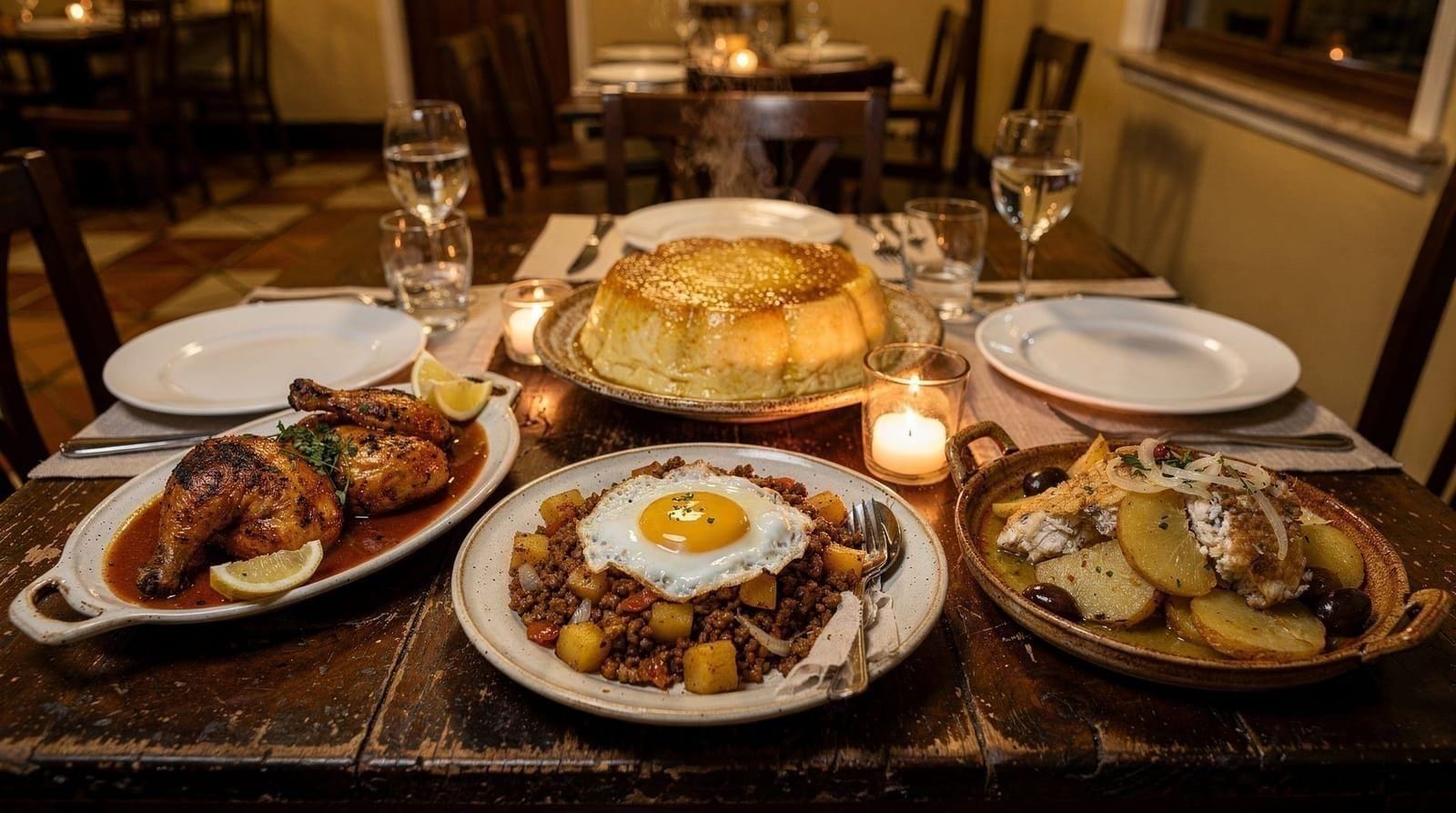
Walk Rua do Cunha (the main street) for almond cookies and beef jerky. Stop at A Petisqueira or Restaurante Esplanda for an early dinner — both serve Macanese African chicken and bacalhau at MOP 140–200 pp/USD 17–25.
Dinner cost: MOP 120–220 pp/USD 15–27
19:00 — Evening on the Cotai Strip (optional)
A 5-minute taxi ride from Taipa Village brings you to the Cotai Strip. If you haven’t already, walk through The Venetian Macao — the indoor Grand Canal with gondoliers, the Piazza San Marco replica, and the casino floor are all free to walk through. The Parisian Macao next door has a half-scale Eiffel Tower that’s illuminated at night and worth the 10-minute walk between the two properties.
Free casino shuttles return to both ferry terminals throughout the evening.
Day 2: Coloane and the Cotai Strip
9:00 — Coloane Village
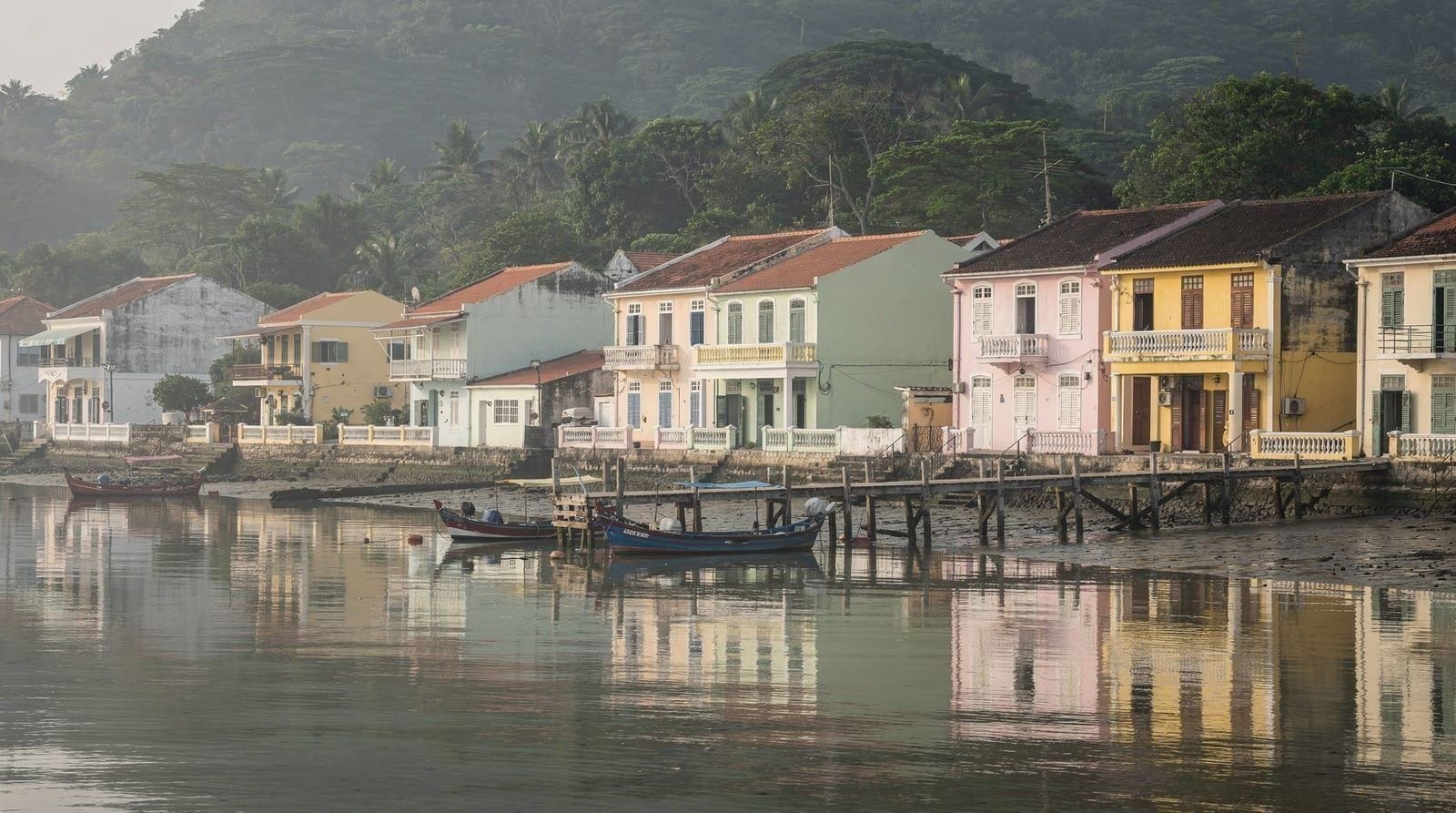
Start Day 2 in Coloane, Macau’s quietest and greenest island. Taxi from your hotel takes 20–30 minutes (MOP 80–120/USD 10–15). Coloane Village is a 15-minute walk from A-Ma statue — a small settlement of pastel houses, a pretty chapel (Chapel of St Francis Xavier), and the square where Lord Stow opened his first bakery in 1989.
Lord Stow’s Bakery: This is ground zero for the Macanese egg tart. Andrew Stow created the now-global Portuguese custard tart recipe here; the original shop at 1 Rua do Tassara is still the best version (MOP 10/USD 1.25 each). Arrive by 9:30 am when the first batch comes out of the oven. The queue moves fast.
Cost: Lord Stow’s tarts ~MOP 10 each; taxi MOP 80–120
10:30 — Hac Sa Beach or Seac Pai Van Park
Coloane has two beaches; Hac Sa (Black Sand) is the larger and more popular. The sand is genuinely dark-grey (volcanic mineral deposits) and the surroundings are leafy and relatively quiet on weekday mornings. It’s not a swimming beach by international standards (jellyfish in summer, strong currents), but it’s a fine place for a walk.
Alternatively, Seac Pai Van Park is a free public garden with peacocks roaming loose and the Giant Panda Pavilion where you can see Macau’s resident giant pandas. See our Macau Giant Panda Pavilion guide for opening times and tips.
Cost: Free (Seac Pai Van Park) or free (Hac Sa Beach)
12:30 — Lunch at Fernando’s
Fernando’s at Hac Sa Beach is one of Macau’s legendary restaurants — a Portuguese-style open-air restaurant that’s been here since 1989 and looks essentially unchanged. Their roast suckling pig, clams, and grilled prawns are excellent. Budget MOP 200–350 pp/USD 25–43. It’s cash-only and doesn’t take reservations, but the wait (if any) is rarely more than 30 minutes at lunch.
Cost: MOP 200–350 pp/USD 25–43
14:30 — Macau Tower
From Coloane, taxi to Macau Tower takes 15–20 minutes (MOP 60–100/USD 7.50–12.50). The tower’s observation deck on Level 58 gives the best panorama of the city and Pearl River Delta. The deck costs MOP 145/USD 18 for adults. If you have budget and courage for the AJ Hackett bungy jump (highest commercial bungy in the world at 233m), book well in advance.
Macau Tower observation deck — advance ticketCost: Observation deck MOP 145/USD 18; bungy jump from MOP 1,988/USD 248
16:30 — Cotai Strip deep dive
With Coloane and the tower done, spend the late afternoon exploring Cotai properly. Beyond the Venetian, the highlights are:
Galaxy Macau: The resort’s atrium contains what Galaxy calls a sky roof with a lazy river and artificial beach — the spectacle alone is worth the walk-through even if you don’t access the pool.
The Parisian Macao: A half-scale replica of the Eiffel Tower sits outside the resort. Day or night, it makes for a good photo. Entry to the Eiffel Tower observation platform (Level 37) costs MOP 80/USD 10.
City of Dreams: The Morpheus hotel by Zaha Hadid has one of the most extraordinary building facades in Asia — a steel exoskeleton with voids and curves that shouldn’t structurally work but does. It’s free to walk past and through the ground floor.
Guided Cotai and Coloane full experience19:00 — Dinner and departure
Budget dinner: The Venetian’s food court runs MOP 60–120/USD 7–15 for Asian and Western options. Nothing remarkable, but convenient and fast.
Mid-range: Zi Yat Heen at the Four Seasons is one of Macau’s better Cantonese restaurants — dim sum dinner runs MOP 250–400 pp/USD 31–50.
Splurge: If you haven’t yet tried a Michelin-starred meal, check our Macau Michelin guide — Robuchon au Dôme and Jade Dragon (City of Dreams) both accept same-day reservations occasionally if you call directly.
Free casino shuttles depart for both ferry terminals continuously. If you’re on a late ferry, you have time for a final walk through the Venetian’s Grand Canal.
Practical planning for two days in Macau
Where to stay
For a two-night stay, Taipa Village is the most pleasant area — walkable, quiet, and 5 minutes from Cotai. On the Peninsula, the area around Senado Square puts you within walking distance of all Day 1 sites. Our where to stay in Macau guide compares all main hotel areas.
Getting around
No car needed. Taxis are metered, honest, and cheap for short hops. Free casino shuttles cover the Cotai and ferry terminal routes. The Macau LRT light rail connects Taipa Ferry Terminal through Cotai and is useful on Day 2. See our full getting around Macau guide.
Two-day budget summary
| Category | MOP | USD |
|---|---|---|
| Day 1 taxis | 150–200 | 19–25 |
| Day 1 meals | 300–500 | 37–62 |
| Day 2 taxis | 250–350 | 31–43 |
| Lord Stow’s tarts | 20–30 | 2.50–3.70 |
| Day 2 meals | 350–600 | 43–75 |
| Macau Tower deck | 145 | 18 |
| Museums/entry | 30–50 | 3.70–6.20 |
| Total per person | 1,245–1,875 | 154–233 |
Accommodation not included. See our Macau travel budget guide for accommodation options across budget, mid-range, and luxury tiers.
What to pack for two days
Comfortable shoes matter more than anything else — Day 1 involves cobblestones and steps around the ruins, and Day 2 mixes beach sand with casino marble floors. Bring a light rain jacket outside the dry winter months, a swimsuit if you plan to test Hac Sa Beach, and cash: Fernando’s, Lord Stow’s, and several Taipa Village restaurants don’t take cards. A portable phone charger is worth it if you’re navigating with maps all day, and sunscreen is non-negotiable even in cooler months given how much walking this plan involves.
What this itinerary trades off
Two days is generous for the Peninsula and Cotai but tight for Coloane — you’ll see Lord Stow’s, Hac Sa Beach and the pandas, but not linger the way a dedicated half-day would allow. If Coloane and slow food are your real priority, our food lovers itinerary restructures these same two days around eating rather than sightseeing. Families should check the 2-day family itinerary instead — the pacing here (later dinners, more walking between stops) assumes adults without young children.
Frequently asked questions about two days in Macau
Is two days enough for Macau?
Two days covers the main highlights comfortably: the UNESCO Historic Centre, Taipa Village, Coloane, and the Cotai Strip. You won’t have time for everything — the quieter Peninsula neighbourhoods, some of the smaller museums, and day trips to Zhuhai all require extra time — but you’ll leave with a genuine picture of what Macau is. If you’re debating between one and two days, see our how many days in Macau guide.
What’s the best area to stay in Macau for two days?
Taipa Village is the most pleasant for first-timers: walkable, neighbourhood feel, close to Cotai. The Cotai Strip itself is convenient for casino-resort guests but feels sterile overnight. The Peninsula puts you closer to the UNESCO sites. Our where to stay guide breaks it down by budget.
Do I need to book anything in advance?
For a standard two-day visit, the only things worth booking ahead are: the House of Dancing Water show at City of Dreams (if you plan to go), the Macau Tower bungy jump, and your ferry tickets from Hong Kong if travelling on a weekend or public holiday. Most restaurants don’t require reservations except Robuchon au Dôme.
Can I walk between all the Day 1 sites?
Yes. The UNESCO Historic Centre on the Peninsula is fully walkable — all the main sites are within 2 km of each other on mostly flat ground (with one significant hill at Guia Fortress). Day 2 requires taxis or shuttles between Coloane, Macau Tower, and Cotai. See our self-guided walking tour guide for a detailed map.
What’s the best time of year to visit Macau for two days?
October and November are ideal: dry, mild (22–27°C), and after the typhoon season. March and April are also good. Avoid late June to September if possible — typhoons can disrupt ferry services and the humidity is oppressive. Read our full best time to visit Macau guide for month-by-month breakdown.
What’s the best guided tour for a two-day visit?
A half-day walking tour on Day 1 covers the UNESCO Historic Centre with historical context you’d miss solo. On Day 2, a guided Cotai and Coloane experience adds structure if you prefer not to navigate independently.
Ruins of St Paul’s and historic centre — guided walking tourCan I do this itinerary without a car or driver?
Yes, easily. Nothing in this two-day plan requires a private vehicle — the Peninsula is walkable, taxis are cheap and metered for the Taipa/Coloane/Cotai hops, and free casino shuttles cover the ferry terminal routes. See our getting around Macau guide for the full transport picture, including the LRT light rail.