Macau food lovers itinerary — 2 days of serious eating
Macau: Hidden Gems Evening Food Tour with Local Guide
Duration: 3 hours
- Small group
- Free cancellation
- Local guide
Quick answer: Macau has one of the highest concentrations of Michelin-starred restaurants per capita in the world, a genuinely unique cuisine (Macanese — a 500-year Portuguese-Chinese-African fusion), and a street food scene anchored by the world’s most famous custard tart. Two days focused on food will take you from Lord Stow’s Bakery in Coloane to dim sum in a Michelin dining room, with Taipa Village restaurants, street food, and a proper Macanese dinner in between. Budget MOP 600–1,800 pp per day depending on how many starred meals you target.
| Where | Macau Peninsula, Taipa Village, Coloane, Cotai Strip |
| Cost | around MOP 1,340–2,120/USD 167–264 per person over 2 days |
| Time needed | 2 full days |
| Getting there | ferry or HZMB bridge from Hong Kong, or fly into Macau |
| Best time | year-round; book Michelin dinners well ahead regardless of season |
Why Macau is a serious food destination
Macau’s cuisine is the result of 500 years of Portuguese administration, trade routes connecting Portugal to India, Mozambique, Malaysia, and Brazil, and a dominant local Cantonese population. The resulting Macanese food — African chicken, bacalhau (salt cod) with egg, tamarind pork, minchi (mince with fried potato and egg) — is unlike anything in mainland China or Portugal itself. It exists almost exclusively in Macau, in a handful of family restaurants, and it’s disappearing as the older generation retires.
At the same time, Macau has 14+ Michelin-starred restaurants (as of the most recent guide), concentrated mostly in the Cotai Strip resorts. Cantonese seafood, Robuchon’s three-star French kitchen, and some of the best dim sum in the world sit within 20 km of Lord Stow’s Bakery. That combination is genuinely extraordinary and worth a dedicated food trip.
Read the full background in our Macanese cuisine guide and Macau Michelin guide.
Egg tart showdown: how the three lineages compare
| Style | Where | Pastry | Custard | Price |
|---|---|---|---|---|
| Lord Stow’s (Portuguese-Macanese) | Coloane original | laminated, croissant-like | silky, vanilla-forward | ~MOP 10 |
| Margaret’s Café e Nata | Inner Harbour | flakier, buttery | slightly more set | ~MOP 9 |
| Macau-style | Koi Kei, most bakeries | shorter, cookie-like crust | brighter yellow, more egg yolk | ~MOP 8–10 |
Trying all three back to back over the two days (as this itinerary does) is the fastest way to actually understand the difference rather than just take other travellers’ word for which is “best” — they’re genuinely different pastries, not variations on one recipe.
Day 1: Old Macau food — morning to midnight
8:00 — The egg tart breakfast question
Macau’s custard tart war is real. Andrew Stow opened Lord Stow’s Bakery in Coloane in 1989 using a Portuguese pasteis de nata recipe adapted with local pastry techniques. His ex-wife’s bakery (Margaret’s Café e Nata) followed with a Portuguese-style recipe closer to the Lisbon original. A third lineage, the Macau-style egg tart — closer to a Hong Kong-style egg tart with a shorter crust — is available everywhere.
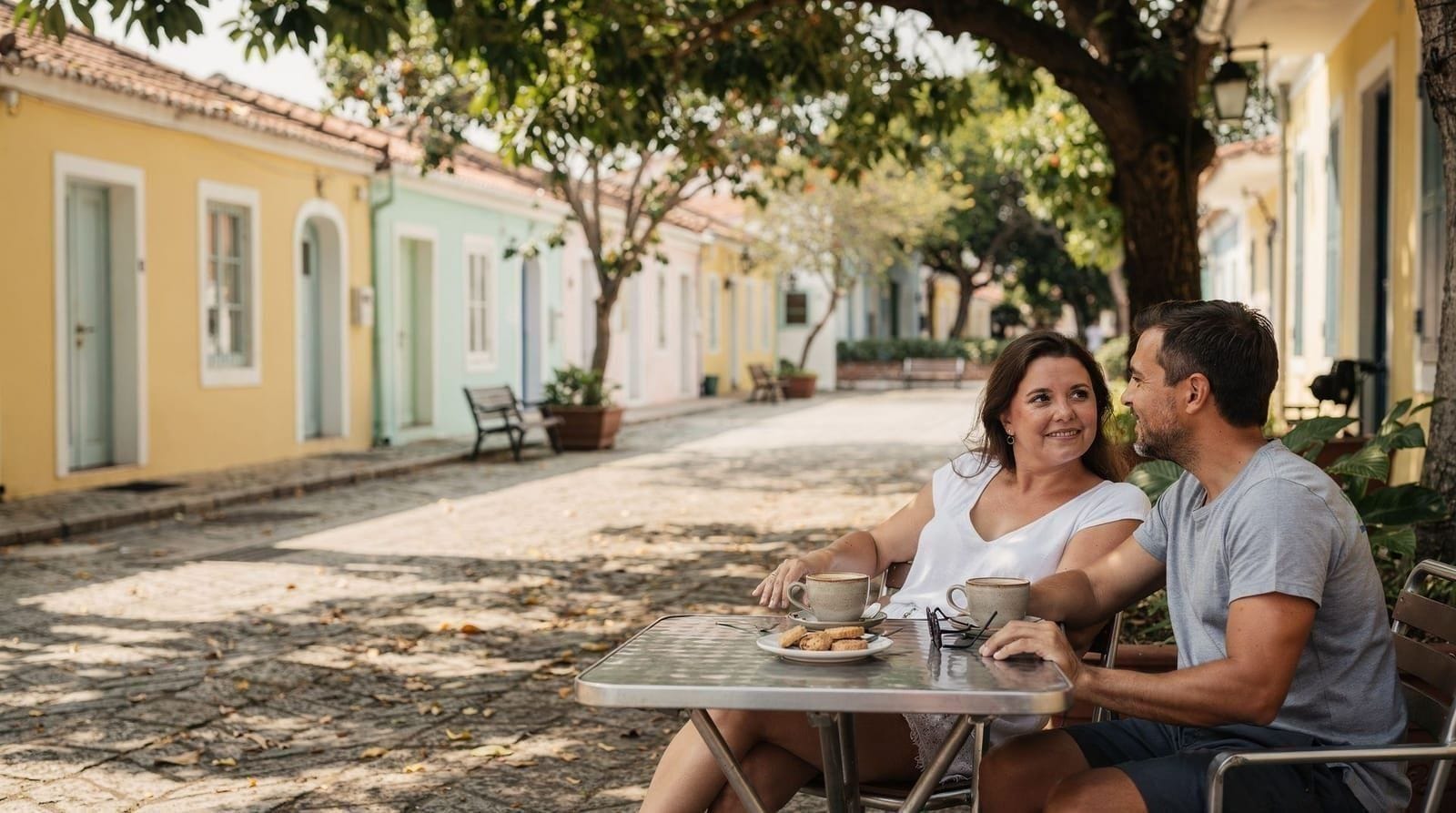
For this itinerary, you’ll try all three styles. Day 1 morning: Margaret’s Café e Nata near the Inner Harbour (MOP 9/USD 1.10 each; open from 6:30 am, sell out by 11 am on weekdays). The pastry is flakier and more buttery than Lord Stow’s; the custard is slightly more set. Take a seat at a street table with a local coffee (galão or barley coffee, not Nespresso — ask for “local style coffee”).
Cost: 2 tarts + coffee MOP 30–40/USD 3.70–5
9:30 — Morning market: the Almirante Lacerda market
The Red Market (Mercado Almirante Lacerda) on the northern Peninsula is Macau’s best wet market: three floors of seafood, meat, vegetables, and dried goods. Not a tourist attraction — this is where Macau restaurants and residents actually shop. Go before 10 am when everything is fresh.
Watch for: fresh mantis shrimp (the same variety used in the best local seafood restaurants), live crabs, dried abalone stacked by grade, and the MSG-free dried seafood in the upper floors that Macanese cooks use for Christmas turkey stuffing. You’re not buying — you’re learning the ingredients.
Cost: Free to walk; buy a piece of fruit (MOP 8–15)
11:00 — Senado Square bakeries and snacks
Walk to Senado Square for the Macau street snack survey:
Pork chop bun (猪扒包, Zhu Pa Bao): a thick Portuguese bread roll split and filled with a fried or grilled pork chop — no sauce, no lettuce, just pork. The best on the Peninsula is from Tai Lei Loi Kei on Taipa (the original), but the Senado Square branch of the similar-style bakeries is adequate. MOP 28–35/USD 3.50–4.40.
Almond cookies: Buy from Koi Kei Bakery or Choi Heong Yuen — these two chains make the only authentic product. The cookies sold loose outside the ruins by hawkers are often counterfeit or stale. MOP 30–50/USD 3.70–6.20 for a box.
Serradura (sawdust pudding): A chilled dessert of cream, condensed milk, and crushed Maria biscuits — simple, sweet, extremely Macanese. Gelataria Italiana near the Senado Square sometimes stocks it; several cafes along Rua da Palha serve it. MOP 25–35/USD 3–4.40.
13:00 — Lunch: proper Macanese cuisine
This is the meal to understand the cuisine’s foundations. Restaurante Litoral (11A Rua do Almirante Sérgio) is the most consistent Macanese restaurant on the Peninsula — family run, in the same building for 20+ years, and serving a menu that covers the canon:
- African chicken (galinha africana): roast chicken in a coconut-groundnut-chilli sauce, a recipe arriving from Mozambique via Goa. MOP 108/USD 13.50.
- Bacalhau à Gomes de Sá: salt cod baked with potato, egg, and olives. MOP 95/USD 11.90.
- Caldo verde: Portuguese kale soup. MOP 45/USD 5.60.
- Carne de porco à Alentejana: pork with clams and coriander — a Portuguese classic that Macanese cooks have adopted as their own. MOP 115/USD 14.40.
- Minchi: the most Macanese dish of all — ground meat (pork or beef) stir-fried with soy, potato, and spices, topped with a fried egg. MOP 65/USD 8.10.
Order 3 dishes between two people and eat slowly. Budget MOP 280–380 for two (USD 35–47), including rice and drinks.
15:00 — Macau egg tart comparison: the Macau-style tart
After lunch, walk to Koi Kei Bakery or the nearby branch of Pastelaria Honolulu to try the Macau-style egg tart: shorter pastry crust (more cookie-like), brighter yellow custard (more egg yolk), slightly sweeter. Different from both Lord Stow’s and Margaret’s. MOP 8–10/USD 1–1.25.
16:00 — A-Ma Temple neighbourhood and the Inner Harbour
Walk to the A-Ma Temple area and along the Inner Harbour. This neighbourhood has several old dried-goods shops that have been supplying Macanese kitchens for generations — dried shrimp paste (balichão), which is the Macanese equivalent of fish sauce and an essential condiment; dried shrimp; and dried oysters. Browse without obligation to buy.
The best place to buy balichão to take home: look for small jars in the shops along Rua do Almirante Sérgio — MOP 35–60/USD 4.40–7.50 for a small jar.
18:00 — Street food evening tour
Rather than navigate the evening street food scene solo, a guided evening food tour covers Lord Stow’s derivatives, Taipa street food, and the Macanese hidden gems that aren’t in English signage. The guides typically include 6–8 tastings across 3 hours.
Macau hidden gems evening food tour — tastings includedIf going solo for dinner: Taipa Village
If you’d rather eat independently, Taipa Village is the best dinner neighbourhood. The Taipa Village food guide covers every option; short version:
- A Petisqueira (Rua de São João): the best all-round Macanese restaurant. Pre-book. MOP 150–220 pp.
- O Santos: wine bar and small plates, excellent Portuguese natural wines. MOP 200–300 pp.
- Café Nga Tim: the casual, neighbourhood version — Macanese comfort food at lower prices. MOP 70–120 pp.
Day 2: Coloane, Lord Stow’s, and Michelin dining
8:30 — Lord Stow’s Bakery, the original
Taxi to Coloane Village (MOP 90–140/USD 11–17). Lord Stow’s Bakery at 1 Rua do Tassara opens at 7 am; the first proper batch of the day arrives around 9 am. This is the benchmark: the egg custard is silkier, slightly less sweet, more vanilla-forward than Margaret’s. The pastry is laminated differently — more croissant than shortbread. At MOP 10 (USD 1.25) each, this is the world’s most famous bargain.
Buy two, sit in the village square, eat slowly. Taste the difference from Day 1’s Margaret’s version.
Also try: Lord Stow’s also makes egg tart sandwiches (a local hack: split tart, insert into bread) at some locations. Ask.
Cost: MOP 10 each; taxi MOP 90–140
10:00 — Fernando’s: the legendary weekend lunch
Fernando’s Restaurant at Hac Sa Beach is one of Macau’s few institutions that deserves its reputation. Opened in 1989, cash only, no reservations, tables under a vine-covered outdoor structure at the edge of Black Sand Beach. The menu is a fixed roster of Portuguese-African cooking:
- Roast suckling pig (leitão assado): the kitchen’s signature — skin crackled, meat soft. Order when you sit; it takes 30 minutes and they sometimes run out. MOP 320–380 for a half-portion serving 2–3 people (USD 40–47).
- Amêijoas na Cataplana: clams cooked in a sealed copper cataplana with garlic and wine. MOP 165–220/USD 20–27 depending on size.
- Bacalhau à Brás: salt cod scrambled with egg and potato — different preparation from Litoral’s version. MOP 130/USD 16.
Budget MOP 350–500 for two (USD 43–62), including beer (Sagres or Super Bock, both Portuguese). The food quality is inconsistent by 5-star-hotel standards — but the setting, history, and cooking philosophy are worth the trip.
Cost: MOP 350–500 for two/USD 43–62 (cash only)
14:00 — Macau Tower restaurant: Tromba Rija
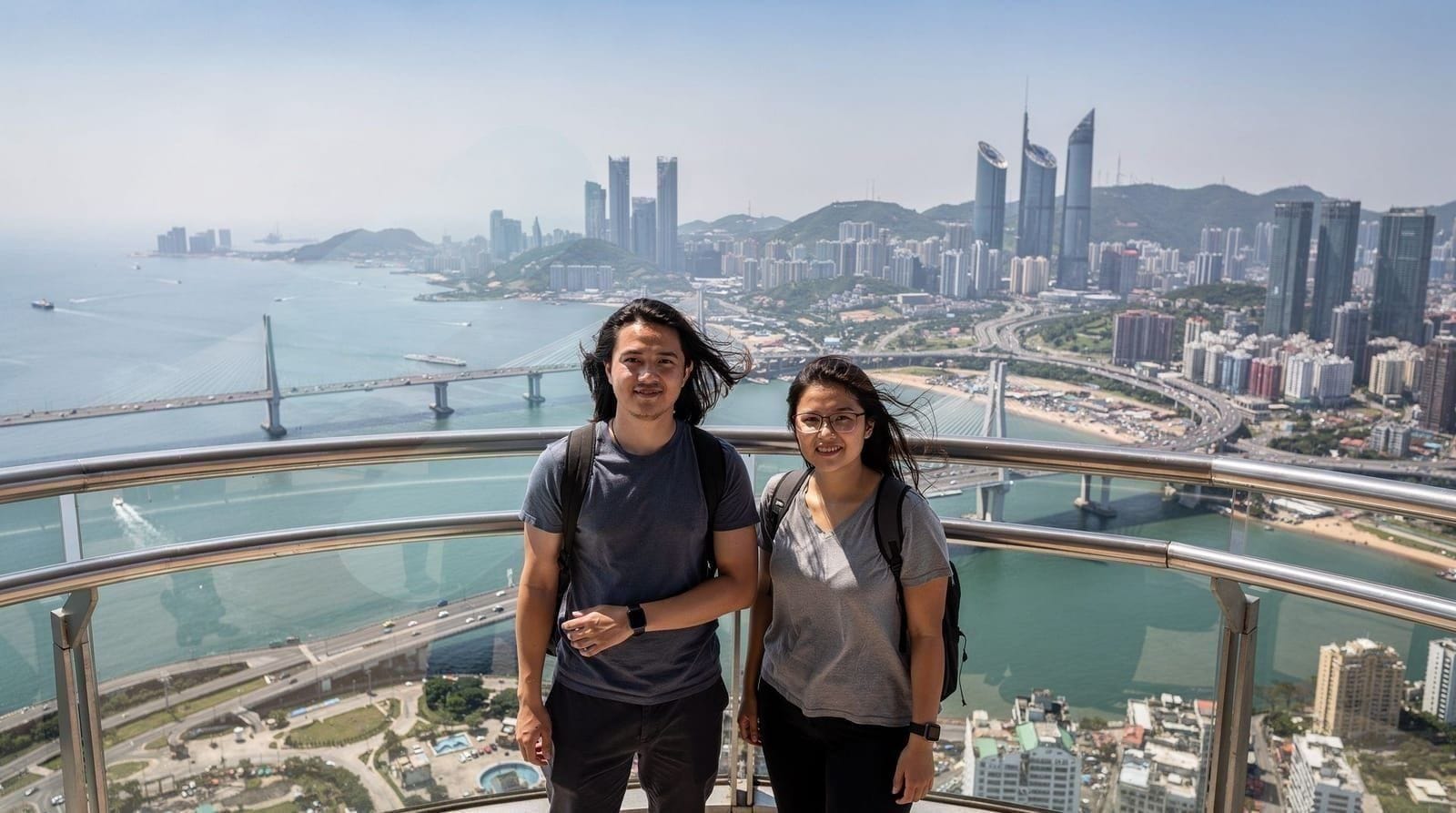
Macau Tower has a surprise: Tromba Rija, a restaurant on Level 61 with rotating 360-degree views and a menu that actually attempts proper Macanese and Portuguese cooking (rather than the hotel buffet approach most tower restaurants take). Lunch at Tromba Rija is MOP 180–280 pp/USD 22–35 for two courses.
Macau Tower Tromba Rija restaurant — dining with rotating viewsIf you’d rather use Macau Tower just for the view (MOP 145/USD 18 observation deck) and save the meal money for dinner, that’s a reasonable call.
16:00 — Cotai: scouting the Michelin restaurants for dinner
Take the free casino shuttle from Macau Tower to the Cotai Strip. Walk the main resorts and identify your dinner restaurant. Options at the high end:
Jade Dragon at City of Dreams: Three Michelin stars. Cantonese cuisine — roast duck, Peking-style dishes, seafood. The private dining rooms are spectacular. MOP 600–1,200 pp/USD 75–150 without wine. Pre-booking required.
The Tasting Room at Crown Tower: Two Michelin stars. Contemporary European cuisine. MOP 450–800 pp/USD 56–100.
Zi Yat Heen at the Four Seasons: One Michelin star. Cantonese dim sum and seafood in a refined setting. Dinner MOP 300–600 pp/USD 37–75. Accessible for a first Michelin experience.
For the broader list and booking advice, see the Macau Michelin guide.
Mid-afternoon snack: Before dinner, stop at The Venetian’s Cotai Expo food hall or the Parisian’s lobby café for a Portuguese custard tart from a hotel pastry kitchen — these are different again from street-bakery tarts and the comparison is educational. MOP 20–35/USD 2.50–4.40.
19:30 — Michelin dinner
Choose based on what you haven’t eaten yet in two days:
If you’ve mostly eaten Macanese: Jade Dragon or Zi Yat Heen for definitive Cantonese.
If you want to compare with European technique: The Tasting Room or Robuchon au Dôme (Peninsula, three stars — but requires months of advance booking).
If your budget has run out: The Venetian’s Golden Peacock (Indian cuisine, one Michelin star) offers the most accessible entry point to the guide at MOP 250–400 pp/USD 31–50.
21:00 — Nightcap and street food finale
After dinner, walk back through the Venetian’s Grand Canal for the evening gondola atmosphere, then find your way to the casino-shuttle terminal. Before you leave, stop at a 24-hour bakery — Koi Kei has several — for a final takeaway box of egg tarts and almond cookies.
Practical information for food travellers in Macau
Booking strategy
- Robuchon au Dôme: Book 2–3 months ahead via the Grand Lisboa website. Non-negotiable.
- Jade Dragon: Book 2–4 weeks ahead; slightly easier mid-week.
- A Petisqueira: Call the day before. Fills up on weekends.
- Fernando’s: No bookings. Arrive by noon on weekends.
- Lord Stow’s: No booking needed; just go early.
What to bring home
- Almond cookies (vacuum-sealed, 3-month shelf life) from Koi Kei or Choi Heong Yuen
- Balichão (Macanese shrimp paste) in a sealed jar — check airline rules for bringing liquids/pastes
- Portuguese wine from specialty shops in Taipa Village
- Serradura powder mixes (sold at some bakeries for home preparation)
Two-day food budget
| Category | MOP | USD |
|---|---|---|
| Egg tarts and morning snacks | 80–120 | 10–15 |
| Day 1 lunch (Restaurante Litoral) | 280–400 | 35–50 |
| Evening food tour (per person) | 350–450 | 43–56 |
| Day 2 breakfast (Lord Stow’s) | 30–50 | 3.70–6.20 |
| Fernando’s lunch (per person) | 200–300 | 25–37 |
| Michelin dinner (entry-level) | 300–600 | 37–75 |
| Michelin dinner (high-end) | 600–1,200 | 75–150 |
| Snacks and drinks | 100–200 | 12–25 |
| Total per person (mid-range) | 1,340–2,120 | 167–264 |
See our full Macau street food guide and best restaurants in Macau guide for the complete picture.
Adapting this itinerary if you’re not doing a Michelin dinner
If starred dining isn’t your priority or budget, swap the Day 2 evening for a proper Taipa Village dinner instead — A Petisqueira or O Santos deliver the same Macanese-Portuguese cooking philosophy at a third of the price. You’ll still hit every essential food experience (Lord Stow’s, Fernando’s, the egg tart comparison, the street food tour) without the four-figure MOP tab. The saved budget is better spent on the evening food tour or a second visit to Fernando’s, which is worth returning to even within the same trip.
How this itinerary compares to the standard 2-day plan
Our general 2-day itinerary covers UNESCO sights and Cotai spectacles with food as a secondary consideration; this one inverts the priority, cutting Macau Tower’s observation deck and much of the Cotai walking to make room for the Almirante Lacerda market, the full egg tart comparison, and two proper sit-down meals a day. If you want a mix of both — heritage sightseeing and serious eating — the 3-day itinerary has more room to do both without sacrificing either.
Frequently asked questions about a Macau food trip
Do I need to book restaurants before arriving?
Only for the high end: Robuchon au Dôme (2–3 months ahead) and Jade Dragon (2–4 weeks). Everything else in this itinerary — Lord Stow’s, Fernando’s, A Petisqueira, the street food tour — is either walk-in or a same-week phone call. See the booking strategy section above for the full list.
Is Macanese food available outside Macau?
Barely. A handful of Macanese restaurants exist in Hong Kong, Lisbon, and a few diaspora cities, but the concentration and authenticity of family-run kitchens in Macau — some operating for 20+ years in the same building — isn’t replicated elsewhere. That’s the core reason this itinerary exists as a dedicated food trip rather than a side note to sightseeing.