Macau vs Las Vegas — which should you pick for your trip?
The comparison is reasonable on the surface: both cities are defined by gambling revenue, both have mega-resort casino hotels, and both attract tens of millions of visitors per year. But spending time in Macau and Vegas reveals how different the underlying experience is — and the choice between them depends almost entirely on what you actually want from a trip.
This isn’t a promotional piece for either city. Both have real limitations. Let’s be honest about what each does well and what each is genuinely bad at.
| Flight distance from Asia | Macau wins — regional gateway, short-haul from most of East/SE Asia |
| Flight distance from North America | Vegas wins — direct domestic flights |
| Best for casual gamblers | Las Vegas |
| Best for heritage and culture | Macau |
| Cheapest overall (from Asia) | Macau |
The gambling comparison
Las Vegas: The gambling experience in Vegas is designed for a broad audience. Slots are the primary business. The atmosphere is theatrical — free drinks while gambling, elaborate casino themes (the Bellagio’s ceiling, Caesars’ Roman excess), and entertainment integrated into the gambling floor. The skill gap between serious gamblers and casual tourists is manageable in Vegas; you can sit at a blackjack table with a basic strategy card and not be embarrassed.
Macau: Macau’s casinos are more serious. The primary game is baccarat, and the primary clientele — especially in the VIP rooms — is mainland Chinese high rollers. The atmosphere is more intense and less theatrical. If you sit at a baccarat table in Macau without understanding the game, you’ll figure that out quickly. Slots exist but are not the cultural centre of the experience. The gaming revenue that made Macau globally dominant came from the mass and VIP baccarat business, not slots.
Winner for casual gambling tourists: Las Vegas, by a significant margin. The casino infrastructure is specifically designed for people who aren’t serious gamblers and want to have fun. Macau’s casino floors are excellent if you’re a high roller or a baccarat enthusiast; they’re more intimidating for everyone else.
See the Macau casinos guide and the dedicated Macau vs Las Vegas comparison for more depth on this specific question.
The food comparison
Las Vegas: Vegas food in 2024 is excellent. The city has become a legitimate culinary destination, with flagship restaurants from Joël Robuchon, Guy Savoy, and other internationally recognised chefs. The casino buffets are famous, though they’re more about quantity than quality. Outside the casino-resort bubble, Las Vegas has a growing neighbourhood restaurant scene.
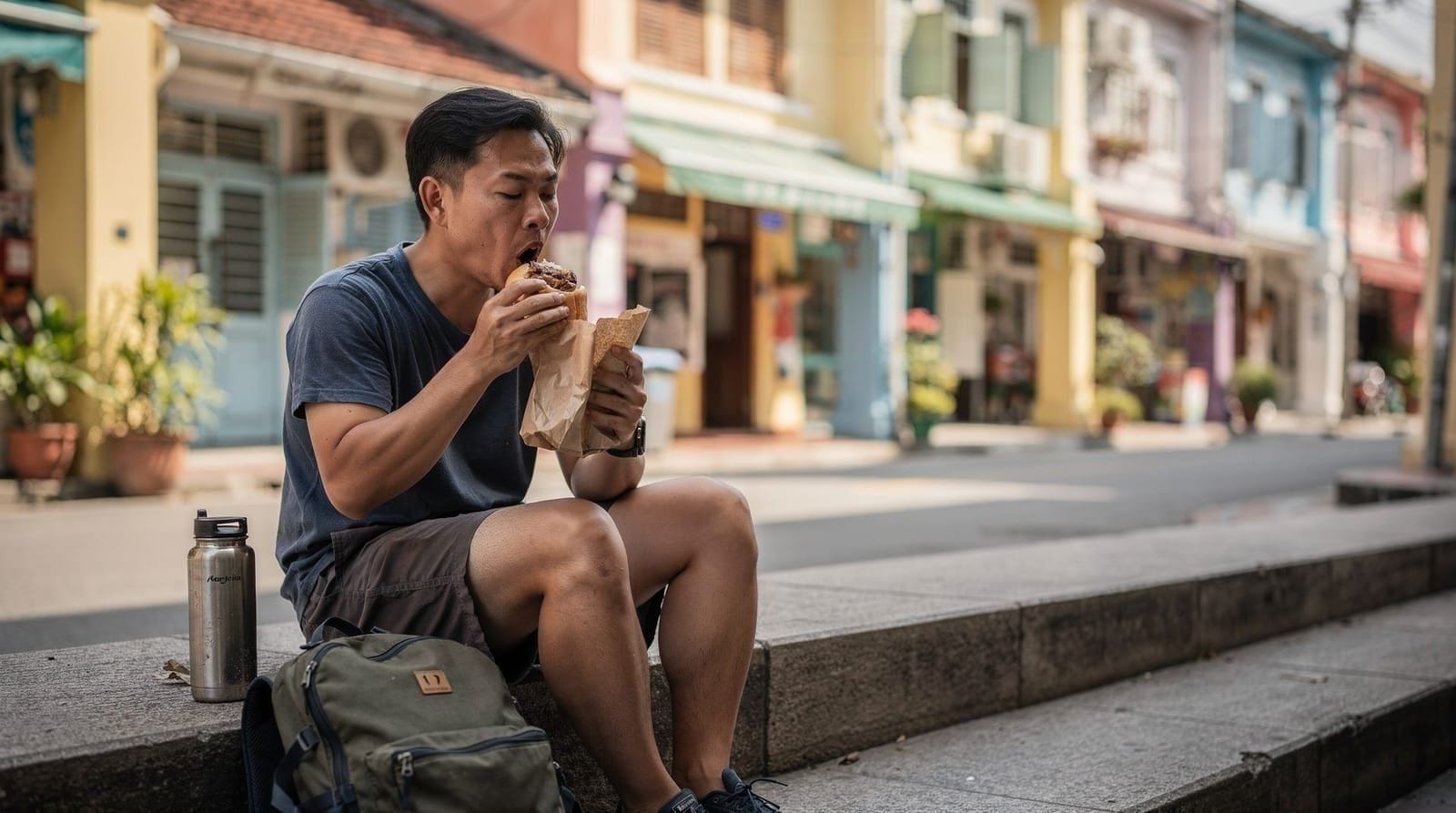
Macau: Macau’s food scene is genuinely world-class at the high end — Robuchon au Dôme at the Lisboa holds three Michelin stars, and the overall Michelin count is remarkable for a city this size. But the really compelling food story in Macau is the low end: egg tarts at Lord Stow’s in Coloane Village, pork chop buns at Sei Kee Café, minchi and African chicken at local Macanese restaurants, congee and wonton noodles at Wong Chi Kei on Senado Square for MOP 40–55 (USD 5–7). The Macanese cuisine guide details this hybrid Portuguese-Cantonese-African culinary tradition that genuinely doesn’t exist anywhere else.
Winner for food: Macau — particularly if you value authenticity, affordability, and genuine cultural specificity in cuisine. Vegas wins on the high-end restaurant concentration, but Macau’s mid-range and budget food is far more interesting than Vegas at the same price points.
The non-gambling attraction comparison
Las Vegas: Outside the casinos, Vegas offers: the Strip itself (architecture as spectacle), day trips to the Grand Canyon and Red Rock Canyon, Cirque du Soleil shows, a large number of pool parties, and an expanding arts district. The Neon Museum and the Discovery Children’s Museum are legitimate cultural attractions. But the honest answer is that Vegas is not a destination for people primarily interested in history, architecture, or cultural depth. The built environment outside the Strip is generic American suburb.
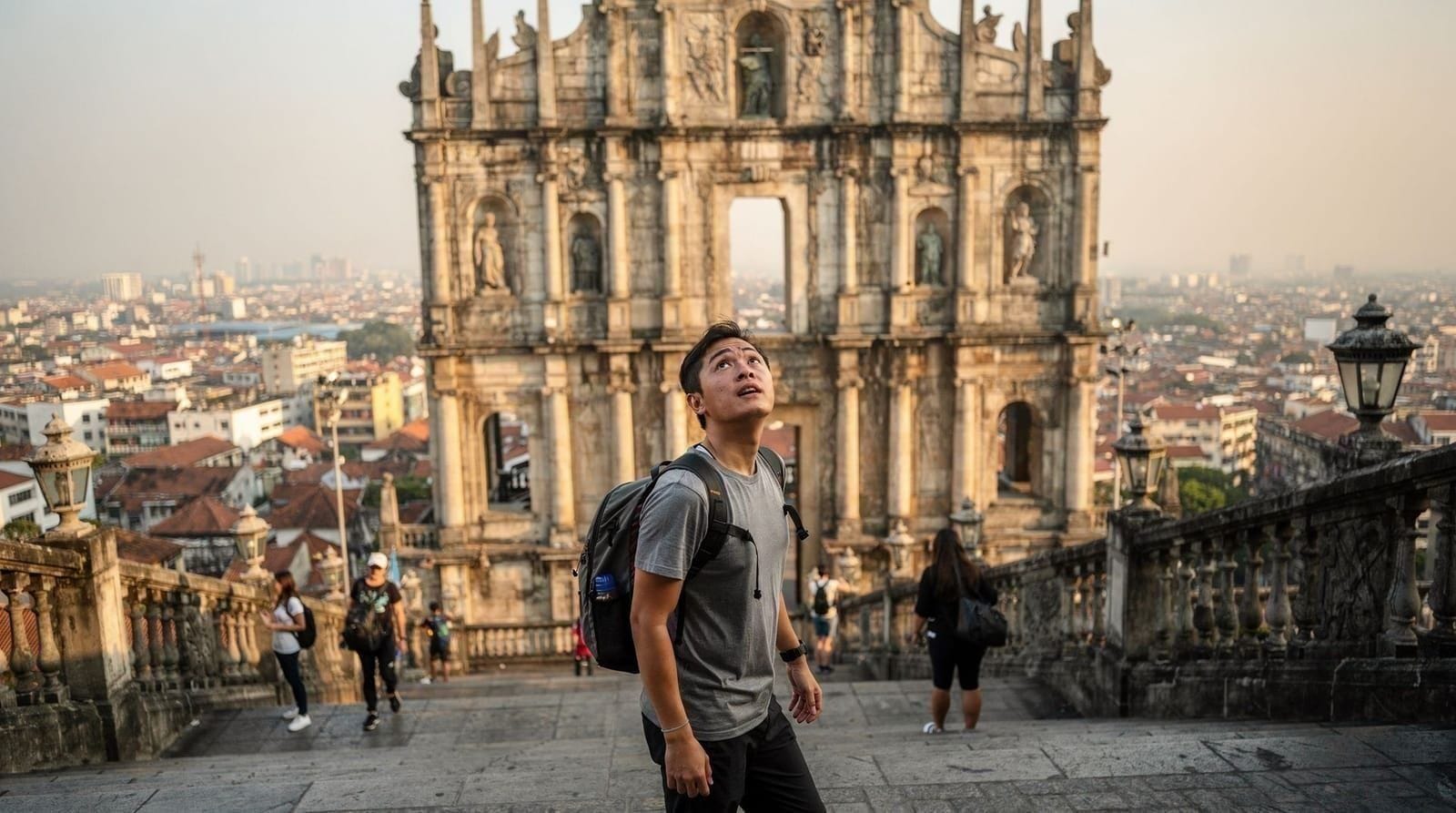
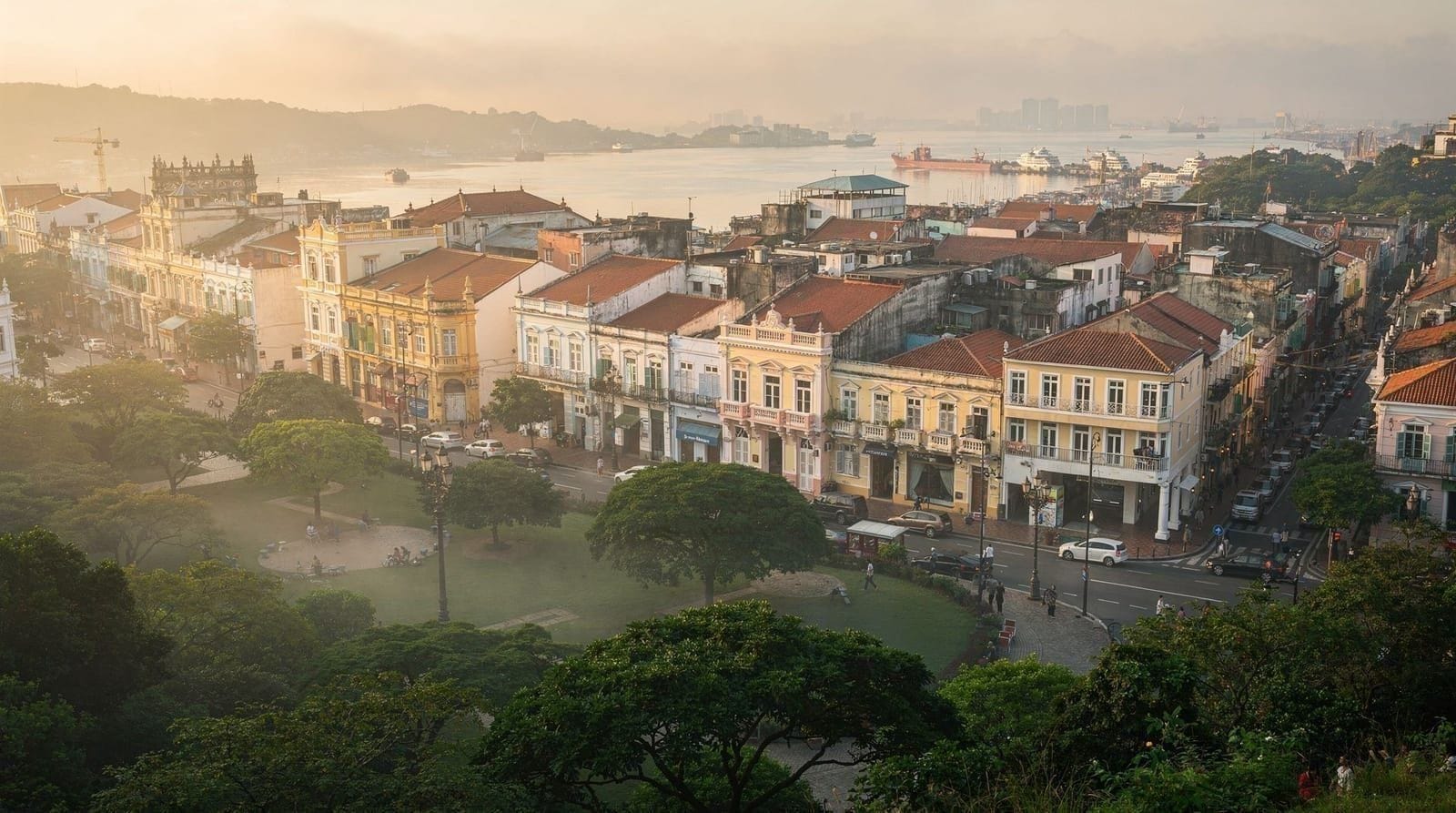
Macau: Macau has a UNESCO World Heritage historic centre with 30 monuments and sites covering 450 years of Portuguese colonial history. The Ruins of St. Paul’s, A-Ma Temple, the Guia Fortress and Lighthouse, and the cobblestone streets of the Macau Peninsula are legitimately historically significant and free to visit. Coloane has beaches, hiking, and Lord Stow’s bakery. Taipa Village is one of the most charming walkable neighbourhoods in Asia.
Winner for non-gambling attractions: Macau, decisively. If you have no interest in gambling, you can spend two engaging days in Macau; two days in Vegas without gambling is two days at a pool and a shopping mall.
The cost comparison
Las Vegas: Hotels on the Strip range from budget (USD 60–100 per night for off-strip older properties) to extreme luxury (Wynn, Bellagio, ARIA at USD 300–700+ per night). Food costs are wide: casino buffets USD 30–60 per person, mid-range restaurant meals USD 50–100 per person. A flight from Europe or Asia to Vegas is a significant expense — typically USD 600–1,200+ depending on origin and timing.
Macau: Casino hotels on Cotai range from MOP 1,200–4,500 (USD 150–562) per night, with significant variation by day of week (weekends are dramatically higher due to Hong Kong and mainland Chinese visitor demand). Budget guesthouses on the peninsula: MOP 400–700 (USD 50–87). Food costs are lower than Vegas at the mid-range: a good Macanese lunch MOP 120–200 (USD 15–25), street food MOP 20–50 (USD 2.50–6.25). Getting to Macau from Hong Kong is MOP 170–210 (USD 21–26) by ferry — the regional gateway costs are low.
Winner for cost: Depends on origin. For travellers already in Southeast or East Asia, Macau wins easily on access cost. For travellers from Europe or North America, both are long-haul destinations with similar overall trip costs.
The weather and timing comparison
Las Vegas: Year-round destination, but the desert heat (42°C+ in July–August) makes summer unpleasant outdoors. Spring (March–May) and autumn (September–November) are optimal. Winter days are comfortable (15–20°C) and rates drop.
Macau: Subtropical climate. Summer (June–September) is hot (30–33°C), very humid, and typhoon season. October–December is the most comfortable: dry, mild, and coincides with the Grand Prix in November. January–March has a cold, damp edge but manageable temperatures (15–20°C). See Macau weather by month for detail.
Winner: depends on origin season and personal heat tolerance. Vegas’s desert heat is a different kind of unpleasant than Macau’s subtropical humidity. Both have comfortable windows.
Getting there and getting around
Las Vegas: McCarran International connects directly to most major North American cities and a growing list of international ones, but from Europe or Asia it’s usually a connection. Once there, the Strip is walkable in sections but genuinely large — expect rideshares or the monorail for longer hops.
Macau: Macau’s own airport has limited long-haul connections; most international travellers arrive via Hong Kong or mainland China. The ferry from Hong Kong takes about an hour and costs MOP 170–210 (USD 21–26) — for travellers already in the region, this is dramatically cheaper and faster than flying into Vegas from anywhere outside North America. Within Macau, the light rail and free casino shuttles cover most of the peninsula and Cotai; it’s a compact enough territory that you rarely need a taxi for long distances.
If Hong Kong is already on your itinerary, a Hong Kong day trip or the reverse Macau day trip from Hong Kong makes the regional logistics an asset rather than a cost — something Vegas, as a standalone US destination, can’t offer.
Hong Kong to Macau ferry ticketSide-by-side snapshot
| Las Vegas | Macau | |
|---|---|---|
| Primary game | Slots | Baccarat |
| Casual-gambler friendliness | High | Lower |
| Heritage/culture depth | Limited | UNESCO historic centre |
| Mid-range hotel (per night) | USD 150–300 | USD 150–300 (higher on weekends) |
| Budget food | USD 15–25 | MOP 20–55 (USD 2.50–7) |
| Best season | Spring/autumn | Oct–Dec |
| Access from Asia | Long-haul | Regional, ferry from Hong Kong |
| Access from North America | Direct | Long-haul plus connection |
The honest answer: which to pick?
Pick Las Vegas if: You primarily want to gamble casually, you want theatrical casino entertainment (shows, clubs, concerts), you’re combining with American Southwest natural attractions, or you’re based in North America.
Pick Macau if: You want gambling as one component of a trip that includes genuine history and architecture, you value authentic Asian street food and Macanese cuisine specifically, you’re travelling from East or Southeast Asia and cost-distance is a factor, or you want to understand how China’s economic transformation has played out in a specific place.
Pick both if: You have the time. The experiences are complementary rather than duplicative. Vegas delivers American excess; Macau delivers Portuguese-Chinese fusion culture with a casino economy layered over it. The overlap is shallower than the marketing suggests.
The full comparison guide on this site covers specific aspects in more depth if you’re still deciding. If Macau is winning the debate for you, the is Macau worth visiting guide and the how many days in Macau planner are the logical next reads.