Macau vs Las Vegas: the world's two gambling capitals compared
Macau: Premium Private City Tour with English Guide
- Private tour
- Hotel pickup
- English guide
Which is better for a casino trip — Macau or Las Vegas?
Macau is the world's largest gambling market by revenue and combines casino culture with UNESCO heritage and unique Macanese cuisine. Las Vegas is more accessible from the Americas and Europe, offers a wider variety of entertainment beyond gambling, and has a more established international tourist infrastructure. Your location matters most: Asia-based travellers should strongly consider Macau; North American and European travellers will find Las Vegas far easier and cheaper to reach.
| Gaming revenue leader | Macau (roughly 3x Las Vegas Strip) |
| Easier to reach from Americas/Europe | Las Vegas |
| Easier to reach from Asia | Macau |
| Unique cultural depth | Macau (UNESCO heritage, Macanese food) |
| Entertainment variety | Las Vegas (Sphere, Cirque, Grand Canyon day trips) |
Two cities built around the bet
Las Vegas and Macau are the only two places on earth where casino gambling has shaped not just an economy but an entire urban identity. Both have invented themselves around the gaming table — the glittering resort corridors, the deliberately disorientating layouts, the free drinks (in Las Vegas) or the free shuttle buses (in Macau), all engineered to keep money flowing.
But beyond the shared premise, these two cities are more different than their marketing suggests. One is a desert city in the American Southwest built on post-war optimism and has diversified aggressively into shows, restaurants, and conventions. The other is a 32-square-kilometre peninsula in southern China, layered with Portuguese colonial history, Buddhist temples, and Michelin-starred restaurants that has, since 2006, consistently outearned its Nevada rival by a wide margin.
This guide compares them honestly — casino culture, non-gambling appeal, food, cost, accessibility, and the practical question of who should visit which.
The revenue reality
Let’s start with the number that surprises most people: Macau is not competing with Las Vegas — it has comprehensively surpassed it.
Macau became the world’s largest gambling market by revenue in 2006, the year it overtook Las Vegas for the first time. By 2013, Macau’s annual gaming revenue had reached USD 45 billion — more than six times the combined revenue of the entire Las Vegas Strip. Even after significant downturns (the anti-corruption campaign of 2014–2015, US-China trade tensions, and the catastrophic impact of COVID-19 travel restrictions), Macau’s gaming revenue in good years runs at USD 20–25 billion versus Las Vegas Strip revenues of USD 7–8 billion.
The driving force is Mainland Chinese high-rollers and mass-market visitors who cross the border from Guangdong province — a catchment area of tens of millions of people within a few hours’ travel. Baccarat accounts for roughly 85–90% of Macau’s gaming revenue, reflecting its popularity among Chinese players. Las Vegas has a far more diverse mix: slot machines, poker, blackjack, sports betting, and table games of all kinds.
This difference shapes everything about the atmosphere on the casino floor.
Casino culture and the gaming floor
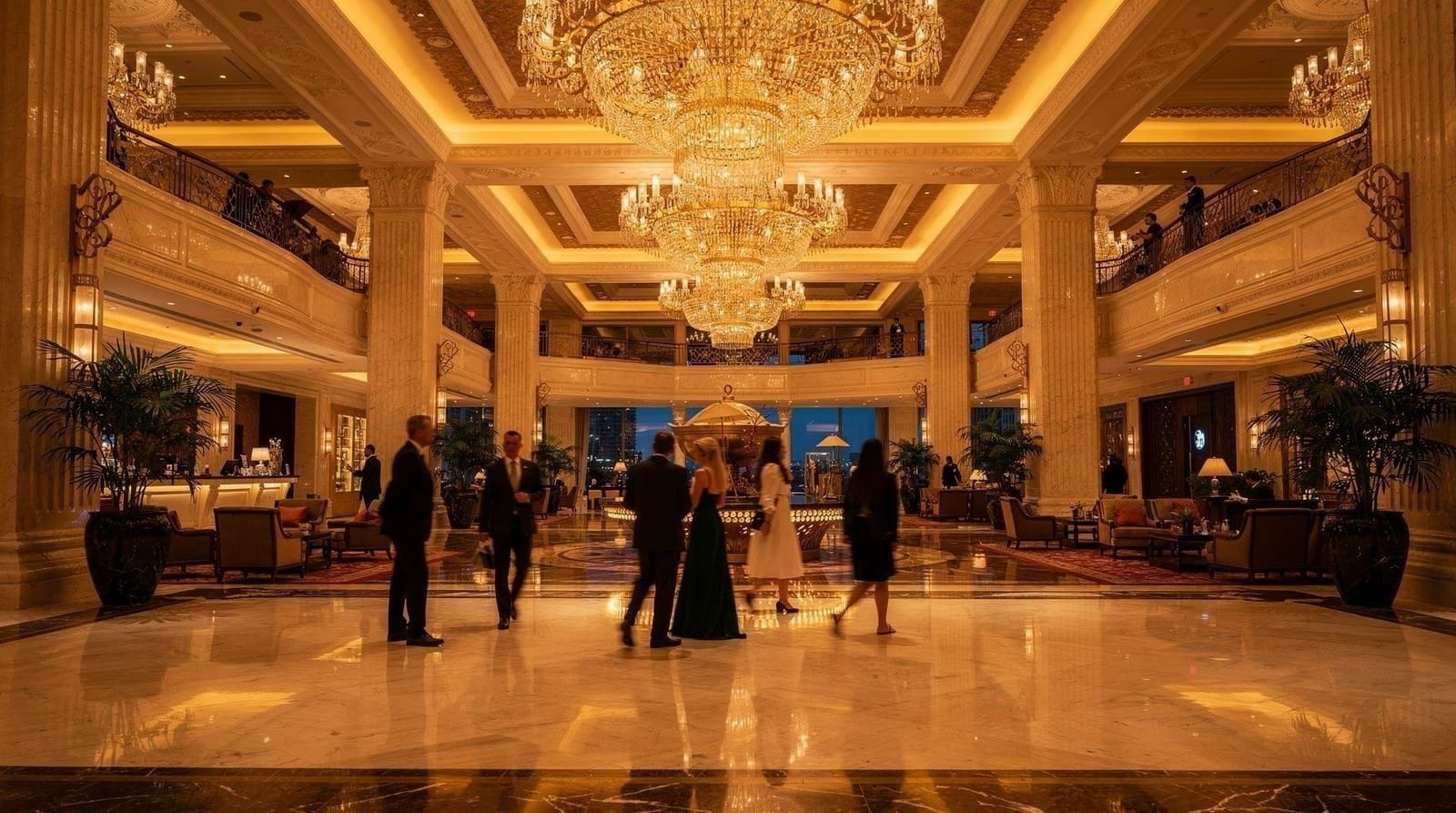
Macau’s casinos are large, often overwhelmingly so. The Venetian Macao on the Cotai Strip claims the largest single casino floor in the world — around 51,000 square metres. Galaxy Macau, City of Dreams, MGM Cotai, Wynn Palace, and Sands Macao are each enormous properties with multiple gaming areas. Table minimums at mass-market tables in Macau typically start at MOP 100–200 (USD 12–25), and main floor baccarat tables can have minimums of MOP 500–1,000 (USD 60–125) or higher. VIP rooms operate on an entirely different scale, with private junket operators and stake levels that dwarf anything on the Las Vegas Strip.
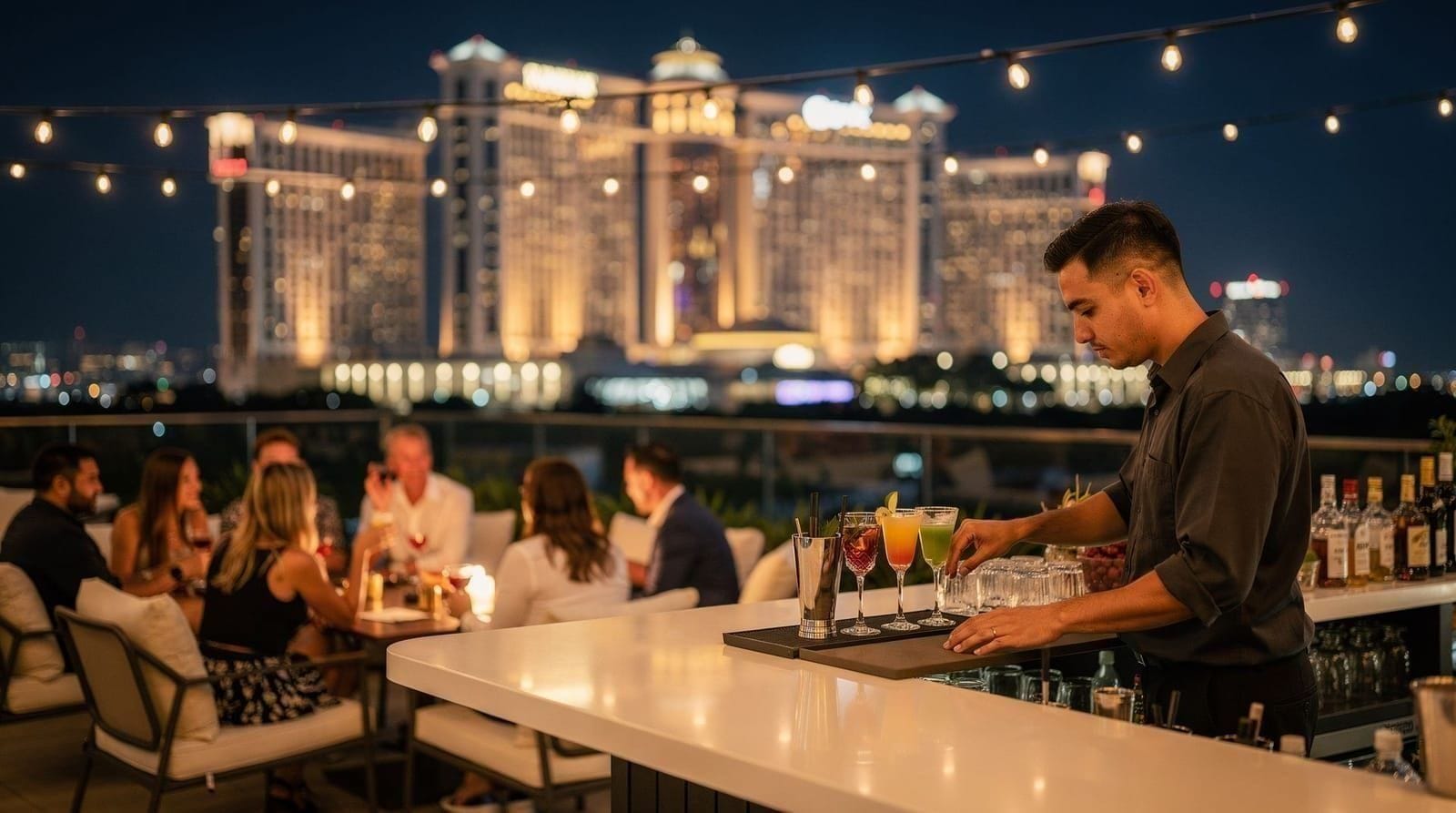
The atmosphere skews heavily Chinese. The predominant language on the floor is Cantonese or Mandarin. The free drinks culture that defines Las Vegas (where casinos provide complimentary alcohol to players) does not exist in Macau in the same way — you will pay for drinks on the floor. The pace is intense and the focus on baccarat gives many floors a particular energy: quiet concentration broken by sudden eruptions of celebration or despair around a single hand.
Las Vegas offers more variety on the gaming floor. Slot machines, which are almost absent in Macau, dominate much of the Las Vegas floor area. Poker rooms (both cash and tournament) are a genuine draw — the World Series of Poker is held in Las Vegas. Sports betting has become increasingly significant since the legalisation of interstate sports wagering. Table game minimums on the Strip range from USD 10–25 at the lower end (in off-Strip casinos, lower still) up to USD 100+ at premium tables. The atmosphere is more international and more casual — Las Vegas markets itself to bachelor parties, corporate groups, and first-time gamblers alongside serious players.
The casinos themselves
Macau’s marquee properties:
-
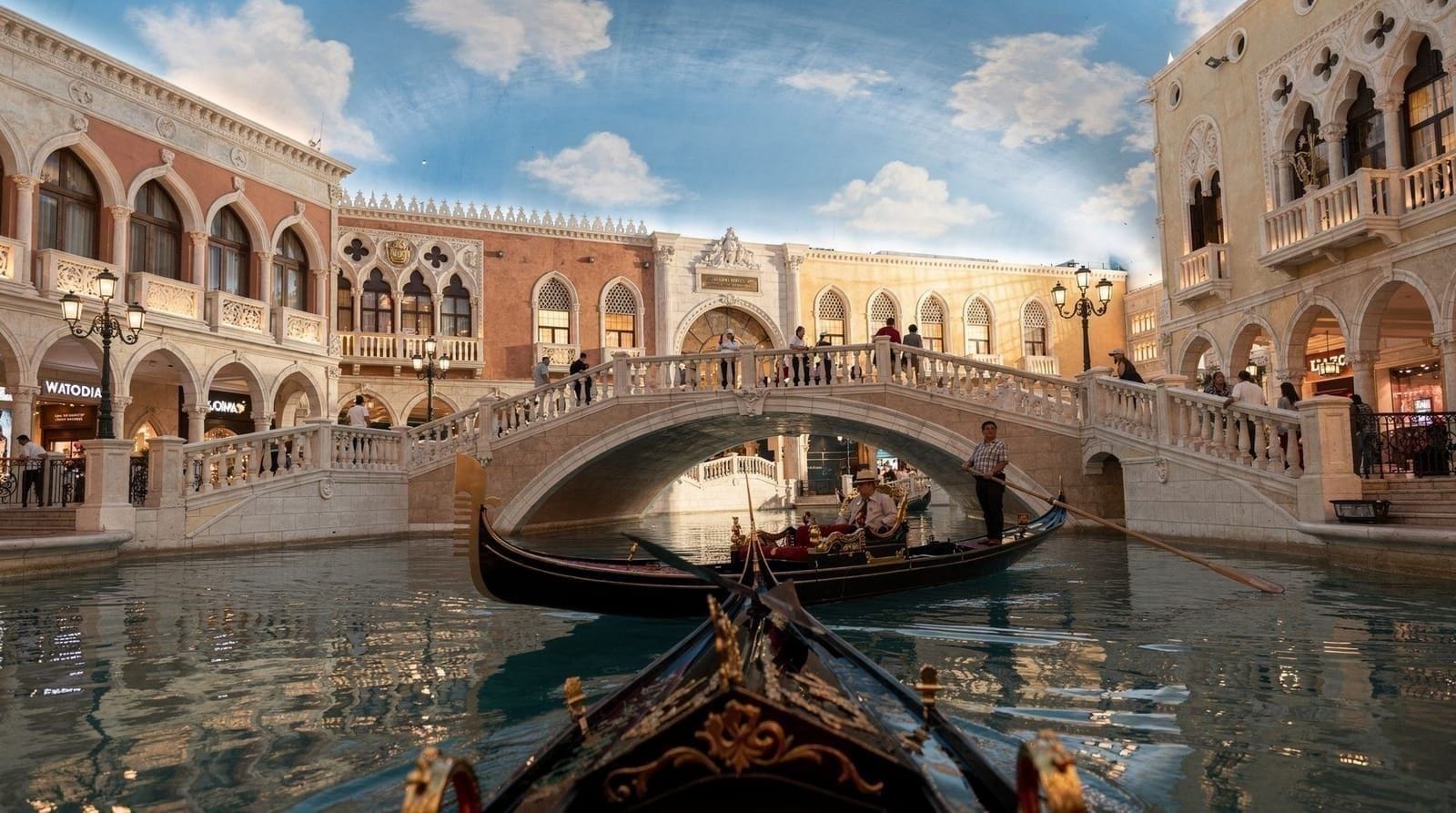
The Venetian Macao (full guide): the world’s largest casino, with a replica Venice grand canal, gondola rides, and a 15,000-seat arena. The non-gaming facilities — restaurants, mall, entertainment — are substantial.
-
Galaxy Macau: a compound with multiple hotels, a wave pool open to hotel guests, and a large casino floor.
-
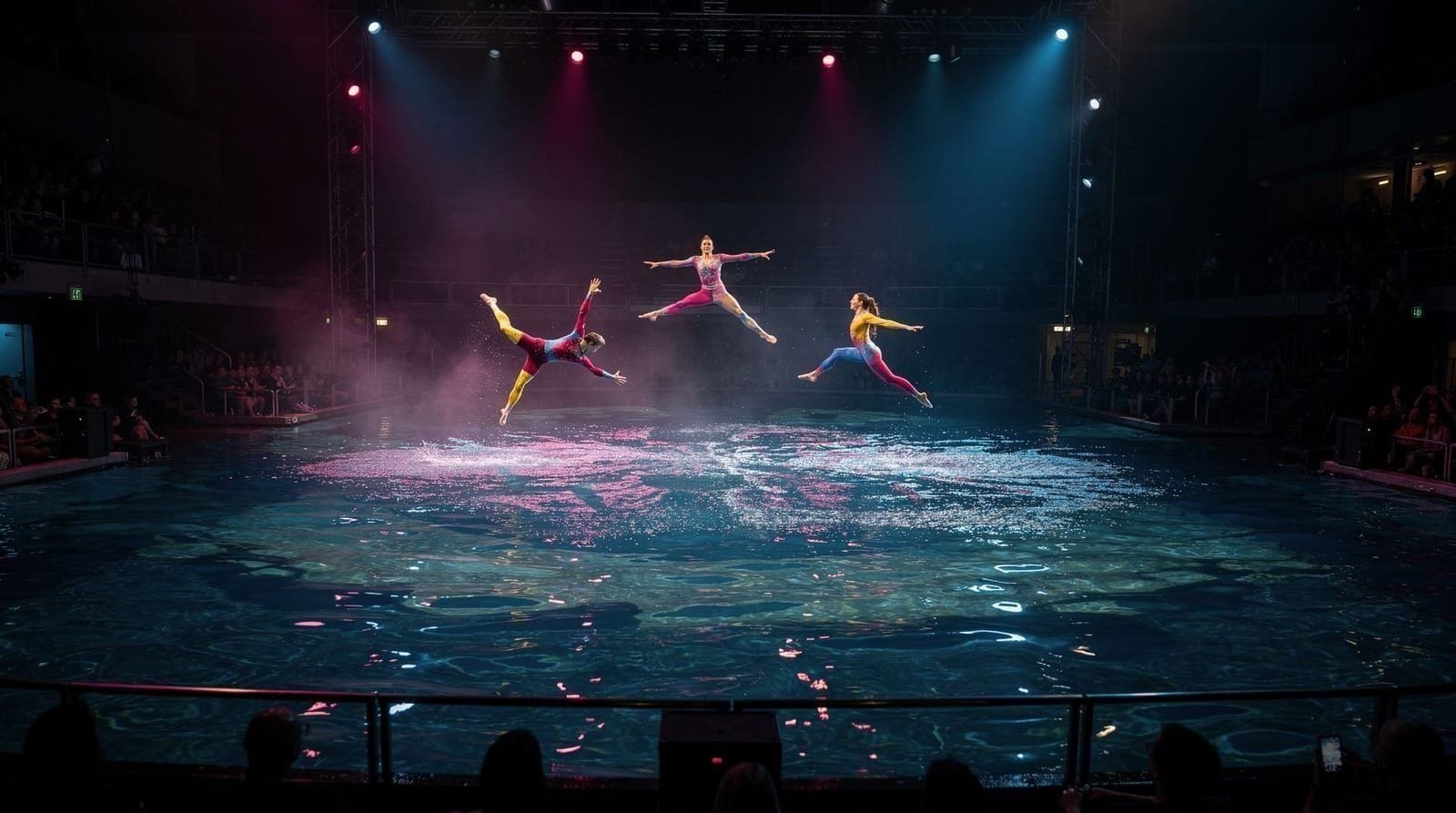
City of Dreams: home to the House of Dancing Water, one of Asia’s most spectacular theatrical shows (details).
-
Wynn Palace: possibly the most visually refined of the Cotai properties, with a floral cable car and landscaped gardens.
-
Wynn Macau and MGM Macau: older Peninsula properties, more intimate in scale.
-
Sands Macao: the property that started the transformation of Macau’s gaming industry when Sheldon Adelson opened it in 2004.
Las Vegas’s marquee properties:
- Bellagio: the dancing fountains on the Strip are a Las Vegas icon; the casino itself is one of the most consistently referenced in gambling culture.
- MGM Grand: one of the largest hotel complexes in the world by room count.
- Caesars Palace: Roman-themed resort with a huge pool complex and the Colosseum entertainment venue.
- The Venetian Las Vegas and Palazzo: effectively the template that inspired the Venetian Macao.
- Wynn Las Vegas and Encore: widely regarded as the most refined properties on the Strip, comparable in quality to Wynn Palace in Macau.
- Resorts World Las Vegas: the newest major property on the Strip at time of writing.
The key distinction: Macau’s properties are mostly concentrated on the Cotai Strip and the older Macau Peninsula, an area covering a few square kilometres. Las Vegas has the Strip (roughly 6.7km long) plus Downtown (Fremont Street) plus numerous off-Strip properties. Las Vegas has more geographic spread; Macau has more density.
Non-gambling appeal
This is where the comparison tips decisively in Macau’s favour for travellers who want more than a casino trip.
Macau’s non-gambling offer:
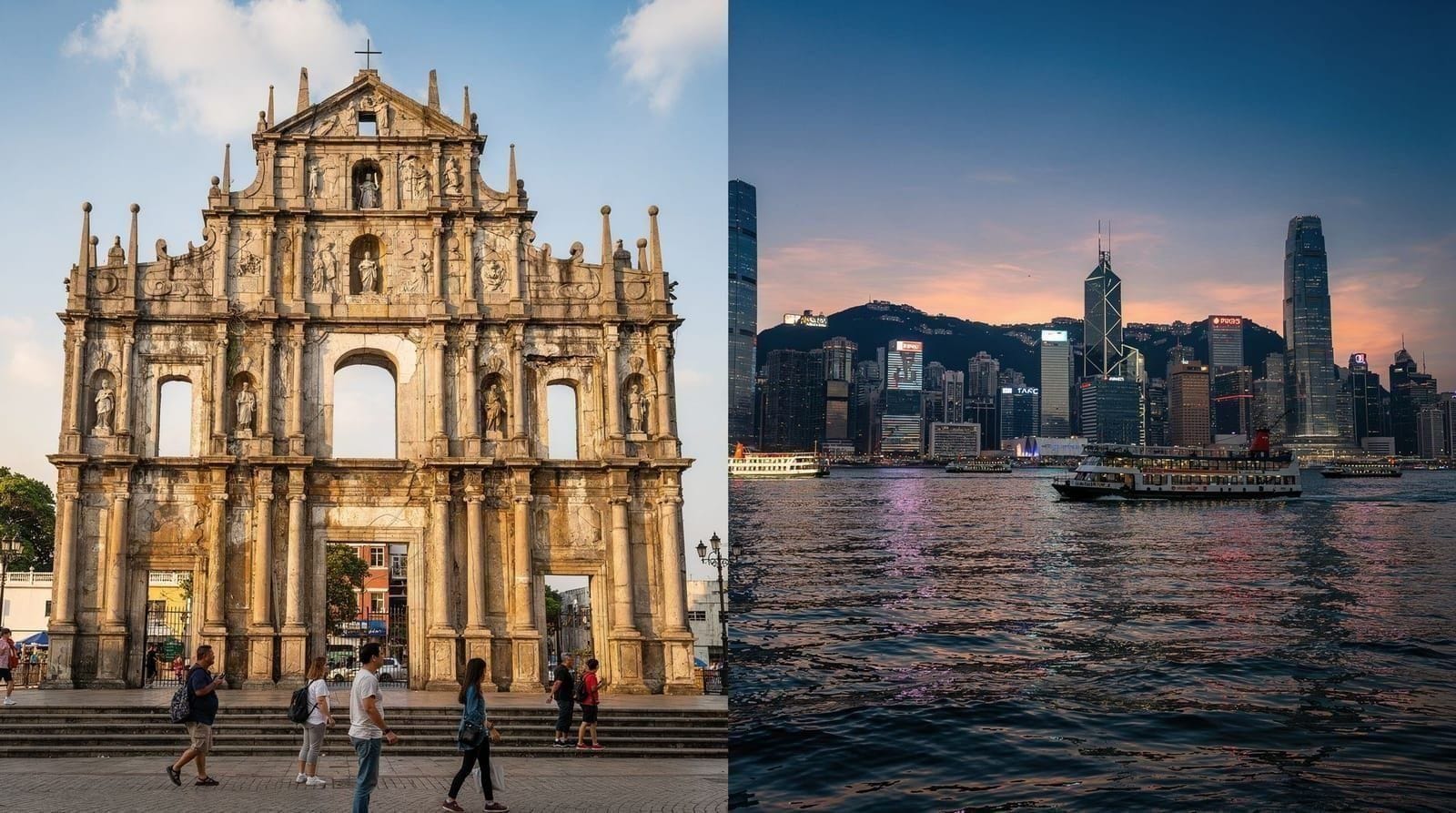
The Macau Historic Centre is a UNESCO World Heritage Site covering 30 monuments across the Macau Peninsula — Portuguese baroque churches, Chinese temples, colonial fortresses, and historic plazas. The Ruins of St. Paul’s, built in the early 17th century, is the defining image of the city. The A-Ma Temple dates to the 15th century. Senado Square is a beautiful Portuguese-paved public square surrounded by colonial architecture. None of this requires spending a single pataca in a casino.
Taipa Village is a walkable neighbourhood of Portuguese colonial houses, local restaurants, and browsable shops that has maintained its character despite the Cotai towers visible in the distance. Coloane has hiking trails, quiet beaches, and the village of Coloane itself — slow-paced and genuinely charming.
The Macau Tower offers a 338-metre observation deck and the AJ Hackett bungy jump — the world’s highest commercial bungy jump at the time it opened. Macau Giant Panda Pavilion in Coloane is free to enter.
Las Vegas’s non-gambling offer:
Las Vegas has worked hard to build a non-gambling identity. The Shows are the most compelling argument: Cirque du Soleil productions (multiple simultaneous shows over the years), residency concerts by major artists, comedy clubs, magic shows, and Sphere — the enormous immersive entertainment venue that opened in 2023 and can host both concerts and film-like immersive experiences. The Sphere represents a genuinely new form of entertainment that has no equivalent in Macau.
Day trips from Las Vegas are exceptional: the Grand Canyon South Rim is roughly 4.5 hours by car or bus, and helicopter tours to the Grand Canyon West Rim run regularly. The Hoover Dam, Valley of Fire, Zion National Park, and Red Rock Canyon are all accessible. For travellers interested in American Southwest scenery, Las Vegas is a uniquely practical base.
The Las Vegas arts scene has grown significantly: the Neon Museum (an outdoor collection of historic Las Vegas signs) is genuinely interesting; the Mob Museum is well-produced; the various free casino entertainments (Bellagio fountains, Fremont Street Experience light show) are worth a look.
The honest assessment: Macau’s non-gambling offer has more historical and cultural depth; Las Vegas’s non-gambling offer has more variety and scale, particularly for outdoor adventurers and live entertainment fans.
Food and dining
Both cities have built serious culinary scenes, partly because high-end casino resorts compete on food as much as games.
Macau:
The unique draw is Macanese cuisine — the hybrid cooking tradition that emerged from centuries of Portuguese colonial trade. African chicken, minchi, caldo verde, and Macanese-style pastel de nata (egg tarts) are dishes you cannot get anywhere else in this form. Taipa Village and the streets around Senado Square are lined with local restaurants serving Macanese and Cantonese food at prices well below resort dining.
At the high end, Macau has Robuchon au Dôme at the Grand Lisboa — a spectacular dining room at the top of the Lisboa tower — and The Tasting Room at Crown Towers. Multiple casino restaurants hold Michelin stars. The overall dining scene rewards exploration beyond the resort level.
Las Vegas:
Las Vegas has assembled a remarkable roster of celebrity-chef restaurants. Gordon Ramsay, Wolfgang Puck, Guy Savoy, and Joel Robuchon (before his death) have all operated or continue to operate high-profile Las Vegas restaurants. The buffet culture — though diminished post-pandemic — remains a distinctive Las Vegas tradition, with properties like the Bacchanal Buffet at Caesars Palace offering enormous variety at a fixed price.
Fast food and mid-range dining in Las Vegas can be expensive by American standards (the Strip markup is real). Off-Strip, Las Vegas has an enormous working city with Vietnamese, Mexican, Chinese, and other restaurants serving locals at reasonable prices — but tourists rarely venture far enough to find them.
The food comparison is close at the high end. At the mid-range and below, Macau’s local restaurant scene is substantially more interesting and more affordable.
Cost and accessibility
Getting there:
This is the single most decisive factor for most travellers.
Las Vegas has direct flights from virtually every major North American city and from many European hubs. A return flight from New York or London to Las Vegas is a standard booking that most travellers can make without thinking. The Las Vegas airport (Harry Reid International) is minutes from the Strip.
Macau, by contrast, is best reached via Hong Kong. Direct flights to Macau’s international airport exist from many Asian cities, but Macau’s airport is small and international connections are limited. Most visitors fly into Hong Kong International Airport and then take the TurboJet or Cotai Water Jet ferry (~55 minutes) or the HZMB bus to Macau. For travellers based in Asia — mainland China, Japan, South Korea, Southeast Asia, Australia — this is straightforward. For travellers from North America or Europe, Macau requires a long-haul flight (typically 14–16 hours to Hong Kong from the US East Coast, 12–13 hours from the UK) plus the onward journey.
Accommodation:
High-end rooms in Las Vegas and Macau are broadly comparable in price during peak periods (USD 200–500+ per night at major resort properties). Budget options: Las Vegas has many mid-range hotels off the Strip at USD 60–100/night that would be considered perfectly comfortable; Macau’s budget accommodation is concentrated on the Macau Peninsula and runs MOP 400–700 (USD 50–90) for a basic en-suite room. Both cities have a wide range of options.
Day-to-day costs:
Food on the Strip in Las Vegas is subject to significant resort markups. Mid-range restaurant meals at Strip casinos run USD 30–60 per person before drinks; casual dining on-Strip is rarely under USD 20 per person. In Macau, local restaurants off the casino circuit serve full meals for MOP 60–120 (USD 8–15) per person. The casino resort markup exists in Macau too, but the existence of a functioning local restaurant ecosystem within walking distance makes it easier to avoid.
Transport: Las Vegas is car-oriented; without a car or rideshare, getting around beyond the Strip is difficult. Macau is compact enough to walk most key sites, with buses and the Macau LRT light rail covering the rest.
Safety and practical matters
Macau has one of the lowest crime rates of any major city in the world. Petty theft, scams, and street harassment are rare. The main risks tourists face are heat, dehydration, and — if gambling — losing money. See our guide to Macau taxi and money scams for the few known issues.
Las Vegas is generally safe in tourist areas, but petty theft (pickpocketing, hotel room break-ins) is more common than in Macau, particularly near the Strip and in the Downtown Fremont Street area late at night. The Strip attracts a wide range of people and some aggressive street promotion. Standard urban precautions apply.
Weather:
Las Vegas summers are extreme — temperatures regularly exceed 40°C (104°F) in July and August, making outdoor activities difficult. The best time to visit is October through April. Las Vegas has essentially no rain and no humidity.
Macau has a tropical climate. Summers (May–September) are hot and humid with significant rainfall and typhoon risk. The best time to visit is October through March, when temperatures are mild (18–25°C) and skies are clearer. Our Macau weather by month guide has the detailed breakdown.
Both cities share similar seasonal logic: avoid the hottest months if you can, go in cooler shoulder season.
Non-gamblers: which city works better?
If you are travelling with a non-gambler, or if you yourself have no interest in gambling at all, the answer differs by city:
In Las Vegas, non-gamblers can have a genuinely full trip with shows, restaurants, pool time, spa days, outlet shopping, and day trips to the Grand Canyon. The city has built an infrastructure for entertainment that largely does not require stepping on a casino floor. That said, you will inevitably walk through casinos to reach everything else, and the city’s layout assumes cars or taxi usage.
In Macau, non-gamblers can fill multiple days with the UNESCO monuments, food exploration, Taipa Village, Coloane’s beaches and trails, shows at the resort properties, and the Macau Tower. The guide to Cotai for non-gamblers is specifically targeted at this. Macau’s historic centre is genuinely exceptional and entirely unrelated to gambling. The city is also walkable in a way that Las Vegas is not.
For non-gamblers, Macau arguably offers more genuine cultural depth; Las Vegas offers more entertainment breadth.
Exploring Macau beyond the casino floor
If you’re visiting Macau for the first time, a structured city tour helps orient you quickly — particularly useful given the contrast between the historic Peninsula and the modern Cotai Strip:
Macau: Premium Private City Tour with English GuideFor the UNESCO heritage specifically, a dedicated walking tour of the historic monuments is the most efficient way to cover the key sites:
Macau: 3-Hour UNESCO Walking Tour in the Historic CenterVerdict: who should go where
| Situation | Recommendation |
|---|---|
| Based in Asia (China, Japan, SE Asia, Australia) | Macau — dramatically easier to reach |
| Based in North America or Europe | Las Vegas — unless you’re already travelling to Asia |
| Primary interest: baccarat and Chinese casino culture | Macau |
| Primary interest: poker, sports betting, slot machines | Las Vegas |
| Want UNESCO heritage alongside casino trip | Macau |
| Want Grand Canyon and American Southwest | Las Vegas |
| Unique local cuisine matters | Macau (Macanese food is irreplaceable) |
| Celebrity chef restaurant experience | Tied (both excellent at this level) |
| Large-scale live entertainment (Sphere, Cirque) | Las Vegas |
| Theatrical casino shows | Macau (House of Dancing Water has no Las Vegas equivalent) |
| Budget-conscious mid-range traveller | Macau (cheaper local food and transport) |
| Non-gambling partner/travel companion | Macau (more cultural depth) or Las Vegas (more entertainment variety) |
The cleanest summary: if you are Asia-based and have any interest in casino culture, Macau is extraordinary and accessible. If you are North American or European and cannot justify the 14-hour flight, Las Vegas will give you a casino city experience that is genuinely world-class on its own terms — just a different world.
For travellers who want context on whether Macau alone is worth the journey, see our guide on whether Macau is worth visiting.
Frequently asked questions about Macau vs Las Vegas
Is Macau or Las Vegas better for a first-time casino trip?
Las Vegas is generally easier for a first casino trip if you're coming from the Americas or Europe — direct flights, English-language service throughout, and a gaming floor culture (free drinks, slot machines, poker rooms) that matches what most Western visitors expect. Macau suits a first casino trip better if you're already travelling in Asia or specifically want to see the world's largest gambling market, with the bonus of genuine UNESCO heritage alongside it.Which city has better free entertainment?
Both offer strong free entertainment inside casino resorts. Las Vegas has the Bellagio fountains and the Fremont Street Experience light show. Macau has elaborate casino lobbies (the Venetian, Grand Lisboa), free performances in the Venetian's shopping mall, and — seasonally — the Macau International Fireworks Competition. Neither city requires spending on a casino floor to have a memorable evening.
Top experiences
Bookable activities with verified prices and instant confirmation on GetYourGuide.