Macau vs Hong Kong: which destination is right for you?
From Hong Kong: Macau Day Tour via HZMB with Lunch & Transfers
Duration: 10 hours
- Lunch included
- Hotel pickup
- Free cancellation
Should I visit Macau or Hong Kong?
Visit both if you have 4+ days — they're only 55 minutes apart by ferry. If you have to pick one: choose Hong Kong for shopping, hiking, and urban diversity; choose Macau for casino culture, UNESCO heritage, Macanese food, and a more compact, walkable experience.
Two cities, one Pearl River Delta
Macau and Hong Kong sit roughly 60 kilometres apart across the Pearl River estuary, yet they feel like different worlds. Both are Special Administrative Regions of China with their own immigration controls, currencies, and distinct identities. Both are dense, vibrant, and packed with things to do. Both can genuinely claim to be among the most interesting cities in Asia.
The question is not really which is better — it’s which suits your priorities, and whether you have time to do both. This guide breaks down every major category so you can make an informed decision rather than guess.
| Distance apart | ~60 km, 55–60 min by ferry |
| Pick Macau for | Casinos, UNESCO heritage, Macanese food, compactness |
| Pick Hong Kong for | Shopping, hiking, urban variety, dim sum |
| If time allows | Do both — 2 nights each works well |
| Getting between | TurboJet/Cotai Water Jet ferry or HZMB bus |
Size, geography, and navigability
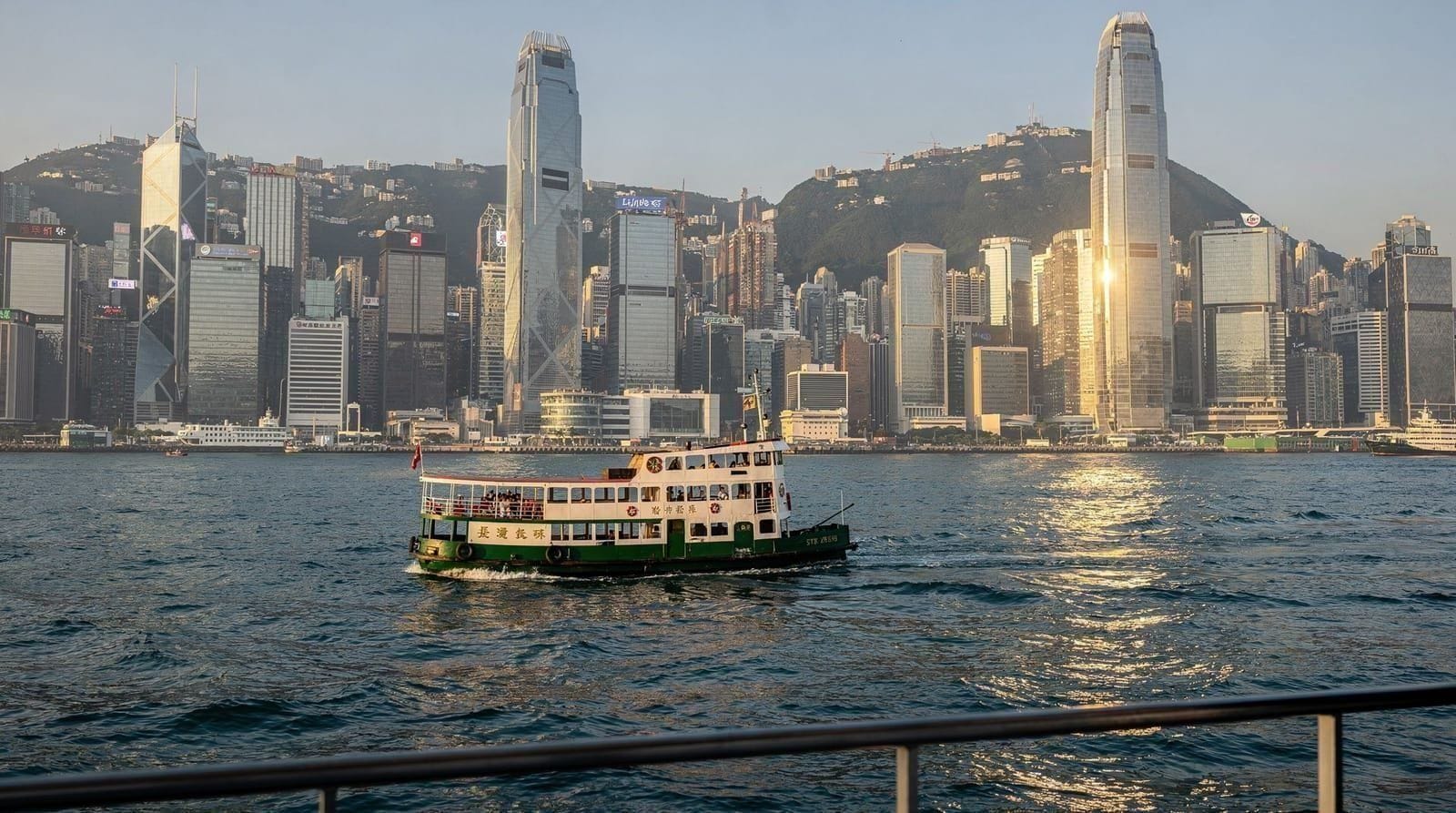
Hong Kong is vastly larger than Macau in every sense. Greater Hong Kong covers around 1,110 square kilometres and has a population of roughly 7.5 million people spread across Hong Kong Island, Kowloon, the New Territories, and more than 200 outlying islands. The MTR metro system is world-class, trams run on Hong Kong Island, ferries cross the harbour, and even so, getting from one part of the city to another can take 45 minutes.
Macau covers just 32 square kilometres and has a population of about 680,000. The Macau Peninsula, Taipa, and Coloane are connected by bridges and the light rail (LRT). You can walk from the Historic Centre to Macau Tower in under 30 minutes. The entire UNESCO zone is navigable on foot in a morning.
For first-time visitors with limited time, Macau’s compactness is a genuine advantage. You see more of the city’s highlights with less transit dead-time. Hong Kong rewards longer stays with its extraordinary geographic variety — harbour views, green hills, remote beaches, and neighbourhood-by-neighbourhood cultural shifts.
Getting between them
This is a critical practical point that shapes many itineraries: Macau and Hong Kong are very easy to combine.
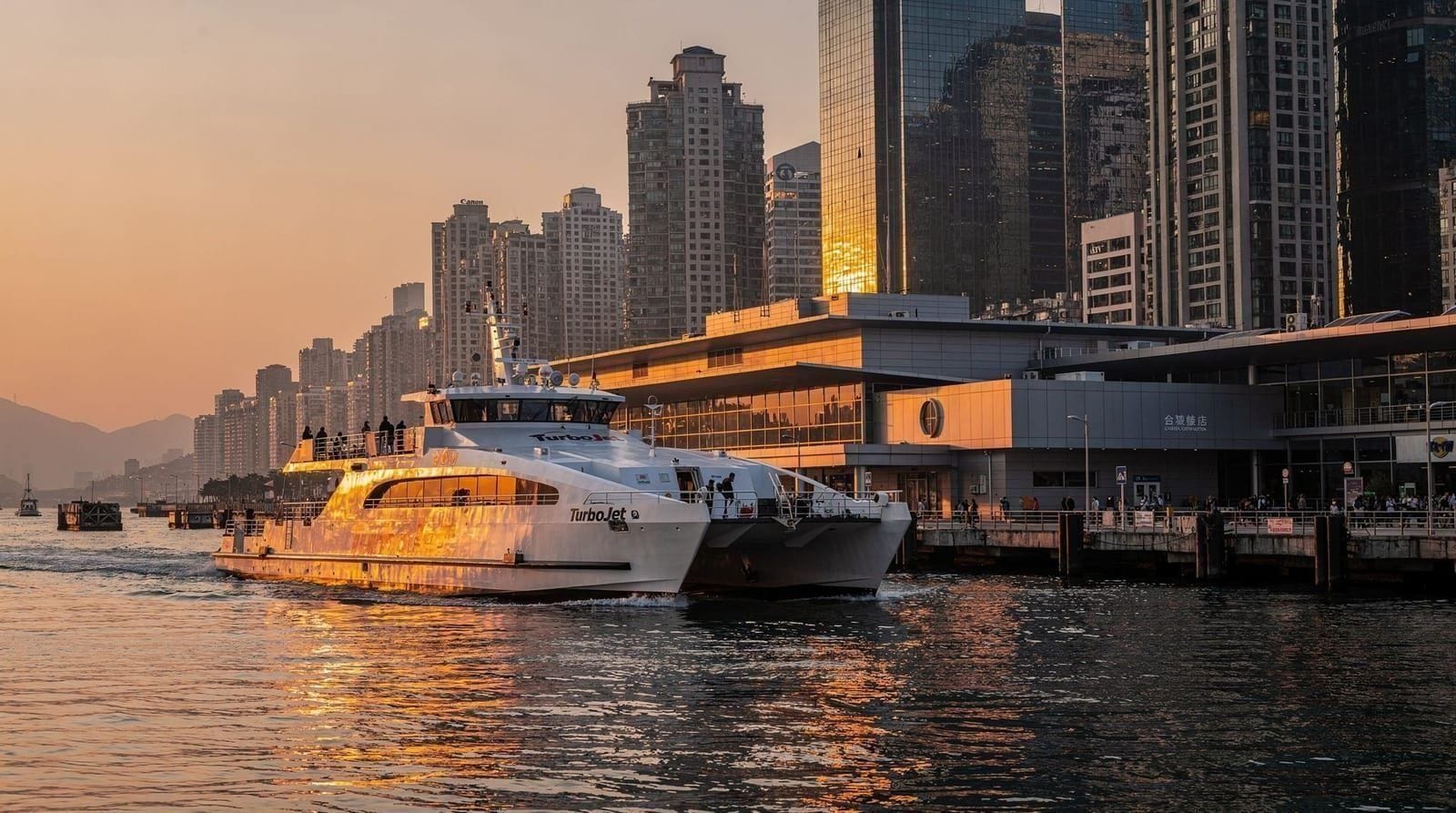
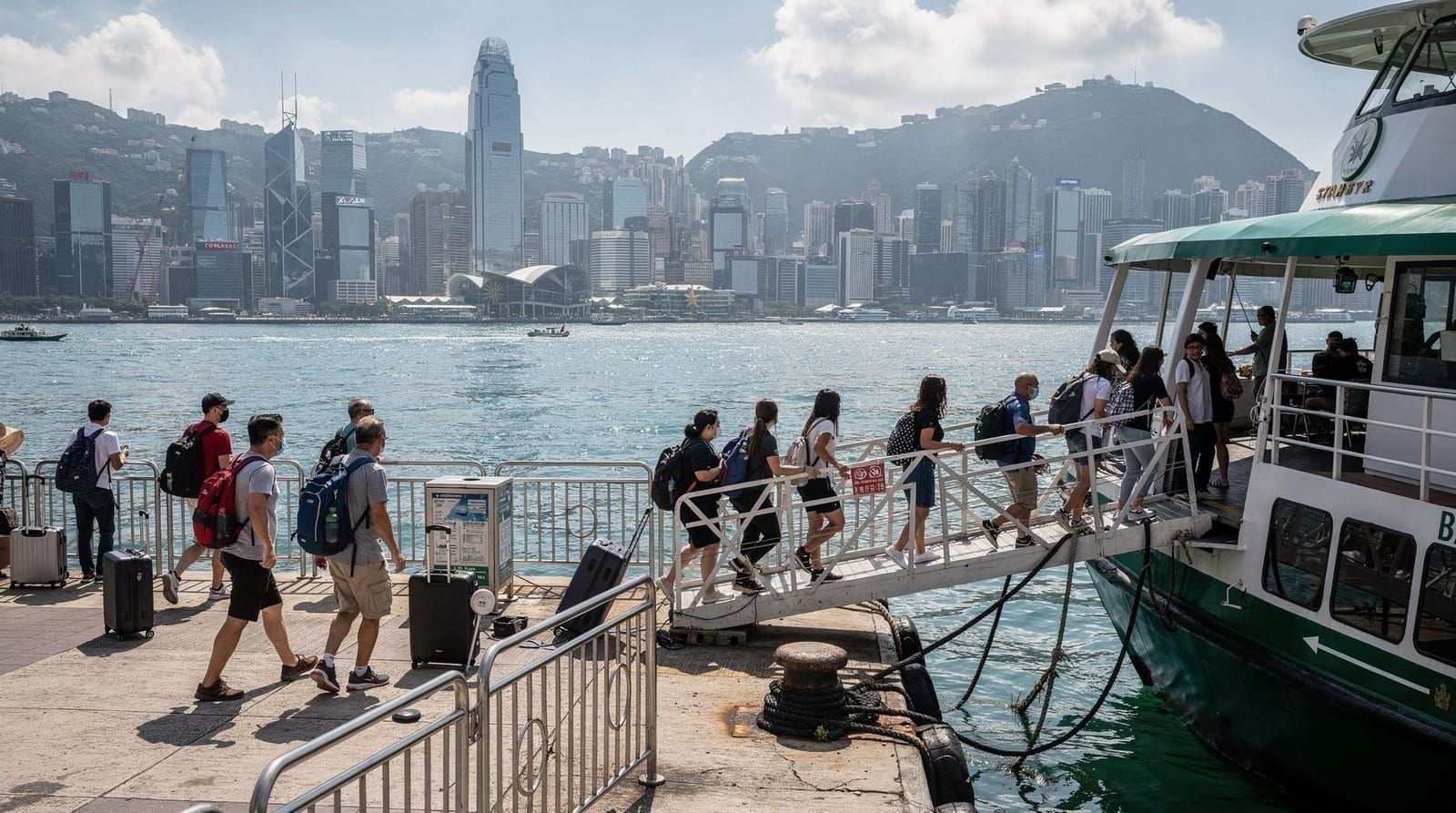
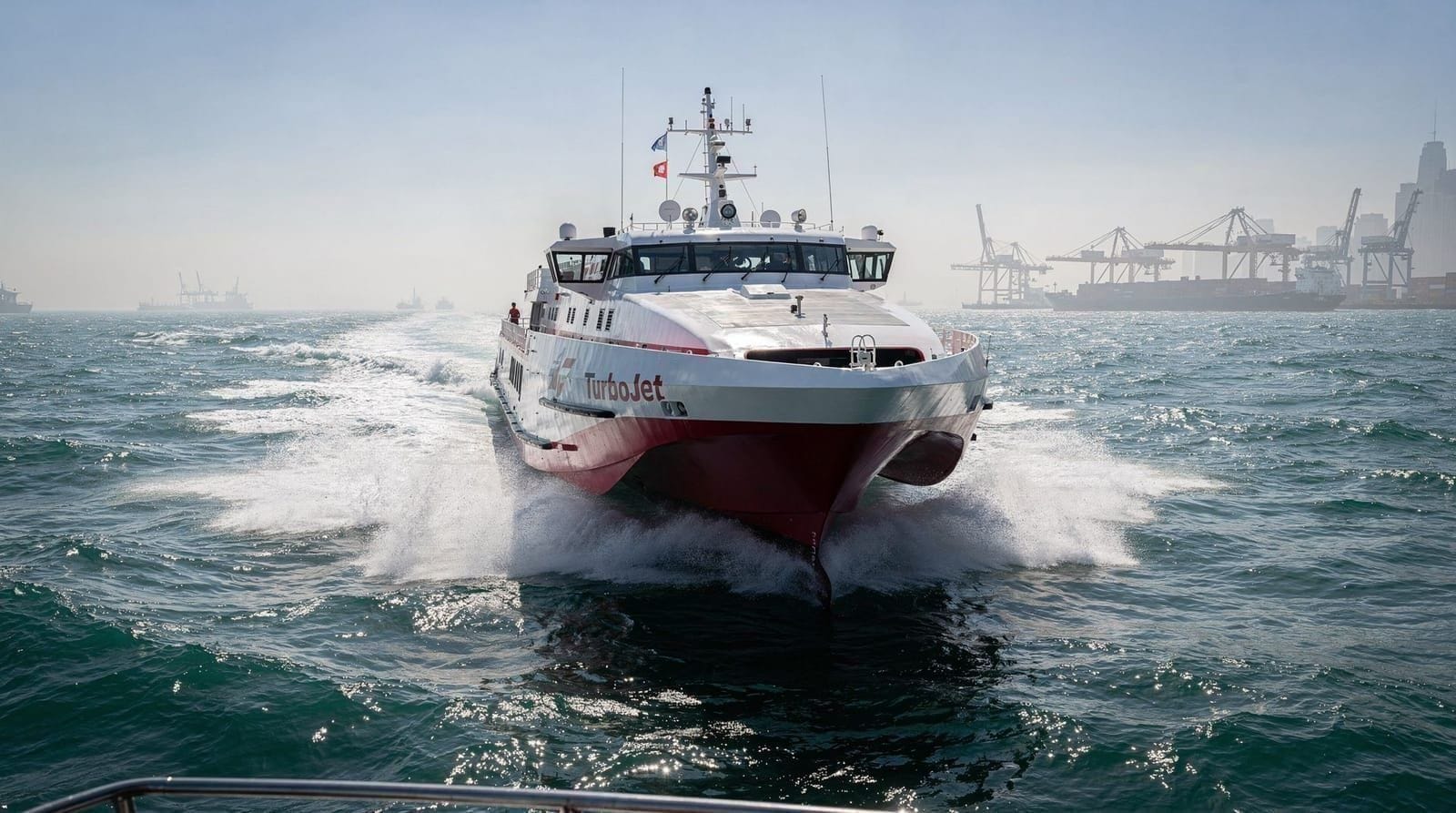
TurboJet and Cotai Water Jet ferries run approximately every 30 minutes between Hong Kong (from the Macau Ferry Terminal in Sheung Wan, or the Tuen Mun Ferry Terminal in the New Territories) and Macau (from the Outer Harbour Terminal or the Taipa Ferry Terminal on Cotai). Journey time is around 55–60 minutes. Tickets cost roughly HKD 165–300 (USD 21–38) depending on the departure time and seat class. Night ferries are available.
The Hong Kong–Zhuhai–Macau Bridge (HZMB) opened in 2018 and created a road link for the first time. You cannot drive your own car — shuttle buses run between the Hong Kong and Macau HZMB border crossing terminals. Journey time is similar to the ferry (around 40–50 minutes on the bus, plus border crossing time). The bus tends to be cheaper than the ferry. The downside is that you arrive at the HZMB border gate on the western edge of the Macau Peninsula, which is less centrally located than the ferry terminals. Our guide to the Hong Kong–Zhuhai–Macau Bridge has full details on both options.
Flying between them is possible but pointless for almost all travellers — the airport journey time on each end means a flight takes longer door-to-door than a ferry.
If you’re planning a combined trip, a guided day tour can handle the logistics for you:
From Hong Kong: Macau Day Tour via HZMB with Lunch & Transfers From Hong Kong: Macau Day Tour with R/T Ferry, Lunch & PickupCasinos and gambling
This is where Macau and Hong Kong diverge most sharply. Hong Kong has no legal casinos. Horse racing at Happy Valley and Sha Tin (operated by the Hong Kong Jockey Club) and the Mark Six lottery are the only legal forms of gambling.
Macau, by contrast, is the world’s largest gambling market by revenue. In years before the pandemic, Macau’s annual gaming revenue regularly exceeded USD 36 billion — more than five times the combined revenue of the entire Las Vegas Strip. Baccarat dominates Macau’s gaming floors (accounting for roughly 85–90% of revenue), reflecting the preferences of its primarily Mainland Chinese visitor base.
The scale is extraordinary. The Venetian Macao has the largest casino floor in the world. Galaxy Macau, City of Dreams, Wynn Macau, MGM Cotai, and Sands Macao are each massive entertainment complexes. Even if you have no interest in gambling, the free entertainment, architecture, and food inside these resorts is worth seeing. Our Macau casinos guide gives a full breakdown of the major properties.
For non-gamblers specifically: Macau’s casinos are not as alienating as they might sound. The Venetian’s indoor canal mall, free concerts, and gondola rides have nothing to do with gambling. City of Dreams has theatrical shows. Galaxy has an artificial surf wave. See our guide to Cotai for non-gamblers for the practical details.
UNESCO heritage and history
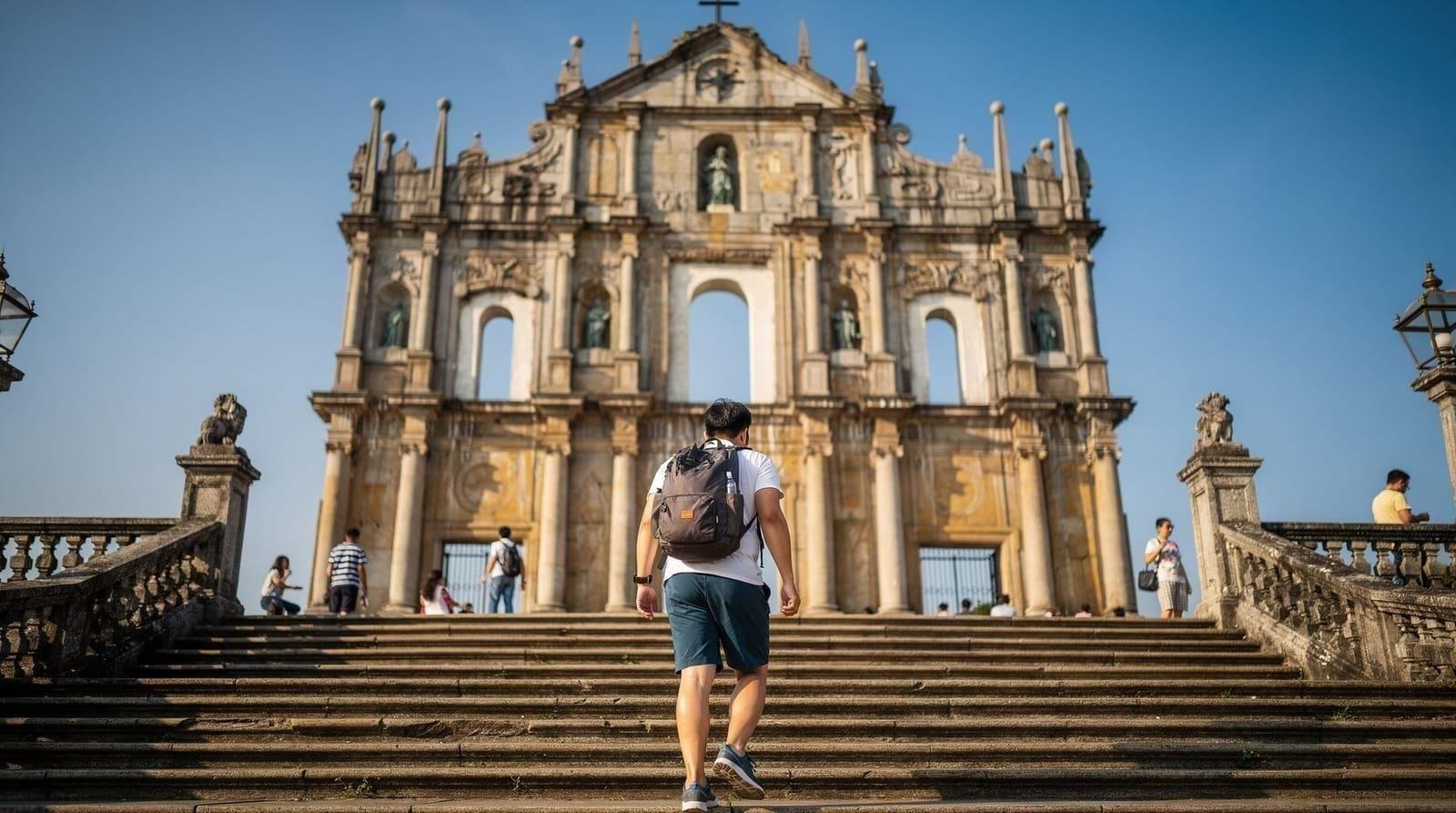
Macau punches well above its weight here. The Macau Historic Centre is a UNESCO World Heritage Site comprising 30 monuments and public spaces — Portuguese baroque churches, Chinese temples, fortresses, and colonial plazas layered on top of each other across the Macau Peninsula. The Ruins of St. Paul’s, A-Ma Temple, Senado Square, and Mount Fortress are all within walking distance. This concentration of genuine colonial and religious heritage is rare in East Asia.
Hong Kong’s heritage is less concentrated but no less interesting. Central’s colonial buildings, the historic villages of the New Territories, Po Lin Monastery on Lantau, and the Tian Tan (Big) Buddha are all significant. But there is no single UNESCO World Heritage designation equivalent to Macau’s Historic Centre.
For history and architecture enthusiasts, Macau’s compact UNESCO zone offers a more immediate payoff. A half-day walking tour covers extraordinary ground. You can book a guided version through our Macau UNESCO walking tour:
Macau: 3-Hour UNESCO Walking Tour in the Historic CenterFood and dining
Both cities are exceptional food destinations, full stop. The question is what kind of eating matters most to you.
Hong Kong is globally renowned for Cantonese cuisine and dim sum culture. Yum cha at a traditional tea house — bamboo steamers, har gow, char siu bao, congee — is one of the world’s great food experiences. Wonton noodle soup, roast goose, clay pot rice, and Hong Kong–style milk tea all have dedicated cult followings. The density of Michelin-starred restaurants is remarkable. Street food in Temple Street Night Market and the cooked food centres adds another dimension.
Macau offers something you cannot find anywhere else: Macanese cuisine. This fusion tradition emerged from centuries of Portuguese colonial trade, blending ingredients and techniques from Portugal, Africa, India, and southern China. Dishes like African chicken (galinha à africana), minchi (ground pork with potato and soy sauce), and caldo verde are genuinely distinctive.
Macau’s egg tarts — pastel de nata adapted locally — are a required stop. Taipa Village is packed with casual restaurants serving both Macanese and Cantonese food at prices well below what you’d pay in Hong Kong. Macau also has Robuchon au Dôme, consistently ranked among Asia’s finest restaurants.
For budget eating, Macau generally wins. A bowl of noodles or a plate of fried rice in a local Macau restaurant might cost MOP 40–60 (USD 5–8). The equivalent in Hong Kong — already cheap by global standards — tends to be HKD 60–90 (USD 8–12). Both cities have exceptional mid-range and high-end options at comparable prices.
Shopping
Hong Kong has historically been the stronger shopping destination, and this remains broadly true. The duty-free status for most goods, the sheer variety of electronics retailers, luxury malls (Harbour City, IFC Mall, Times Square), and the street markets of Mong Kok make Hong Kong a serious shopping destination. Gold jewellery is particularly good value.
Macau is not primarily a shopping city. The Venetian has a large mall, and the casino resorts have luxury brand boutiques, but prices are broadly similar to Hong Kong or slightly higher. Local markets in Taipa Village and along Senado Square sell regional specialities — almond cookies, dried pork, egg tarts — that make excellent gifts.
If shopping is your primary motivation, Hong Kong is the stronger choice.
Nightlife and entertainment
Both cities have active nightlife, but with very different characters.
Hong Kong nightlife is centred on bar districts: Lan Kwai Fong (LKF) in Central is compact, busy, and mainly expatriate-focused. Wan Chai has a broader mix of venues. SoHo has higher-end wine bars and cocktail bars. Live music venues exist but are relatively limited. The scene is bars-and-clubs focused.
Macau’s entertainment offering is more theatrical. The casino resorts stage free performances — Wynn’s tree of prosperity dancing display, elaborate fountains at other properties — throughout the evening. Ticketed shows include the House of Dancing Water at City of Dreams (an acrobatic water spectacular on a scale unlike anything in Hong Kong), various concert residencies, and Cirque du Soleil-style productions. Our Macau shows and entertainment guide covers current programming.
Street bars and cocktail bars exist in Macau (particularly around Taipa Village and Coloane Village), but the nightlife scene outside the resorts is quieter than Hong Kong’s.
Beaches and outdoor activities
Macau: Coloane has two actual beaches — Hác-Sá (black volcanic sand, about 1km long) and Cheoc Van (smaller, calmer). Neither is a destination in itself, but both are clean, accessible by bus, and make for a pleasant afternoon break from the city. The hills of Coloane also offer gentle walking. Guia Fortress on the Macau Peninsula provides elevated views and a colonial lighthouse.
Hong Kong has considerably more outdoor variety. Repulse Bay is the most famous beach — wide, clean, and serviced. Discovery Bay on Lantau is relaxed and car-free. Dragon’s Back is rated one of Asia’s best urban hikes. The 100km MacLehose Trail crosses the New Territories. Sai Kung has fishing villages and clear water. If outdoor activities and coastal scenery are priorities, Hong Kong has more to offer.
Families with children
Both destinations are genuinely family-friendly.
Hong Kong: Ocean Park (theme park with marine life, roller coasters, and pandas) and Hong Kong Disneyland are obvious major draws for families with children. The tram rides, ferry crossings, and cable car to the Big Buddha are all accessible for kids.
Macau: The Macau Giant Panda Pavilion at Seac Pai Van Park in Coloane is free to enter and houses several giant pandas. The Macau Tower offers an observation deck and (for older children and adults) the AJ Hackett bungy jump and sky walk. The casino resort kids’ zones — particularly at Galaxy Macau, which has a wave pool and water park — are popular. Our guide to Macau for families covers the specifics in depth.
Visa and entry requirements
Both Hong Kong and Macau operate their own immigration systems. Most nationalities receive visa-free entry to both — but the terms differ.
Some examples (verify before travelling, as rules change):
- UK citizens: 180 days visa-free in Macau; 180 days in Hong Kong
- US citizens: 30 days visa-free in Macau; 90 days in Hong Kong
- EU citizens: generally 30–90 days in Macau; 90 days in Hong Kong (varies by nationality)
- Mainland Chinese citizens: use their Home Return Permit (回乡证) for both; separate quotas apply
Because they have separate immigration systems, crossing from one to the other involves a real border crossing with passport control — even though both are part of China. This is seamless in practice but does add some time to each crossing.
Our full guide to Macau visa and entry requirements covers the specifics.
Budget comparison
Both cities are expensive by regional standards but reasonable by Western European or North American city standards.
| Category | Macau | Hong Kong |
|---|---|---|
| Budget accommodation | MOP 500–800 / night | HKD 600–900 / night |
| Mid-range hotel | MOP 900–1,800 / night | HKD 1,000–2,000 / night |
| Budget meal (local restaurant) | MOP 40–80 | HKD 60–100 |
| Mid-range restaurant (per person) | MOP 200–400 | HKD 250–500 |
| Metro/bus ride | MOP 3–8 | HKD 4–12 |
| Ferry between cities | MOP 150–250 (HKD 165–300) | — |
MOP 1 ≈ USD 0.12; HKD 1 ≈ USD 0.13. Rates fluctuate.
For a realistic daily budget, see our Macau travel budget guide. The key takeaway: if you eat at local Macau restaurants rather than casino buffets, Macau can be meaningfully cheaper day-to-day than Hong Kong.
The case for doing both
The most common — and arguably the most satisfying — approach is to combine both cities in a single trip. The 4-day Macau and Hong Kong itinerary covers the highlights of both: two nights in each, with a ferry crossing mid-trip. Neither city feels rushed at two nights, and you get the contrast between them rather than feeling like you’ve compromised.
If you’re already in Hong Kong and considering a day trip to Macau: it is absolutely doable and worth doing. A full day in Macau — UNESCO monuments in the morning, lunch in Taipa Village, an afternoon on Cotai — gives you a genuine taste of the city. Our guide to Macau as a day trip from Hong Kong covers the logistics.
The reverse also works: based in Macau and doing Hong Kong as a day trip is feasible, though a full day in Hong Kong feels rushed given the city’s scale.
Verdict: who should go where
| Your priority | Recommendation |
|---|---|
| Casino culture and resort entertainment | Macau |
| UNESCO heritage and colonial history | Macau |
| Unique Macanese fusion cuisine | Macau |
| World-class dim sum and Cantonese food | Hong Kong |
| Shopping (luxury, electronics, markets) | Hong Kong |
| Outdoor activities and hiking | Hong Kong |
| Urban variety over a longer stay | Hong Kong |
| Compact city, walkable highlights | Macau |
| Beaches | Hong Kong (more variety) |
| Family theme parks | Hong Kong (Ocean Park, Disneyland) |
| Family cultural attractions | Macau (Pandas, Tower, smaller crowds) |
| Budget food | Macau (slight edge) |
| Short trip (1–2 days) | Macau (more concentrated highlights) |
| Longer trip (5+ days) | Both |
The honest answer for most visitors planning a trip to this part of Asia is: do both. The ferry is easy, the time cost is minimal, and the contrast between the two cities makes each feel richer.
Frequently asked questions about Macau vs Hong Kong
Can I visit both Macau and Hong Kong on one trip?
Yes, and most visitors do exactly this. The TurboJet ferry runs roughly every 30 minutes and takes about 55 minutes. The HZMB bus is similarly fast. A 4-day itinerary — 2 nights each — covers both comfortably. See the Macau and Hong Kong 4-day itinerary for a full plan.
Is Macau cheaper than Hong Kong?
For food, yes. Local Macanese restaurants and dai pai dong street stalls are noticeably cheaper than their Hong Kong equivalents. Hotel prices are similar; upscale casino resorts in Macau can actually be pricier than mid-range Hong Kong hotels. Budget MOP 600–900 (USD 75–115) per day for mid-range Macau travel.
Do I need a separate visa for Macau and Hong Kong?
Yes — each has its own immigration controls. Most nationalities get visa-free entry to both, but the allowances differ. Always check the specific rules for your passport on both SARs’ immigration websites before travelling.
Which has better food — Macau or Hong Kong?
Both are world-class. Hong Kong’s dim sum culture is globally renowned. Macau offers genuinely unique Macanese fusion food that you cannot find anywhere else. Serious food lovers should experience both.
Does Macau have beaches?
Yes. Coloane has Hác-Sá beach (black volcanic sand) and Cheoc Van beach. Neither rivals Southeast Asian beach destinations, but both are pleasant for an afternoon. Hong Kong has Repulse Bay and Discovery Bay, which are larger and better serviced.
Is Hong Kong or Macau better for families?
Both work well. Hong Kong has Ocean Park and Disneyland. Macau has the Giant Panda Pavilion, Macau Tower activities, and casino resort family zones at the Venetian and Galaxy. Macau is more compact and easier to navigate with young children. See our guide to Macau for families.
What is the best way to get between Macau and Hong Kong?
The TurboJet or Cotai Water Jet ferry (~55 min) is the most popular option, departing from the Macau Outer Harbour or Taipa Ferry Terminal. The HZMB shuttle bus takes similar time and costs less, but requires clearing immigration at the HZMB terminal on both ends. See our Macau ferry guide for timetables and booking tips.
Which city is safer?
Both are exceptionally safe by global standards. Macau has one of the lowest crime rates in the world. Hong Kong is similarly safe for tourists. Neither requires unusual safety precautions beyond standard urban awareness.
Should first-timers start in Macau or Hong Kong?
Either works, but starting in Hong Kong and finishing in Macau tends to suit first-timers slightly better: Hong Kong’s scale and pace are more demanding, so tackling it while you’re fresh makes sense, and Macau’s compact, walkable UNESCO core makes a relaxed final stretch before flying home. If your international flight lands in Hong Kong, this order also avoids backtracking. That said, either sequence works well within the 4-day Macau and Hong Kong itinerary.
Top experiences
Bookable activities with verified prices and instant confirmation on GetYourGuide.

From Hong Kong: Macau Day Tour via HZMB with Lunch & Transfers
- Lunch included
- Hotel pickup
- Free cancellation

From Hong Kong: Macau Day Tour with R/T Ferry, Lunch & Pickup
- Ferry included
- Lunch included
- Hotel pickup

Macau: 3-Hour UNESCO Walking Tour in the Historic Center
- Small group
- Free cancellation
- Instant confirmation