Best photography spots in Macau — a working photographer's notes
Macau is one of the most photogenic territories in Asia, and not primarily for the reasons you might expect. Yes, the Ruins of St. Paul’s facade makes a strong image. But the more interesting photography in Macau comes from the collision of scales and aesthetics: 17th-century Portuguese church walls with 50-floor casino towers behind them, incense coils hanging in century-old temples, tile-covered townhouses with neon signs at street level. Macau rewards the photographer who walks slowly and looks at what’s between the main attractions.
These notes are from visits over several years, with attention to what works at different times of day and what the tourist photography guides typically miss.
| Best light | Early morning (7–8:30am) or blue hour before sunset |
| Gear that earns its weight | A fast prime (f/1.8–f/2.8) for interiors, a short telephoto for facade detail |
| Getting between spots | Walking plus the light rail on the peninsula; taxi or free casino shuttle to Cotai |
| Base yourself | Macau Peninsula for heritage shots, Cotai for skyline and casino architecture |
| Time needed | A full day for the peninsula circuit, a separate half-day for Cotai and Taipa |
The Ruins of St. Paul’s facade — beat the crowd or join it
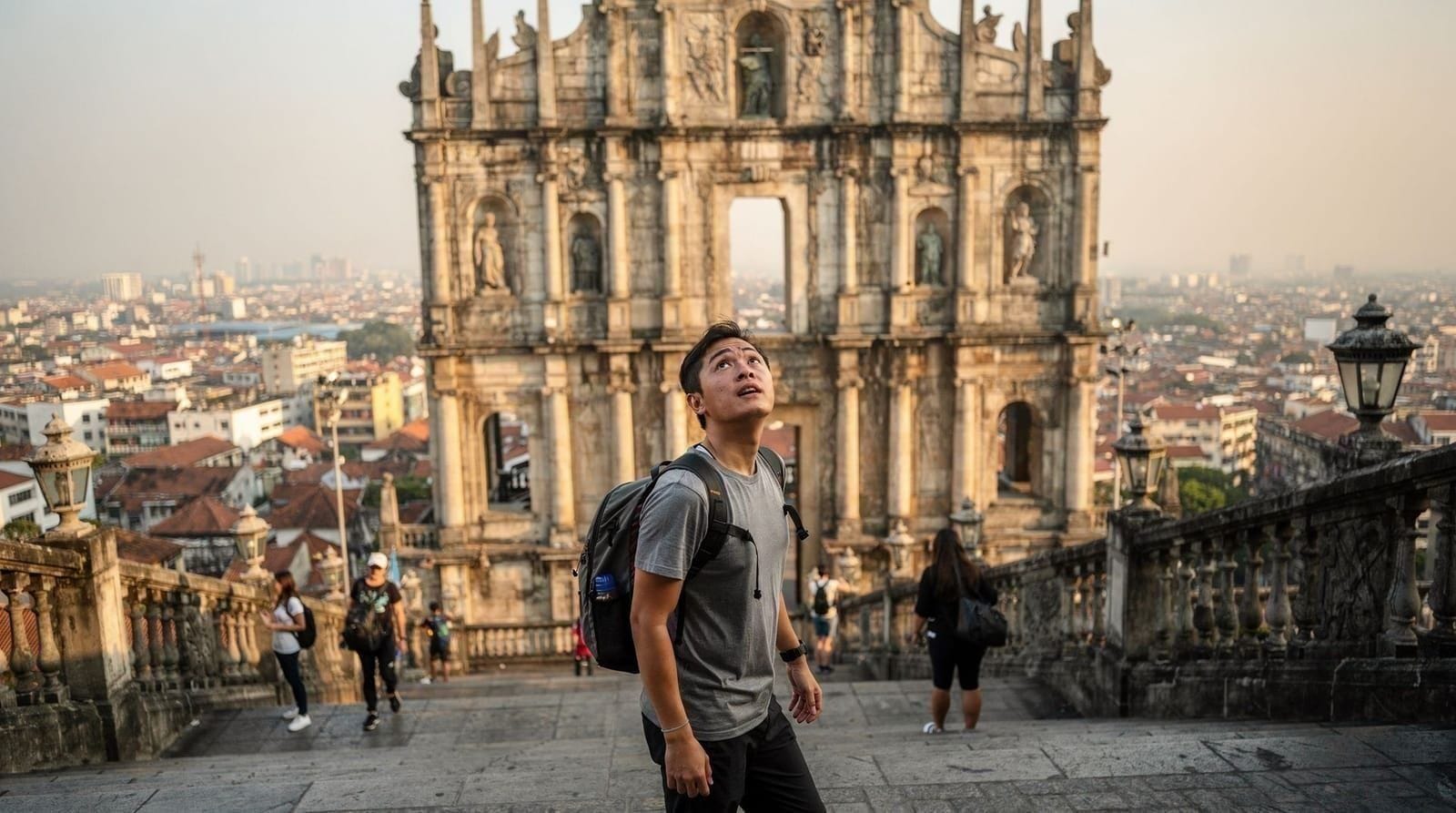
The ruins are the most photographed spot in Macau, and the challenge is exactly what you’d expect: by 10am on any day, the plaza in front is dense with tour groups and smartphones. The composition everyone gets — wide-angle, facade centred, blue sky or dramatic clouds behind — is worth having, but it requires timing.
Early morning (7–8:30am): The facade faces roughly east, so you get soft morning light on the stone in the first hours. At this time, the plaza is largely empty. The coffee vendors and egg tart shops nearby haven’t opened yet, and you can work the facade from multiple angles without crowds.
Late afternoon (4:30–6pm): Shadows across the facade in the late afternoon create texture in the stone carvings. Better for detail shots than the flat midday light. Crowds thin somewhat compared to midday.
Night: The ruins are illuminated at night. A tripod and long exposure produces a clean image of the lit facade against a dark or deep-blue sky. The surrounding streets are quieter, though still not empty.
Composition tip: resist the full-frame wide shot. The upper sections of the facade — the carved figures of the Virgin Mary, the sun, the moon, the demon figure at the base — reward telephoto compression. Bring something in the 85–200mm range for the detail work.
Senado Square and the heritage streets
The wave-pattern black-and-white mosaic of Senado Square photographs well in the early morning when no one is walking on it, or in the blue hour before sunset when the surrounding colonial buildings are lit. Midday with overhead sun and a full crowd produces flat, busy images.
The real photography on the heritage streets is not the Square itself but the smaller lanes radiating north toward St. Paul’s. Rua dos Cules, Rua da Palha, and the steps up to Calçada da Igreja de Santo Agostinho are all worth exploring. The combination of Portuguese tile facades, Chinese signage, and human street life is the visual identity of Macau at its most compressed.
A-Ma Temple area: The temple complex on the southwest tip of the peninsula near the Maritime Museum has remarkable visual material — red lanterns, stone carvings, incense smoke catching the light — and is significantly less crowded than the northern heritage sites. Morning light from the east hits the temple structures from behind, so the late afternoon or overcast days work better for interior shots. Free entry.
Mount Fortress views
The fortress walls give clear views south over the peninsula — you can see the Ruins facade with the casino towers of Cotai in the distance, which is one of the visual paradoxes that defines contemporary Macau. This shot is best from late afternoon when the sun is behind you (if shooting south) and the casino towers catch the golden light.
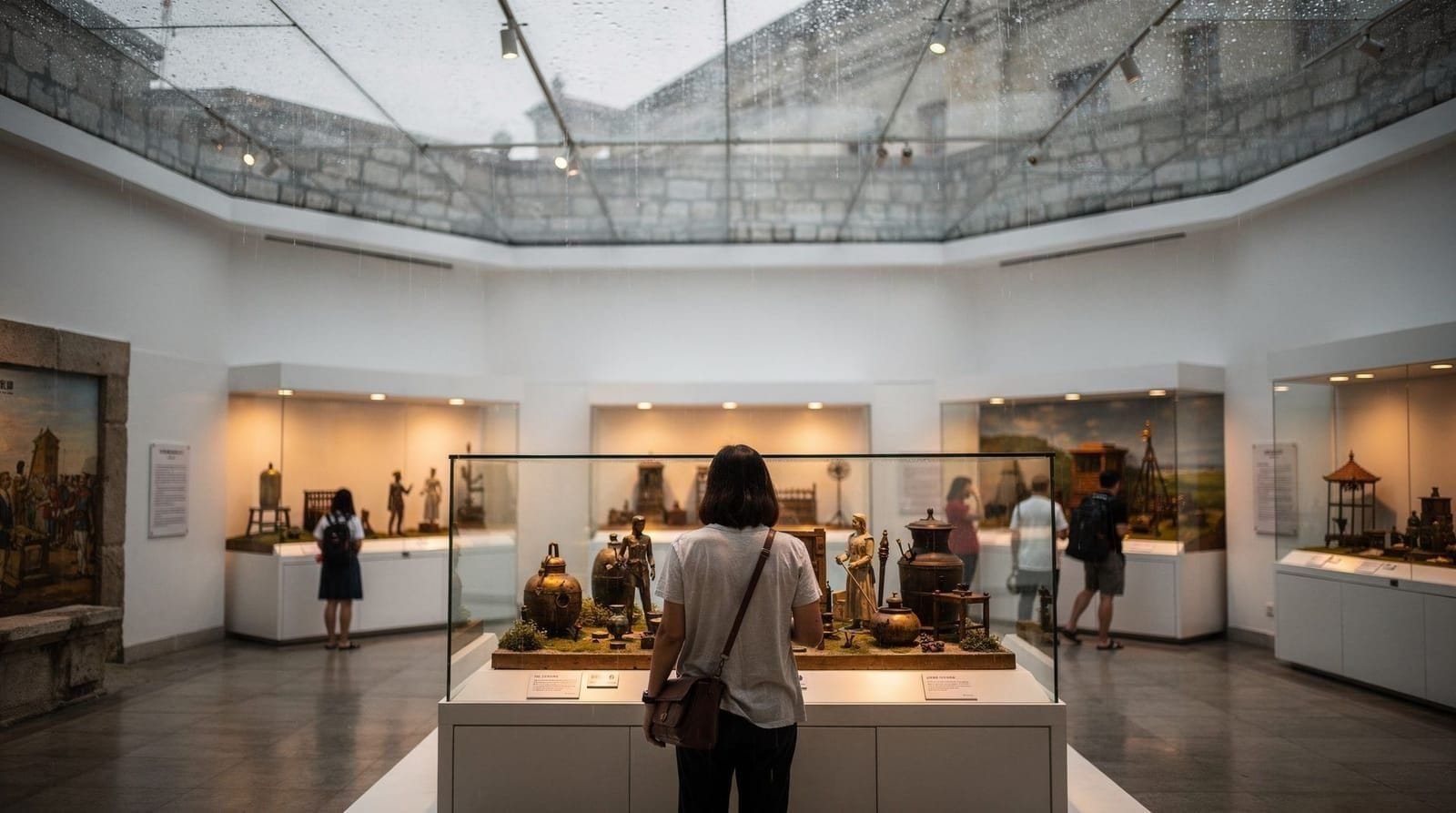
The Macau Museum inside the fortress occupies several floors but photographs poorly inside due to low light and no-tripod rules. Use the exterior walls and the garden area.
Guia Fortress and surrounding park
The lighthouse and the attached chapel with its 17th-century frescoes are two of the most overlooked photography subjects in Macau. The chapel frescoes are genuinely unusual — Christian imagery painted with Chinese brushwork techniques — and they photograph well in the diffuse light of overcast days. Flash and tripods are restricted; a fast prime lens (f/1.8–f/2.8) in the 24–50mm range works.
The Guia Hill park surrounding the fortress has mature trees, walking paths, and views east toward the outer harbour. Early morning in the park is especially good — the light filtering through the trees and the quiet before the city wakes up.
The Inner Harbour (Porto Interior)
The western coast of the Macau Peninsula along the Inner Harbour facing Zhuhai has some of the most overlooked photography in the city. The area around the Rua do Almirante Sérgio and the jetties has old fishing boats, dried seafood shops with their goods laid out in the sun, and faded Portuguese colonial buildings in states of gentle decay.
This is street photography territory. The pace is slow, the locals are accustomed to cameras, and the scenes are authentically functional rather than staged for tourism. Best from 8–11am when the morning fish markets and food preparation are active.
Avoid photographing border infrastructure or mainland China across the narrow harbour in any way that might be misread as surveillance of the crossing. The maritime border is functional and active.
Taipa Village — colour and scale
Taipa Village’s coloured Portuguese houses on Avenida da Praia (the Taipa Houses Museum row) are among the most recognisable images in Macau after St. Paul’s. They photograph well in the early morning from the waterfront side, and in the late afternoon when the western light catches the yellow, green, and pink facades.
Rua do Cunha (the main street) is excellent for street photography during business hours — vendors, bakeries, the mix of locals and tourists — but crowded enough that decisive moments happen fast. A 35mm or 50mm equivalent is the right focal length here.
Cotai Strip — the other Macau
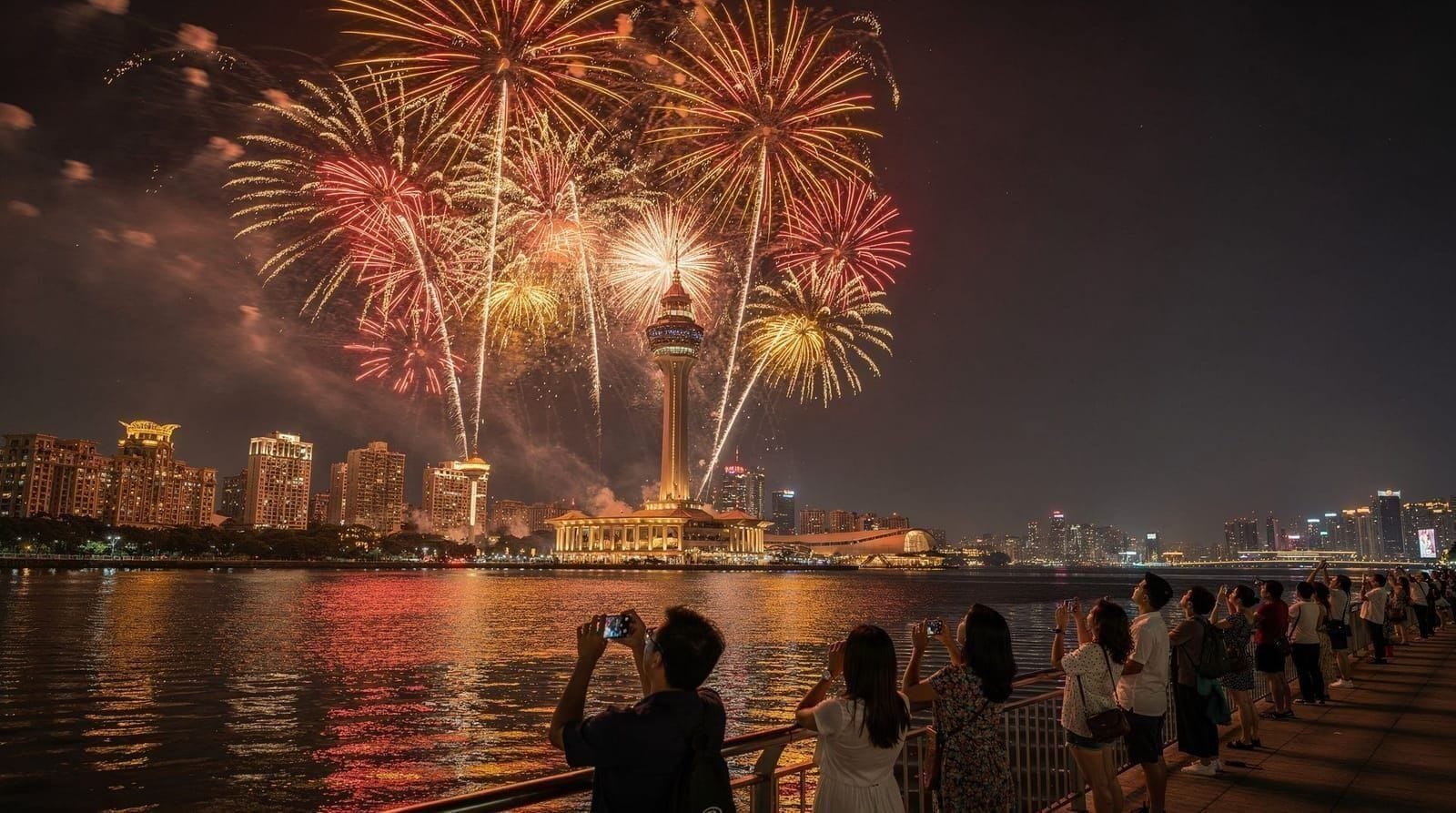
The Cotai casino resorts are visually extraordinary in a specific way: they’re vast, surreal, and completely confident in their own excess. The Venetian Macao’s replica Venice canals, Galaxy Macau’s wave pool architecture, Studio City’s Art Deco tower — all of these photograph interestingly, and at night they become properly spectacular.
The challenge is permission. Most casino interiors allow casual smartphone photography but may restrict professional camera setups (tripods, dedicated camera bodies with large lenses) on the gaming floors. The non-gaming areas — malls, lobbies, outdoor spaces — are generally unrestricted.
Studio City’s figure-8 ferris wheel at night is one of the more photogenic modern structures in Macau — the illuminated steel and the repetitive geometry respond well to a telephoto lens compressing the structure against the sky.
Skyline and rooftop viewpoints
If you want the classic Macau skyline shot — the Cotai casino towers rising behind the older peninsula, or the harbour and the Hong Kong–Zhuhai–Macau Bridge in the distance — you need height, and Macau doesn’t hand it out for free the way some cities do. The Macau Tower observation deck at 223m is the single best vantage point on the peninsula: on a clear day you can see across the Pearl River Delta to Zhuhai and the bridge, and at dusk the deck gives you the whole Cotai skyline lighting up in one frame. Bring a lens cloth — the glass is clean but reflections from interior lighting are a real problem after dark, so shoot with the lens hood pressed close to the glass.
Macau Tower observation deck ticketOn the Cotai side, several hotel lobby levels and sky bridges offer elevated views over the casino strip without needing a ticket, though access policy changes and you should ask staff rather than assume. The best views in Macau guide has a fuller rooftop-by-rooftop breakdown, including which ones are open to non-guests.
A quick-reference table: where and when
| Location | Best time | Recommended lens |
|---|---|---|
| Ruins of St. Paul’s | 7–8:30am (empty) or night (illuminated) | Wide-angle + 85–200mm for detail |
| Senado Square | Early morning or blue hour | 24–35mm |
| Guia Fortress chapel | Overcast days | 24–50mm, f/1.8–f/2.8 |
| Inner Harbour | 8–11am (active fish market) | 35–50mm, street setup |
| Taipa Village houses | Early morning or late afternoon | 24–35mm |
| Cotai casino architecture | After dark | Telephoto for compression |
| Macau Tower deck | Dusk, clear days | Wide-angle, lens hood against glass |
Practical notes for photographers
Golden hour timing: Macau is at approximately 22°N latitude. In summer (June–August), sunrise is around 5:45–6:15am and sunset around 7–7:30pm. In December, sunrise is 7–7:15am and sunset 5:45–6pm. Winter golden hours are much more manageable for photography.
Overcast conditions: Macau’s humidity means frequent cloud cover, especially from April to September. Overcast light is often better than harsh direct sun for heritage architecture — it removes the shadows that obscure the details in the stone carvings and tile work.
Tripod rules: Public spaces are generally unrestricted for tripods. Museums and some heritage sites inside buildings restrict them. Casinos restrict tripods on gaming floors. The fort walls, public parks, and street-level photography are all freely accessible.
The best views in Macau guide has additional vantage points including some rooftop options that supplement the ground-level photography notes above.
Getting between locations without wasting light
The peninsula heritage sites — the Ruins, Senado Square, Guia Fortress — are all within a 20–30 minute walk of each other, so plan a single morning circuit rather than backtracking. The light rail and the free casino shuttles are the fastest way across to Cotai or Taipa Village for the afternoon or evening session; a taxi is faster still if you’re chasing a specific sunset window and don’t want to risk shuttle queues.
If your trip is short, the one-day Macau itinerary and the self-guided walking tour both map reasonably well onto a photography-focused day, with the walking tour route roughly mirroring the peninsula shot list above.