Macau after the bridge opened — how the HZMB changed the city
The Hong Kong-Zhuhai-Macau Bridge (HZMB) opened in October 2018 after nine years of construction, MOP 127 billion (approximately USD 15.9 billion) in costs, and considerable controversy over its engineering, environmental impact, and financing. At 55 kilometres total length (with a 6.7km tunnel section), it’s one of the longest sea crossings in the world.
The question for travellers: did it change Macau, and does it change how you should plan a visit?
The honest answer is: somewhat, but less dramatically than the construction hype suggested. Here’s what actually shifted.
| Opened | October 2018 |
| Length | 55km total, incl. 6.7km tunnel |
| Bus journey | around 40 minutes, plus immigration both sides |
| Best for | travellers connecting from Hong Kong airport / Lantau |
| Not for | most visitors already in central Hong Kong — take the ferry |
What the bridge is, and what it isn’t
The HZMB is a road bridge. Private cars are not permitted to use it without a specific cross-boundary permit that is difficult to obtain and mostly reserved for registered vehicles. The bridge is used primarily by specially licensed shuttle buses and a limited number of freight vehicles.
For travellers from Hong Kong, this means you take a shuttle bus from the Hong Kong Boundary Crossing Facilities (a man-made island off Lantau) to the Macau Boundary Crossing Facilities (another man-made island, subsequently connected to the Cotai reclamation). The bus journey takes about 40 minutes; add 30–45 minutes at immigration on each side and the connection time from central Hong Kong, and the total journey is 2.5–3.5 hours — notably longer than the 70–80 minute door-to-door ferry option.
So the bridge is not a replacement for the ferry. It’s an alternative with different characteristics. The full logistics are in the Hong Kong-Zhuhai-Macau Bridge guide.
Who actually uses the bridge
The bridge serves several populations:
Travellers from Lantau Island, the Hong Kong airport area, and Tung Chung: The bus departs from close to Hong Kong International Airport. If you’re arriving in Hong Kong and immediately continuing to Macau, the bridge connection avoids going into central Hong Kong at all. This is genuinely useful and has changed the routing for airport transit passengers.
Day-trippers from areas near the Lantau bus stops: If you’re in Discovery Bay or close to the Tung Chung MTR station, the bus pickup is more convenient than reaching Sheung Wan for the ferry.
Mainland Chinese tourists arriving via Zhuhai: The bridge connects to Zhuhai on the mainland as well. Many mainland Chinese tourists now cross from Zhuhai directly into Cotai’s border gate rather than coming via the Hong Kong ferry. This changed the visitor mix on Cotai somewhat — more direct mainland arrivals, fewer HK-transiting tourists.
Freight: A significant portion of bridge traffic is goods vehicles, not tourists.
What changed for Macau as a city
Cotai’s connectivity improved substantially. Before the bridge, the main entry point for ferry passengers was the Outer Harbour terminal on the Macau Peninsula, with a secondary terminal at Taipa Ferry Terminal (near Cotai). The HZMB’s Macau terminal lands directly in Cotai, making it the first arrival point for bridge users. If you’re staying on Cotai and coming from HK airport, the bridge is genuinely the better option.
New tourist numbers from the mainland. The direct Zhuhai–Cotai crossing made it easier for mainland Chinese visitors from the Pearl River Delta region to visit Macau without a Hong Kong transit. Cotai saw increased visitor numbers in the months after the bridge opening — though the 2020–2022 pandemic period subsequently disrupted these trends significantly.
The Cotai Frontier Post: The new border gate at the HZMB terminal in Cotai opened a second entry/exit point on Cotai in addition to the Lotus Flower (Qingmao) crossing. Travellers now have more options for entering and leaving the territory.
Increased mainland Chinese visitor composition: The bridge, combined with the Cotai gaming expansion, shifted Macau’s visitor composition toward mainland Chinese tourists and away from Hong Kong-based visitors as a proportion of the total. This had downstream effects on the languages of menus and hotel staff (more Mandarin emphasis), the types of shops in casino malls (more mainland luxury brands), and the price points in some restaurant categories.
What didn’t change
The ferry from central Hong Kong is still the best option for most visitors. For travellers already in central Hong Kong or Kowloon, the ferry from Sheung Wan or Tsim Sha Tsui to Macau Outer Harbour is faster, cheaper than the total bus journey, and arrives at the more central peninsula terminal. The Macau ferry guide remains the primary reference.
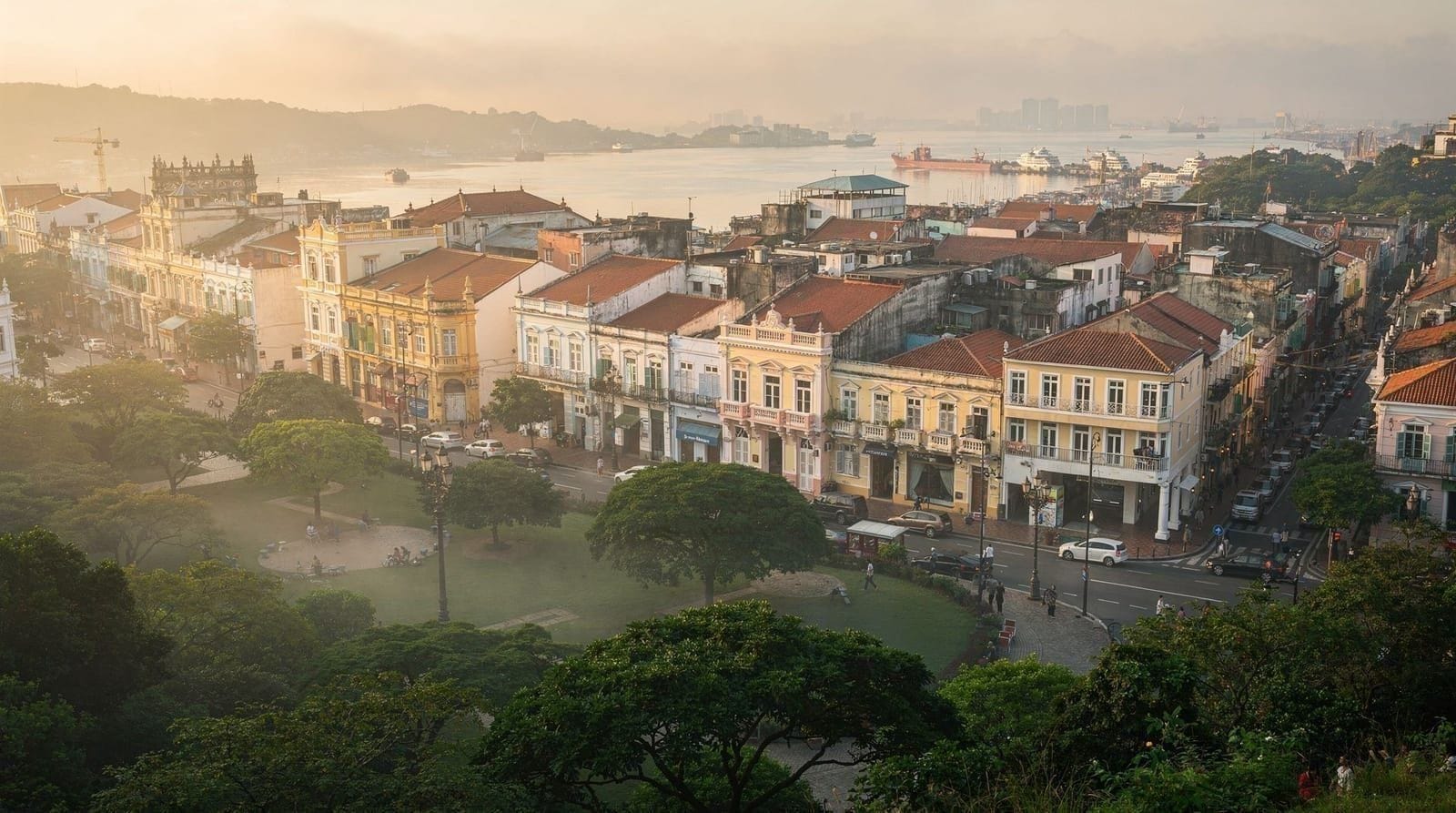
The historic peninsula remains the heritage centre. The bridge terminates at Cotai, which reinforces the casino-resort first impression for bridge users. The Macau Peninsula and its UNESCO World Heritage historic centre are still best accessed from the Outer Harbour ferry terminal — a short walk or taxi from Senado Square.
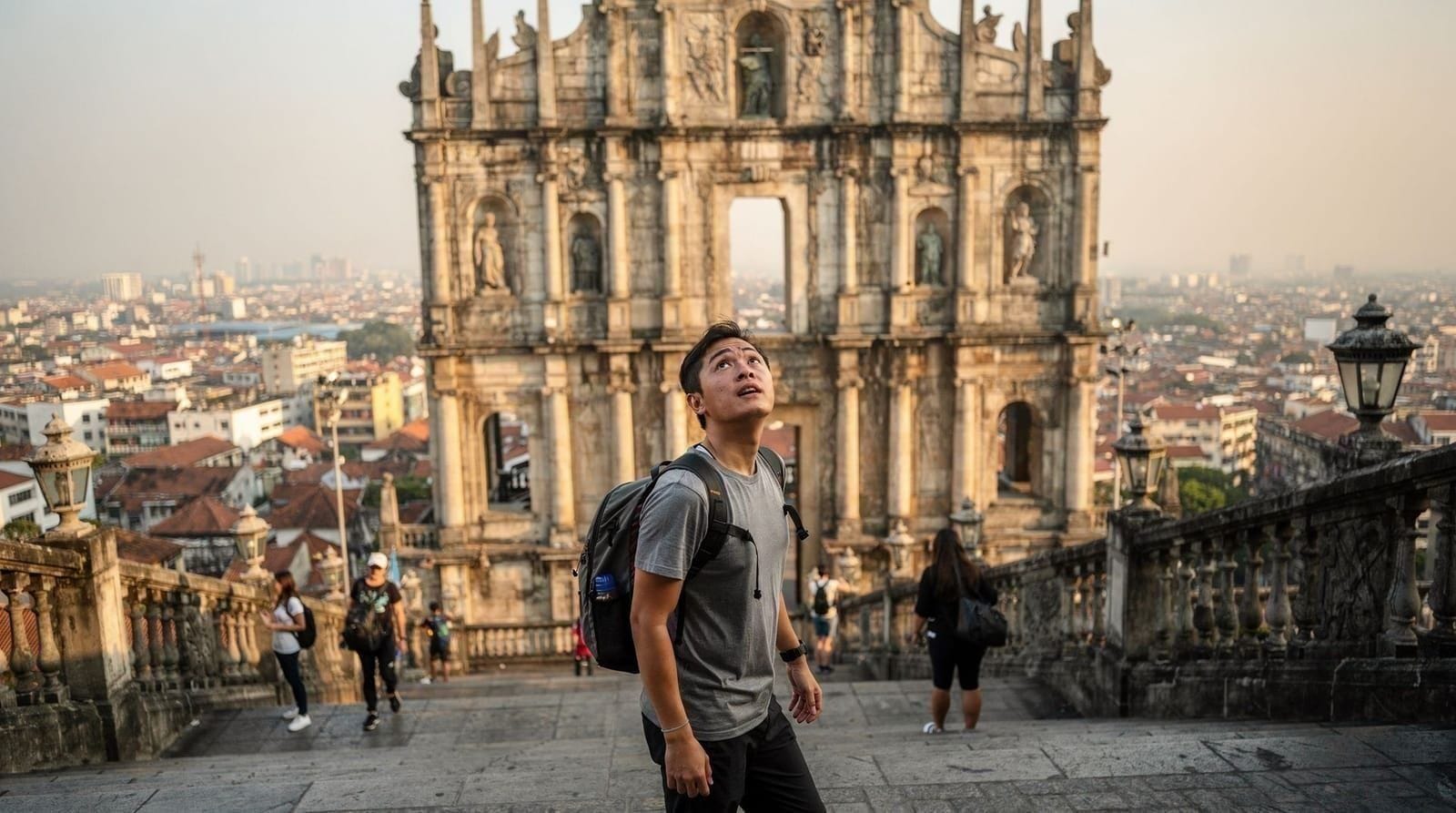
The fundamental character of the city. The Ruins of St. Paul’s, A-Ma Temple, Taipa Village, Coloane Village — none of this changed because a bridge opened. The concerns expressed before the opening that the bridge would overwhelm the historic centre with mainland mass tourism have materialised partially but not catastrophically: Cotai absorbs the majority of the casino visitor increase, and the heritage sites see more visitors but remain manageable with early-morning visits.
The practical travel planning implications
If you’re coming from Hong Kong airport directly: The HZMB bus is convenient. You avoid going into central HK. The Macau terminal drops you in Cotai. If you’re staying in a Cotai casino hotel, this is efficient.
If you’re coming from central Hong Kong or Kowloon: Take the ferry. It’s faster door-to-door.
If you want to make a Zhuhai day trip from Macau: The bridge connection makes the Zhuhai crossing easy from Cotai’s Lotus Flower border gate. See the Zhuhai day trip guide for what’s worth doing across the border.
If you want to visit Macau as part of a longer China trip: The bridge creates a new routing — arrive by air to HK, bridge to Macau, spend days there, cross back to Zhuhai and continue inland. The Hong Kong-Macau-Zhuhai routing guide covers this in more detail.
An honest assessment six years on
The bridge transformed the infrastructure of the Pearl River Delta in ways that will take decades to fully play out. For the ordinary visitor planning a trip to Macau, it primarily matters in one specific scenario: connecting from Hong Kong airport without going into central HK.
For the majority of travellers — those arriving from Hong Kong city centre, or flying directly to HK and taking a day or two in the city before crossing — the ferry remains the faster, simpler, and generally preferable option.
The bridge is real and significant. It’s also not the revolution in Macau access that was sometimes claimed in the opening coverage. The getting to Macau from Hong Kong guide weighs both options side by side with current timings and prices to help you make the choice for your specific situation.
What the bridge did permanently change is the conversation about Macau’s geographic relationship with the mainland. The territory’s connection to the Pearl River Delta — Zhuhai immediately across the Inner Harbour, Guangzhou two hours by fast train — is more tangible now. For a first-time visitor, understanding this context enriches the experience of walking through Portuguese-era streets that are simultaneously deeply connected to the Chinese economy around them.
Ferry vs bridge: a direct comparison
| Ferry (Sheung Wan/Kowloon) | HZMB bus | |
|---|---|---|
| Door-to-door time | 70–80 minutes | 2.5–3.5 hours |
| Best starting point | Central Hong Kong, Kowloon | Hong Kong airport, Lantau, Tung Chung |
| Arrival point in Macau | Outer Harbour (peninsula) or Taipa | Cotai |
| Booking | Advance booking recommended | Tickets at HKBCF or online |
| Ideal for | Most Hong Kong-based visitors | Airport transit passengers, Zhuhai onward travel |
Combining the bridge with a Zhuhai or night crossing
If you’re using the bridge as part of a longer routing rather than a simple Hong Kong–Macau hop, a couple of packaged options remove some of the planning friction. A private limo transfer covering Hong Kong, Zhuhai and the HZMB crossing is worth considering if you’re travelling with luggage or in a small group and want to skip the shuttle-bus queues on both sides. For an evening option, a Hong Kong–Macau night tour using the HZMB with dinner included packages the crossing with a guided evening rather than requiring you to plan the border logistics yourself.
Should the bridge change your itinerary?
For most first-time visitors coming from central Hong Kong, the answer is no — plan your trip around the ferry as described in the Macau ferry guide, and treat the bridge as a curiosity rather than infrastructure you need. The exception is genuinely useful: if your Hong Kong stay starts or ends at the airport, or you’re building a Zhuhai/mainland leg into the trip, the bridge removes a redundant trip into central Hong Kong and is worth the extra journey time for that convenience alone.
Frequently asked questions about Macau
Is the Hong Kong-Zhuhai-Macau Bridge faster than the ferry? No, not for most travellers. The bridge bus journey takes around 40 minutes, but with immigration on both sides and the connection time from central Hong Kong, the total is 2.5–3.5 hours — notably longer than the 70–80 minute ferry.
Can I drive across the HZMB myself? Not without a specific cross-boundary permit, which is difficult to obtain and mostly reserved for registered vehicles. Most travellers use the licensed shuttle buses instead.
Where does the bridge bus arrive in Macau? The Macau terminal lands in Cotai, not the historic peninsula. If you’re heading to Senado Square or the Ruins of St. Paul’s, budget extra time for a taxi or shuttle from the Cotai terminal.