Chinese New Year in Macau — what it's actually like
Chinese New Year is the busiest and most visually spectacular time to visit Macau. The city’s Chinese population — the majority — marks the Lunar New Year with genuine civic celebration: lion dances, dragon parades, temple offerings, fireworks over the Inner Harbour, and the unmistakable smell of incense drifting through every street. Simultaneously, the casinos fill to near-capacity with mainland Chinese visitors, ferry ticket prices triple, and the streets around Senado Square become nearly impassable on the main days.
It’s an experience unlike any other time of the year. Whether it’s the right time to visit depends entirely on what you’re after.
| When | Late January to mid-February (lunar calendar, dates shift yearly) |
| Book ferries | At least two weeks ahead |
| Hotel prices | Up to 2–3x weekday rates over the peak |
| Quietest area | Coloane and Coloane Village |
| Best free experience | Lion dances at Senado Square, New Year’s Day |
When Chinese New Year falls in Macau
The Lunar New Year date changes annually according to the lunisolar calendar. It typically falls between late January and mid-February. The public holiday period in Macau officially covers the first three days of the lunar year, though in practice the celebrations and elevated crowds extend for about two weeks — roughly from the week before New Year’s Eve through Lantern Festival (the 15th day of the new year).
For exact dates year by year, the Macau weather by month guide lists major festival periods. The best time to visit Macau guide gives context on when crowds peak and when they ease.
What you’ll actually see and experience
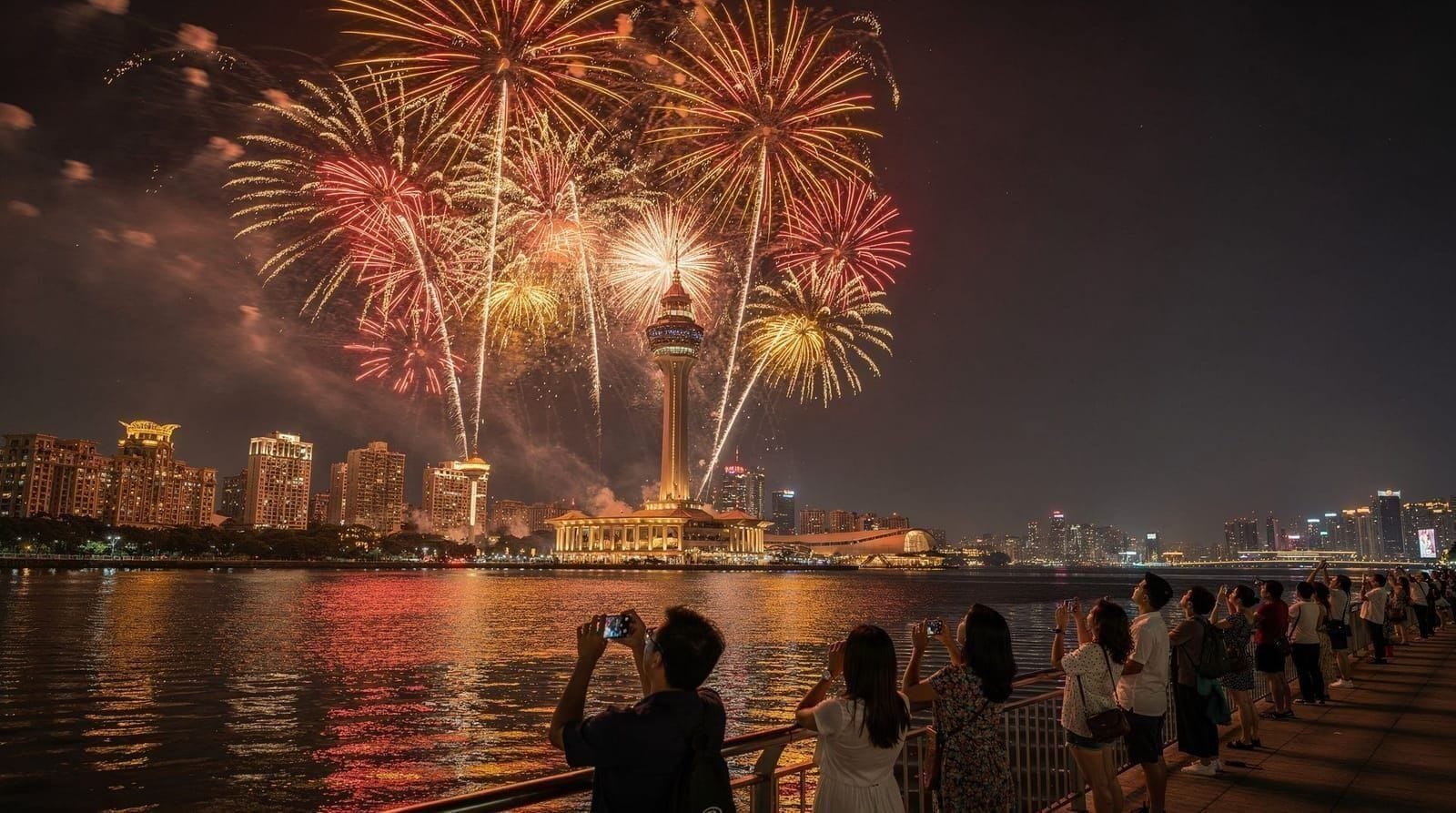
New Year’s Eve and New Year’s Day: The most intense period. Fireworks over the Inner Harbour at midnight on New Year’s Eve are visible from multiple points on the peninsula — the Praia Grande waterfront and the Guia Fortress area offer good elevated views. The sound is considerable; Macau is a small territory and the shells are large.
New Year’s Day features lion dance performances in Senado Square and at various casino entrances — casinos sponsor lion dance troupes as a traditional good-luck gesture. The performances are genuine and energetic, not staged for tourists, and free to watch.
Temple visits: A-Ma Temple and Lin Fong Temple are packed with worshippers during the first days, with incense smoke heavy enough to sting the eyes. This is absolutely worth experiencing — but visit early (before 9am) if you want to observe rather than be swept along by the crowd.
The parades: Macau’s tourism office organises a parade around the New Year period that runs through central areas of the peninsula. Floats, traditional performers, and acrobatic troupes. The exact route and timing varies each year — check the MGTO (Macau Government Tourism Office) website closer to your travel dates.
Lantern Festival: The 15th day of the lunar year (Yuan Xiao Jie) brings lantern displays to parks and public squares, and is a somewhat calmer celebration than the first days. The Camões Garden on the peninsula often has installations.
The crowd reality
Let’s be honest about what Chinese New Year crowds in Macau mean. The territory receives a significant spike in visitors from mainland China and Hong Kong over the holiday period. Casino occupancy reaches near 100%. The ferry crossings from Hong Kong book out days in advance. The streets in the historic centre are genuinely difficult to navigate at peak hours.
The bottleneck is the physical size of Macau. The Macau Peninsula historic centre is not large, and when visitor numbers double, the experience in popular areas shifts from pleasant to uncomfortable for anyone who doesn’t enjoy dense crowds.
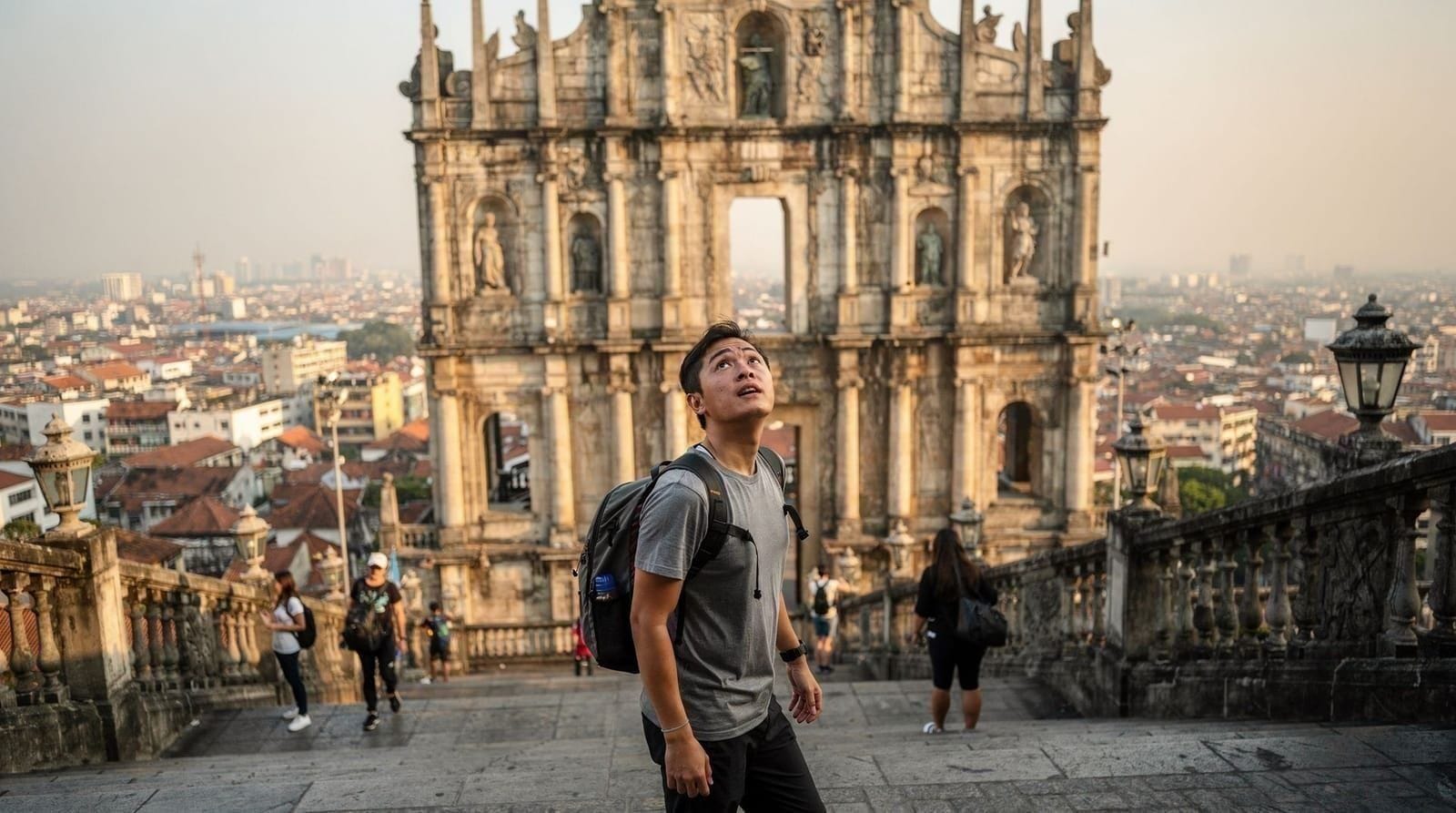
Practical coping strategy: do the popular heritage sites — Ruins of St. Paul’s, Senado Square, Mount Fortress — in the early morning (before 9am) when crowds are thinnest. Midday to 6pm is the worst period. Evening is better, especially for the atmospheric lighting at Senado Square and the heritage buildings.
Coloane and Coloane Village are dramatically quieter than the peninsula during CNY. Lord Stow’s Bakery in Coloane Village has a queue but it moves. The surrounding village streets are walkable and relaxed.
What’s open and what’s closed
Most tourist sites remain open through the public holiday — the casinos certainly never close, and many restaurants stay open or have limited holiday hours. The Macau Museum has adjusted holiday hours in past years (closed on New Year’s Day, reduced hours the following days). Check directly before you go.
Some local restaurants close for the first two or three days of New Year to give staff the holiday. The taipa village food guide lists which types of restaurants are more likely to maintain normal hours. Many of the dedicated tourist restaurants and hotel restaurants remain open throughout.
Ferry and transport
Book your ferry from Hong Kong at least two weeks in advance, and ideally further out. Return ferries on the third or fourth day of CNY — when mainland Chinese and Hong Kong visitors head home — are especially hard to get. The Macau ferry guide explains the booking process.
The Hong Kong-Zhuhai-Macau Bridge bus service is an alternative if ferry tickets are sold out, but expect very long queues at the border crossing on peak days.
Taxis are harder to find than usual during the CNY peak. Build in extra time for any transport. The casino free shuttle services continue to operate and are often the most reliable way to get between Cotai and the peninsula.
Prices during Chinese New Year
Hotel rates spike significantly. Casino hotels on Cotai that charge MOP 1,200–1,800 (USD 150–225) on weekdays may reach MOP 3,500–5,000 (USD 437–625) or higher over the holiday peak. The Macau travel budget guide has general price context, but CNY operates on a separate economic logic.
If you’re flexible, the days immediately before and immediately after the main holiday period — say, two to four days before New Year’s Eve, or from the fifth to the eighth day — offer much of the festive atmosphere at lower price premiums.
Is it the best time to visit?
For experiencing Macau’s Chinese identity and the genuine civic energy of a major traditional festival, yes — the first three days of Chinese New Year are the most vivid time to visit. The combination of the fireworks, lion dances, temple atmosphere, and general festivity is something that photographs cannot fully convey.
For anyone who finds crowds stressful, values being able to walk without shuffling, or is travelling with young children, the peak days may be overwhelming. A visit two to three days after New Year’s Day — when mainland visitors begin to return home but the decorations and atmosphere linger — is a reasonable compromise.
A guided UNESCO heritage walk during CNY is practical if you want context about what you’re seeing at the temples and historic sites without having to navigate independently through peak crowds.
The Macau International Fireworks Competition in September is a different kind of event — less crowded, often more technically impressive, and worth comparing as an alternative festival-driven visit.
Crowd and price levels by day
| Period | Crowd level | Hotel prices | Notes |
|---|---|---|---|
| New Year’s Eve – Day 3 | Peak | Highest (2–3x weekday) | Fireworks, lion dances, temples packed |
| Day 4 – Day 8 | High, easing | Elevated | Mainland visitors begin heading home |
| Day 9 – Lantern Festival (Day 15) | Moderate | Near-normal | Calmer atmosphere, lantern displays remain |
| Week before New Year’s Eve | Low-moderate | Slightly elevated | Decorations up, crowds not yet arrived |
Where to watch the fireworks and lion dances
If you only have time for one CNY-specific activity, prioritise the New Year’s Day lion dance circuit around Senado Square — it starts mid-morning and moves between casino entrances through the afternoon, so you can catch multiple performances without fixed timing. For the midnight fireworks on New Year’s Eve, arrive at your viewing spot at least an hour early; the Praia Grande waterfront gets crowded but stays walkable, while Guia Fortress hill offers more breathing room if you don’t mind the climb.
Packing and practical notes for the holiday
Bring cash — some smaller restaurants and stalls during CNY prefer cash over cards, and ATM queues can build during the peak days. Dress in layers; late January and early February evenings in Macau run 12–17°C, cooler than the daytime and considerably cooler than the incense-heavy temple interiors. If you’re travelling with red envelopes (lai see) to give, small denominations are the norm and are not expected from visitors, though hotel and restaurant staff will appreciate the gesture.
Frequently asked questions about Macau
Is Chinese New Year a good time to visit Macau for a first trip? It’s a spectacular but demanding time. If dense crowds don’t bother you, it’s one of the most vivid weeks of the Macau calendar. First-time visitors who want to see the heritage sites at a relaxed pace may prefer a quieter month and save CNY for a return trip.
How far in advance should I book for Chinese New Year in Macau? Book ferries and accommodation at least two to three weeks ahead, and earlier if possible for the peak New Year’s Eve through Day 3 window. Hotel rates and ferry availability tighten considerably as the date approaches.
Is Macau more crowded than Hong Kong during Chinese New Year? Proportionally, yes — Macau’s small physical footprint means the visitor influx is more concentrated. The historic centre in particular becomes noticeably harder to navigate than an equivalent crowd would feel in a larger city.